When the Church Looks Less Like Jesus

A call to remember who the Church belongs to—and what the world should see in us.

The Church Belongs to Jesus

What should people encounter when they encounter the Church?

Should they leave impressed by our excellence? Inspired by our music? Encouraged by our preaching? Or should they leave saying, “I caught a glimpse of Jesus.”

That question matters because the Church belongs to Him. She is not ours to redefine, market, or mold according to the preferences of any generation. Scripture describes her as the Body of Christ (1 Corinthians 12:27), the household of God (Ephesians 2:19), and the Bride for whom Christ willingly laid down His life (Ephesians 5:25–27).

If she belongs to Christ, every generation must ask one simple question: Are we becoming more like Jesus? Not more successful. Not more influential. Not more visible. More like Jesus.

To look like Him is to love what He loves, serve as He served, welcome as He welcomed, and make disciples as He commanded. Everything else flows from that.

A Shared Life, Not a Weekly Event

The New Testament presents a compelling vision of the Church. Believers devoted themselves to the apostles’ teaching, fellowship, the breaking of bread, and prayer (Acts 2:42). They shared with those in need (Acts 2:44–45), bore one another’s burdens (Galatians 6:2), rejected favoritism (James 2:1–9), practiced hospitality (1 Peter 4:9), and became known by their love (John 13:34–35).

This was not simply a worship service. It was a shared life. They did not merely attend together. They belonged to one another.

The early Church was not perfect. Acts and the New Testament letters reveal conflict, sin, and correction. Yet they also reveal a people willing to repent and reorder their lives around Christ. That picture should challenge us: Have we unintentionally settled for something smaller than what Scripture describes?

When Activity Replaces Faithfulness

The modern Church has become remarkably effective at gathering people. We organize ministries, communicate vision, create excellent environments, and steward resources wisely. Those things can honor God. But excellence must never replace obedience.

  • Programs cannot replace people.
  • Production cannot replace presence.
  • Attendance cannot replace discipleship.

Methods are servants. They must never become masters.

One temptation facing the Western Church is to mistake activity for faithfulness. The question is whether our methods have quietly become our measurements of success. Jesus did not commission His followers to build impressive institutions; He commanded them to make disciples (Matthew 28:19–20). Paul wrote, “I planted, Apollos watered, but God gave the growth” (1 Corinthians 3:6).

Faithfulness belongs to us. Growth belongs to God.

Christ gave leaders to the Church “to equip the saints for the work of ministry” until the whole body matures in Him (Ephesians 4:11–16). Healthy ministry is measured by whether God’s people are becoming more like Jesus together.

The earliest believers did not simply invite people to a gathering. They carried the life of Christ wherever they went. Their worship overflowed into hospitality, their teaching into discipleship, their fellowship into generosity, and their prayers into courageous witness.
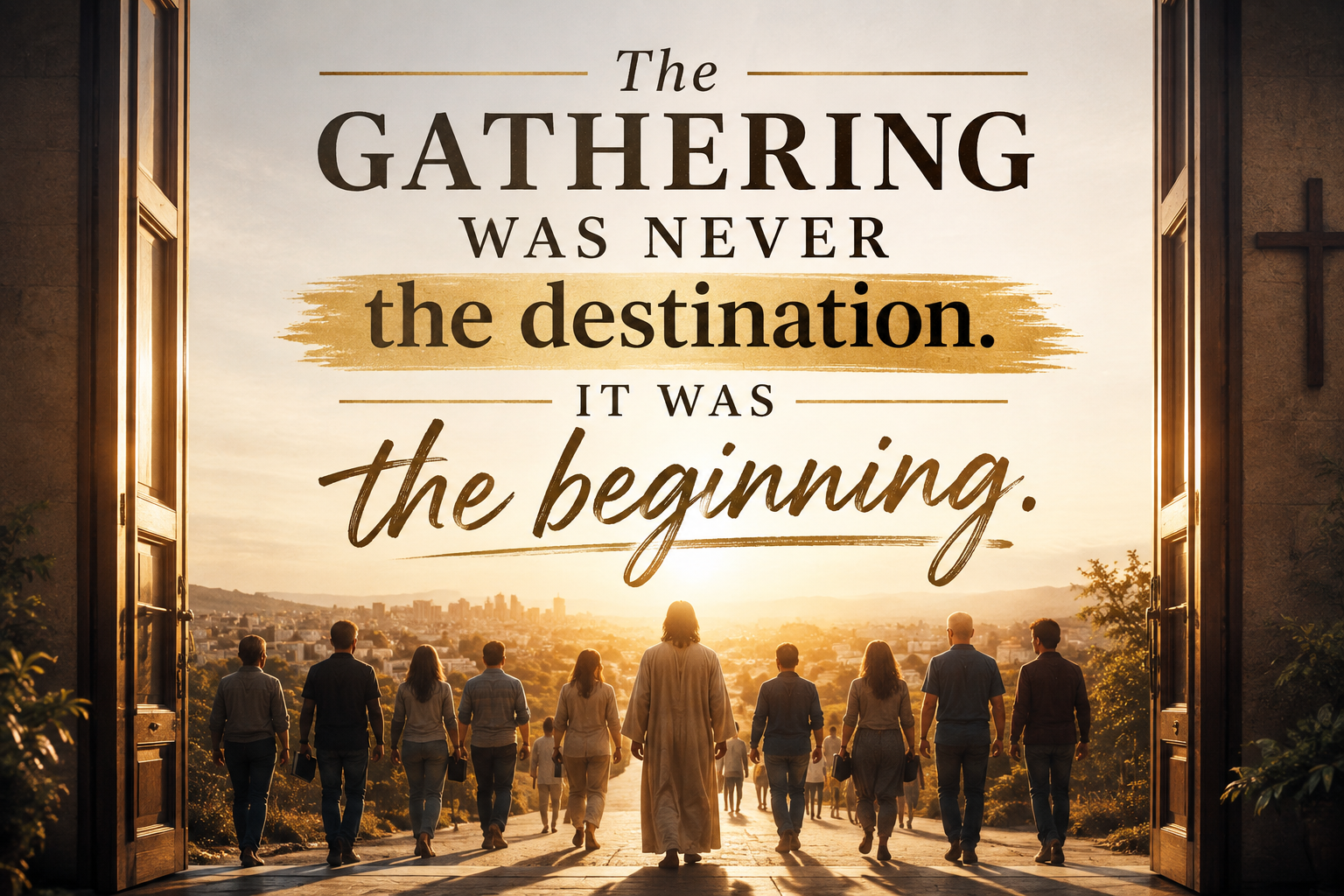
Returning to Our First Love

Churches do not drift overnight. Neither do believers. Even the church in Ephesus—commended for perseverance and discernment—heard these sobering words from Jesus: “You have abandoned the love you had at first” (Revelation 2:4). Their greatest problem was not incompetence. It was misplaced affection.

That warning still echoes. We can become more competent while becoming less dependent upon God, more organized while becoming less compassionate, and more influential while becoming less Christlike.

The greatest threat to the Church has rarely been opposition from the outside. More often, it has been gradual drift from the inside.

Sent Belong the Walls

Outreach has not disappeared from the Church. Countless congregations faithfully serve their communities in ways that honor Christ. Yet we should ask whether outreach has slowly moved from being part of the Church’s identity to becoming one ministry among many.

The ministries hardest to promote are often the ministries Scripture emphasizes most: visiting the sick, welcoming the stranger, caring for widows and orphans, bearing burdens, opening our homes, and serving without recognition (James 1:27; Matthew 25:34–40; Galatians 6:2). These acts rarely generate headlines, fill auditoriums, or build anyone’s platform. But they look remarkably like Jesus.

The Church was never called merely to invite people into a building. She was called to carry the presence of Christ into the world.

More Than Consumers

Perhaps nowhere is self-examination more necessary than in the way we approach gathering together. We ask: Did I enjoy the worship? Did the sermon encourage me? Did I feel fed today?

Those are not wrong questions. They are incomplete.

The New Testament invites us to ask another set of questions: Whom did I encourage? Whose burden did I help carry? Who experienced the love of Christ through me? Who did I welcome, forgive, or serve?

Church was never intended to function like a spiritual gas station where we stop once a week to refill before returning to life unchanged. If we leave our gatherings knowing more about Christ but looking no more like Him, we have misunderstood the purpose of gathering.

Worship that truly encounters God does not terminate on itself. It overflows into love, service, mercy, justice, humility, forgiveness, generosity, and sacrificial care.

Hungry Without Agenda

The same examination applies to every gift within the Church. Whether someone teaches, preaches, writes, leads worship, or serves behind the scenes, every ability entrusted by God exists to make much of Christ. Whenever a gift begins drawing attention primarily to the person using it, we have drifted from its purpose.

The platform has never been the center of worship. Christ is.

I believe believers across the world are quietly praying for communities simply hungry for Christ—without agenda, without platform-building, without chasing influence for its own sake. Communities whose greatest ambition is to know Christ and make Him known. Where people serve because they love, give because they have received grace, worship because God is worthy, and gather because they genuinely belong to one another.

Those communities may never become famous. But heaven has never measured faithfulness by fame. The Church has never needed more influence than faithfulness. She has only ever needed more of Christ.

Call Back to Christ

The prophet Micah summarized God’s desire with remarkable simplicity:

“He has told you, O man, what is good; and what does the Lord require of you but to do justice, to love mercy, and to walk humbly with your God?” (Micah 6:8)

Perhaps the Church today needs that reminder as much as any generation before us. This is not a call to abandon Christ’s Bride. It is a call to love her enough to invite her continually back to her first love.

The answer to an imperfect Church has never been abandoning her. The answer has always been allowing Christ to continue sanctifying her—including us.

May we have the humility to examine ourselves before we examine others. May we have the courage to repent wherever we have drifted. May we become people hungry for Christ without agenda—content to decrease so that He might increase.

And until the day we finally see our Savior face to face, may the watching world first catch a glimpse of Him in us.

For that has always been the Church’s greatest witness.

Graphics created in ChatGPT

Work as Freedom: Hearts of Flesh (Part 1)

Inspiration passages: Ezekiel 11:19; Ezekiel 36:26-27; Jeremiah 31:33; Hebrews 8:10

Backdrop passages: 2 Corinthians 3; 2 Corinthians 5:13

Core concept 1: God has qualified us to communicate the Gospel as Kingdom influencers; however, to walk in this competency, we must receive hearts of flesh in place of hearts of stone.

It’s no secret the world bombards us with the idea success is an identity we achieve through ability. If we want to get something, we got to first become something; if we want to reach ‘x’ status, we must set an ‘x’ goal; to reach an ‘x’ goal, we must get there by ‘x’ effort, etc.

However…

37xlq2

For example, you may have a counselor’s heart, but doubt its validity since you’re not a licensed counselor. The world would say until you receive the proper credentialing, you’re not a counselor. But to God, you are a counselor because that’s what He’s made you to be. Of course, you may have much to learn and have to wait a few years until certification. But this doesn’t mean you’re not who God has called you to be.

You see, the world wants you to think it’s all about the process…that what you hope to be can only be accomplished through how you get there. But think about it: In order for there to be a ‘how’, there has to be a ‘what’ and for there to be a ‘what’, there has to be a ‘who’, right?

The question is: Who do we believe when it comes to who we are?

While the outcomes are many, by allowing God to be the answer, we can know the sweet reality that not only is our salvation secure for those who believe (Romans 10:9-10), but our purpose, our destiny,  and our future as well.

Accordingly, growth and improvement should not be seen as functions of development, but of yielding. After all, what you hope you are, you already are because your identity is not a matter of be-coming and self-refining (heart of stone thinking), but be-lieving and aligning (heart of flesh thinking).

This in mind, if what you seek to experience has already been prepared, why not enter into God’s best with a ‘yes’  than effort with a sigh? Why not accept His ‘realized new’ than take a chance missing it all for the sake of going your own way?

Core concept 2: To receive a heart of flesh is to believe God always sees the ‘finished you’. Accepting this sets us up to experience radical life in the Spirit…to be transformed through the Spirit’s inner power.

Consider this illustration from my dad/Gate senior pastor, Steve Fry (8:46-11:30)…

As created (or in this case, painted)…

…there’s amazing freedom to be found when we accept our future as known and pre-determined rather than unknown and self-determined.

Understandably, this can be challenging to accept since we often seek to control our destiny through achievement and effort. We think as long as we work hard and ask God for the right things, they’ll be given to us and to a certain extent, this is true; however, if making requests to God and modeling faith through excellence are detached from alignment, are we not craving what He can give versus valuing what He creates?

If so, dare to view present and future struggle through David’s Psalm 51:10-12 heart-cry, where he asks not only for a clean heart, but a new one! (more on this in a sec)

NewHeart-iPad

As Paul emphasizes in 2 Corinthians, we’re not changed into a new creation, we are made as a new creation. We aren’t born again through accrued improvements; we’re born again through the Spirit’s transformative power which enables us to become what God has and continues to declare. As for us, all we have to do is align to God by His Spirit and walk His appointed paths through daily tuning and reliance. In a sense, that is life in the Spirit – an ongoing presence meets power, abiding meets trusting reality with God.

Think of this way: If the Good News is ‘Jesus is alive and has set you free‘, then by extension, you don’t have to earn your freedom because your efforts aren’t the keys to your life. Instead, you can relish in your freedom knowing you don’t create it by self-effort, but discover it being present with God.

Core concept 3: Believing God sees the ‘finished you’ allows you to embrace helplessness and surrender your veils.

When Paul mentions ‘veil’ five times in 2 Corinthians 3:12-18, it’s easy to assume he’s talking about revealed glory; however, when we consider v. 17 and its modern-day application, we find Paul is doing, at least, three things:

  1. He’s linking Christ’s finished work on the Cross to our finished person (to see freedom through the lens of the New Covenant is to accept both Cross and weakness as the plan for our transformation). 
  2. He’s charging the church to fearlessly turn to the Lord.
  3. He’s cautioning the body against obedience through self-effort.

Concerning point #3, it’s worth noting even when we do the right thing, if the act is rooted in fear, our hard hearts will remain since trust is self-reliant. That’s why the flip-side is so radical. To do the right thing by trusting God is to allow God’s tender heart to tenderize your own. This is evident when we turn to Jesus in moments of dependence, desperation, and/or negative thinking. When you turn to Jesus, you’re essentially abandoning fear of conviction and exposure for the sake of discovering new levels of His nature, character, and glory. It’s the ultimate ‘His fullness exceeds my voids‘ proclamation…an acceptance of God and His desire for us to know His heart out of abundance, not fear.

As mentioned in Core Concept #2…

God doesn’t want to change your heart; He wants to give you a new one! He doesn’t want to improve you; He wants to take out your heart of stone and put in a brand, new heart of flesh. 

Yes, God is able to fully restore health (Jeremiah 30:17), relationships (2 Corinthians 13:9-11), fortune (Job 42:10), strength (Isaiah 40:29), and the joy of our salvation (Psalm 51:12), but with our hearts, our inhabitable being, He never stops wanting to go deeper; hence why God implants new hearts in His people so the larger dimensions can contain the future ‘more’ He’ll inevitably reveal.

As for our response, remember we don’t believe the right things so we can experience the cool buzz of God’s presence. We contend for them so the glory of Lord can fill our spaces…work, church, living, family/friends, etc. God desires His created to be free from performance and fear-based systems of thinking; however, we can’t tap into this desire if we try to effort our way there. Instead, we must yield our way to His way. That’s the hope of glory meeting the Good News as modeled in our own life!

Final Thoughts:

  1. Stop trying to be a Christian and turn to Jesus regardless of how you feel
  2. Accept God’s acceptance of yourself
  3. Pain is real, but irrelevant when you consider we are his workmanship created not only for good works, but for fullness from our finished future. Side note: Combining Colossians 2:10 and Ephesians 2:4-10 is super fun!)
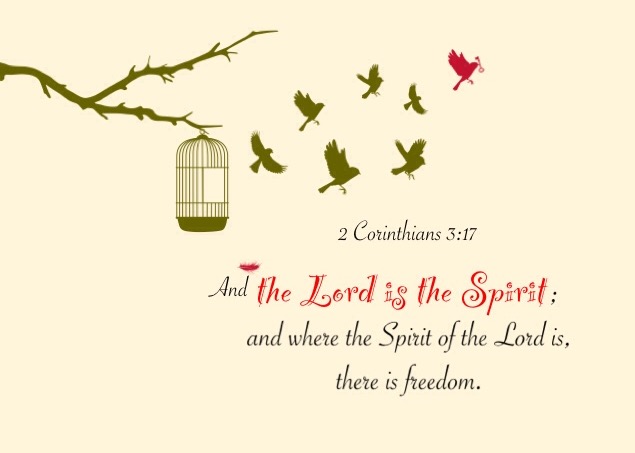
  4. (see graphic below)

where-the-spirit

…from your effort, self-reliance, systems of performance, and the deepest of emotional hurts.

Stay tuned next time for ‘part two’ when I’ll discuss how this theology works in the marketplace. ‘Til then, praise the One with the key not only to your heart, but your future as well.

Selah.

Cover creds: Heartwell
Content inspired by ‘New Heart’ series @ The Gate Community Church

Work as Worship: Scratch Notes on Titus 2:7-15

TDOT Bible Study – WORK AS DOXOLOGY (WORSHIP)

Question: What are some of the ways we can approach work as worship?

v 7 – Behave wisely – take life seriously

v 8 – Sound and beyond reproach in instruction

v 9 – Subject in everything, pleasing and not talk back so that in every respect they will adorn and do credit to the teaching of God our Savior

What does ‘adorn’ mean?

  • Adorn – Implies advancement, a passing on of something; not just something you put on (Proverbs 25:20)
  • Adorn – An active/direct extension of majesty (God’s sovereignty)
  • Adorn – Transitive property applied, adorn is all about sharing good news with people. But to share good news with people, it has to be evident in our lives as well.

v.10 – Proving themselves trustworthy*

*Note: ‘Work as worship’ doesn’t mean you effort to prove your maturity. You don’t effort to live above reproach. Without Jesus, you have to rely on yourself. But with Jesus, this becomes an overflow of daily submitting yourself to Christ and His lordship (i.e. ‘not my will, but your will be done’). There’s an investment in doing this, but it’s a joyful one if our heart is to give God all glory.

v 11 – Scriptural evidence that points to God’s grace finding a way to all men

v 12 – Sensible repeated for the fourth time; this is significant.

What does ‘sensible’ mean?

  • Sensible – Acting within God’s definition of balance; receiving God’s discernment made practical through the Spirit.
  • Sensible –  Spiritual moderation exemplified by “a man who does not command himself, but rather is commanded by God‘” (K. Wuest, Word Studies, 2, 46).
  • Sensible –  The marking of a decision that contributes to the regulation of life; self-control aids this process since the virtue helps us mature as a safe place (evidence) to people and as workers with reliable attitudes and behaviors (manifestation).

Root origins: The root (phrēn) is the root of “diaphram,” the inner organ (muscle) that regulates physical life, controlling breathing and heartbeat.

Example: A good opera singer controls the length and quality of their tones by their diaphragm. This also controls their ability to breathe and moderate heartbeat; hence, why the disaphragm is so valuable as it regulates (“brings safety to”) the body, keeping it properly controlled.

v 13-14 – ‘Work as worship’ means we do good with a good attitude to bring others the good news/into God’s presence. This point only is why we should see self-control as surrendering our control in terms of relationships. Remember God will take care of the possession (making His nature/will known to those around us) as long as we don’t make entering God’s presence all about us.

v 15 – “Tell them these things” – This implies instruction is being modeled with the authority we’ve been given from Christ. Active encouragement and constructive criticism working in tandem. If we do this right, our colleagues and co-workers will be regularly edified.

Thoughts on etymology influenced by Strong’s Concordance; cover photo creds – Logosphere 


Work as Worship: Our Story for God’s Glory

Work and worship.

Two words with great power, but for some reason are hardly used in the same sentence.

Of course, we all know what they mean.

With work, you have what you put your hands to, your vocation, where skill meets a living; with worship, you have what (or rather whom) you lift your hands to, the reason for vocation, where purpose meets living.

However, if you think these terms are easily compartmentalized, I get it. After all, as long as the church teaches the principles behind them, we should automatically know how they apply in each setting of life, right? (*Sarcasm*)

Whatever the case, when we talk about how work works as worship, when we consider the origin of work and its modern-day application, there’s fresh freedom and joy to be found.

So for today, I want to discuss what it means to be a worship-thinker as opposed to a work-thinker – what working to the fullest looks like when function becomes a part of our daily abiding in Christ.

For instance…

  • Do we treat work as a source of identity?
  • Do we treat work as a tool of personal fulfillment?
  • Do we treat work as a necessary evil in order to get a paycheck or other “benefits”?

If ‘yes’, then chances are our work has become a place of pressure, performance-based thinking or worse…a means to an end1.

Accordingly, we must ask ourselves:  How then do we treat work if we’re to elevate it as a selfless sacrifice of praise?

For starters, it doesn’t hurt to bridge work and worship with ‘mission’…

…however, to truly answer this, we must flash back to the Garden of Eden as captured in Genesis 2:15-20…

“The Lord God took the man and put him in the Garden of Eden to work it and keep it. And the Lord God commanded the man, saying, “You may surely eat of every tree of the garden, but of the tree of the knowledge of good and evil you shall not eat, for in the day that you eat of it you shall surely die. The Lord God said, “It is not good for the man to be alone. I will make a helper suitable for him.” Now the Lord God had formed out of the ground all the wild animals and all the birds in the sky. He brought them to the man to see what he would name them; and whatever the man called each living creature, that was its name. So the man gave names to all the livestock, the birds in the sky and all the wild animals.”

First off, before we discuss Adam’s work, note how God gave Adam a task before sin entered the world. This has huge implications as to how we’re to understand work. Often times, we see our job as a consequence or choice rather than a gift. We think what we do is a product of what we have done good or bad. But from the very beginning, we find God designating responsibility in the form of delegated authority. Specifically, God entrusted Adam to be an extension of His hand in cultivating the greatest garden ever and be an extension of voice in naming what He’d already cultivated!

35l3na.jpg

Going back to the garden timeline, it’s interesting to see how God appointed man a task, but didn’t define it right away. While God would ultimately bring the animals to Adam2 (v. 19), He knew before this could happen, parameters were required to ensure intimacy and authority had boundaries to flourish.

Similarly, God also knew before He could delegate a particular assignment to Adam, he needed to not only learn dependence on Him in and out of work, but also his identity detached from the helper (Eve) who was to come. Again, this narrative order carries powerful implication given it underscores God’s desire for us to learn spiritual reliance without assurance of task and/or relational affirmation. Yes, God intended a helpmate for Adam before he was created, but more importantly, God intended Adam to learn his identity (and purpose as overflow) before work or wife existed.

Thus, the existence of work evidenced by the Garden is proof God desires to establish intimacy with us outside of work so he can build upon that intimacy as we work.

Not to mention it also confirms…

  1. Work plays a certain role in how we interact with God.

  2. The only way to understand the purpose of work, enjoy our work and the fruit of our labor is by also enjoying God as we work (Psalm 16:11).

  3. For Adam, tending the garden wasn’t his purpose; worship was his purpose.

  4. Accordingly, we can perceive our work has both a necessity and an overflow.

With Genesis 2 set as our backdrop, let’s look at Colossians 3:12-17, 23-24…

“Put on then, as God’s chosen ones, holy and beloved, compassionate hearts, kindness, humility, meekness, and patience, bearing with one another and, if one has a complaint against another, forgiving each other; as the Lord has forgiven you, so you also must forgive. And above all these put on love, which binds everything together in perfect harmony. And let the peace of Christ rule in your hearts, to which indeed you were called in one body. And be thankful. Let the word of Christ dwell in you richly, teaching and admonishing one another in all wisdom, singing psalms and hymns and spiritual songs, with thankfulness in your hearts to God. And whatever you do, in word or deed, do everything in the name of the Lord Jesus, giving thanks to God the Father through him. Whatever you do, work heartily, as for the Lord and not for men, knowing that from the Lord you will receive the inheritance as your reward. You are serving the Lord Christ.”

In this passage, Paul captures ‘work as worship’ once it’s an overflow locked in rhythm. Combined with Genesis, an applicative breakdown of these verses reveals the following benefits (Note: Due to word count, we’ll wrap things up after this list):

Being a ‘worship thinker’…

  • Frees you to enjoy the moment of the work
  • Provides a sense of closure at every juncture of every task even if the project as a whole is not done!
  • Frees you from becoming unnecessarily offended at other teammates since punctuality or accuracy isn’t your first priority
  • Frees you to be honest without agenda/unbiased with your teammates because you know that how you handle yourself is a ‘fragrant offering’ of worship to God
  • Motivates you to work over longer periods because you are no longer experiencing emotional drains that come from the…
    • Fear that your voice won’t be heard
    • Fear that another’s performance will jeopardize project completion
    • Fear of failure, since your definition of success has changed
  • Motivates you to give God your best and embrace accountability
  • Helps you be more open to input/critique from team-members and supervisors
  • Reminds you the work is not your identity, but working unto the Lord is
  • Helps you to see work experiences as learning opportunities
  • Minimizes anxiety during a project/carrying out his responsibilities because you can better compartmentalize (i.e. prioritize at each juncture) the job
  • Minimizes fear on what your boss can do to you
  • Empowers us to not be controlled by the attitudes/behaviors of our co-workers
  • Helps you see business culture as more freeing when bottom lines go beyond profit or position
  • Refreshes the way you perceive success in your organization
  • Protects you from deriving identity from profits and/or positions
  • Protects you from taking on damaging behaviors like over-control and over-accommodation (people or employee-pleasing)
  • Allows you to be more patient in your work because each work moment is treated as a worship moment

giphy.gif

Bottom line: When we see work as an overflow of worship, we find intimacy at the core of success: Bringing pleasure to God through the gifts He’s given us so we can make His name known to the world.

Selah.

Footnotes

  1. Or rather, a means as opposed to an end
  2. Note: The fact God brings the animals to Adam is significant as it emphasizes God’s sovereignty to reveal how our calling merges with our purpose (more on this in a future post)
Cover photo creds: Abstract Wallpapers; Col. 3 content collaborated on with Steve Fry as part of our ‘Commission U’ series at The Gate Community Church


The Feel Deal: Why ‘Isn’t It Romantic’ Isn’t That Romantic

Sooo…I wasn’t initially going to write anything on this, but after cutting a pod earlier this week, I’m calling an audible.

‘Cause truth is: I’m surprised how much a feel good movie in ‘Isn’t It Romantic’ has me feeling, well, not that good.

While the film, in itself, is charming full of laugh out loud moments and clever wit, to say the film lacks irony would be an understatement.

*Spoiler alert*

For instance, when contrasting real life to rom coms, our protagonist is clear she hates happy endings since they hinge on plot convenience more than anything else.

The funny thing: This is exactly what ‘Isn’t It Romantic’ does on the issue of self-love which begs the question…

Does self-love actually exist?

To be fair, the answer can’t be addressed in a vacuum since real love can’t be compartmentalized. That said, while secular voices can only go so far in their quest not to offend, one must wonder if we, as a culture, are synonymizing love and esteem as much as we are love and tolerance.

This in mind, I want to tackle the question by un-blurring the lines between self-love/love and self-esteem/esteem. As for love versus tolerance, don’t worry. I’ll come back and do a ‘part 2’ once the right movie comes along.

Before we define any contrasts, let’s define some terms.

First, what is love?

200

For starters, the most central answer can be found in 1 Corinthians 13:

“If I speak with the tongues of men and of angels, but have not [a]love [for others growing out of God’s love for me], then I have become only a noisy gong or a clanging cymbal [just an annoying distraction]. 2 And if I have the gift of prophecy [and speak a new message from God to the people], and understand all mysteries, and [possess] all knowledge; and if I have all [sufficient] faith so that I can remove mountains, but do not have love [reaching out to others], I am nothing. 3 If I give all my possessions to feed the poor, and if I surrender my body [b]to be burned, but do not have love, it does me no good at all.

4 Love endures with patience and serenity, love is kind and thoughtful, and is not jealous or envious; love does not brag and is not proud or arrogant. 5 It is not rude; it is not self-seeking, it is not provoked [nor overly sensitive and easily angered]; it does not take into account a wrong endured. 6 It does not rejoice at injustice, but rejoices with the truth [when right and truth prevail]. 7 Love bears all things [regardless of what comes], believes all things [looking for the best in each one], hopes all things [remaining steadfast during difficult times], endures all things [without weakening].

8 Love never fails [it never fades nor ends]. But as for prophecies, they will pass away; as for tongues, they will cease; as for the gift of special knowledge, it will pass away. 9 For we know in part, and we prophesy in part [for our knowledge is fragmentary and incomplete]. 10 But when that which is complete and perfect comes, that which is incomplete and partial will pass away. 11 When I was a child, I talked like a child, I thought like a child, I reasoned like a child; when I became a man, I did away with childish things. 12 For now [in this time of imperfection] we see in a mirror dimly [a blurred reflection, a riddle, an enigma], but then [when the time of perfection comes we will see reality] face to face. Now I know in part [just in fragments], but then I will know fully, just as I have been fully known [by God]. 13 And now there remain: faith [abiding trust in God and His promises], hope [confident expectation of eternal salvation], love [unselfish love for others growing out of God’s love for me], these three [the choicest graces]; but the greatest of these is love.”

Granted, most are familiar with this passage; however, what’s often missed is the reason why we struggle grasping it.

Consider this great DC Talk chorus…

Hey, tell me haven’t ya heard? Love is a serious word. Hey, I think it’s time ya learned. I don’t care what you say. I don’t care care what ya heard. The word love, love is a verb.

…and while we’re at it, let’s hit the bridge as well…

Back in the day there was a man who stepped out of Heaven and he walked the land. He delivered to the people an eternal choice with a heart full of love and the truth in His voice. Gave up His life so that we may live. How much more love could the Son of God give? Here is the example that we oughta be matchin’ ‘cause love is a word that requires some action.

Yeah, yeah…I’m starting this exegesis with the most popular ‘love Scripture’ and one of the most iconic 90’s Christian rap songs ever. Nevertheless, the content is 100% certified truth; specifically, love isn’t love without action…without a transitive nature.

Speaking of which, allow me to get nerdy for just a second…

source.gif

In math, the transitive property is expressed as the successive members of a sequence of at least three, where if A is larger than B, and B is larger than C, then A is larger than C. Interestingly, from a theological perspective, this confirms the existence of the Trinity (more on this in a future post).

In this case, let’s use the metaphor to compare us to ‘B’ with the people we love as ‘C’. If ‘B’ (love median) and ‘C’ (love recipient) are given, then who represents A?

In fewer words, God (i.e. love giver). But the big picture point is this: The reason love exists is because there has always been a giver and receiver for all of eternity. Thus, whenever we talk about self-love, it’s only fair to reference the concept as intransitive since the act is not only internal, but immobile.

But Cam…Matthew 22:39 says, “You shall love your neighbor as yourself”. Certainly, self-love isn’t a bad thing?

And to that, I’d have to agree…wait for it…in a vacuum. But as mentioned, we can’t address this topic in a vacuum so let’s zoom out further and ask another question…

Is the self-love culture conveys the same as what Scripture describes?

‘Cause when we reference the Word, we find love, in every use, to be a direct response to receiving love. For example, before we can confess God as love (1 John 4:8), we must first believe the preceding verse: “Let us love one another, for love comes from God. Everyone who loves has been born of God and knows God.”

1 John 4:19 paraphrases this in fewer words:

“We love because He first loved us.”

Therefore, the difference between self-love (culture) and loving yourself (Scripture) is one is contained and the other can’t be. One is restricted, the other depicted. One is incomplete, the other complete. One is achieved, the other received. One looks to preserve, the other looks to subserve. I could go on.

For now, let’s discuss esteem.

As Webster defines, esteem is a regard involving an admiration, adulation, and/or appreciation of another. A derivative of gratitude, esteem molds an ‘I respect you’ statement into an ‘I value you’ declaration.

Unfortunately, most learn esteem as self-esteem, taking that ‘I value you’ and reforming it into ‘I value me’. Again, this is appropriate in moderation; however, we must be careful not to abuse the practice as how we love. Reason being: like self-love/love, for self-esteem to exist, there must first be esteem and for esteem to exist, not only must there be a giving entity, but authentic community surrounding it. Put another way, the necessity of esteem isn’t rooted in feeling valuable, but in sharing praise.

As Hebrews 13:15 and Psalm 66:4 capture…

“Through Him, therefore, let us at all times offer up to God a sacrifice of praise, which is the fruit of lips that thankfully acknowledge and confess and glorify His name.” (AMP)

“All the earth will [bow down to] worship You [in submissive wonder],
And will sing praises to You; they will praise Your name in song.” (AMP)

…for praise to have any purpose, it must be expressed as unrequited adoration. For if the affirmation of self is what focuses our esteem, then what we think is love is pride in disguise…or as I like to say, a vehicle for validation.

And it’s here where self-esteem goes off the rail for many people. Yes, self-esteem has a place, but can we say it has purpose when it’s narcissistically misappropriated? For example, we see in entertainment, politics, even health, the cultural message of self-esteem being a barometer to success and worth. Ironically, the same voices are also surprised when such pathways are met by insecurity, stress, and burnout. Keep going, they say. Don’t give up, they say.

Of course, Christ in us, we see how this is done the right way. In context, we tie esteem to love through the nature of God which then allows us to see anxiety as the bypassing of holy residence to feel significant. Sadly, for most, self-esteem is and will forever be detached from its Creator, leading many to strive for desirability through skillsets, passions, even status.  How sad is it that many discover strengths without wondering or questioning how they got there in the first place? No wonder so many struggle with voids given they’re pursuing meaning without reason!

But getting back to the movie…

After our protagonist’s comatose catharsis, she finally comes to the pay off: While love is not a fairytale, it doesn’t mean you can’t love yourself.  True, the happy ending might not exist, but it doesn’t mean you can’t be happy. As long as you’re not depending on others for acceptance, you can love yourself to determine your destiny…and at least come close to a happy ever after.

Now…*cracks knuckles*…I have much to say to this moral discount morale boost.

But being I’m already near 1300 words, I’ll be short. The problem I have with this movie (and others like it) is how it conveys love as being stronger when it’s independent.

tenor

While I agree that our sense of value should be detached from what others think, if we’re constantly generating love out of self-preservation (i.e. an egotistic approach to void filling), there’s no way we can sustain love in any capacity.

Essentially, the movie’s tagline fits the “moral” of the story.

91bYksAPWQL._SL1500_

To love yourself, complete yourself. Don’t possess your emotions, numb them! To feel esteem, don’t rely on others to affirm it, provide it for yourself. Don’t just be indifferent to what others think, but be different to what others do. That way you can love you without the sensitivity to others’ needs getting in the way. After all, love isn’t given; it’s a personal choice.

*Sighs*                                                                                                                                  *Sarcasm subsides*

I guess what I’m trying to say is…

  1. The reason we love is because it has always existed.

  2. The reason love has always existed not only points to the existence of God, but to the reality of a Godhead.

By this, we can accept the truth that though we were made for love, we weren’t made to ignite and sustain it by ourselves¹. Accordingly, as the object of love and not the subject, let’s be careful with any cultural messaging suggesting the contrary. In the same way we create because we’ve been created and design because we’ve been designed, we love because we were and are forever loved.

Again, God didn’t generate us; rather He formed and fashioned us uniquely with delicate precision before the beginning of time (see Isaiah 44:24, Isaiah 49:15, Psalm 71:6, Jeremiah 1:5, Galatians 1:15). And while we can’t possibly fathom the eternity of such love, we can accept its presence as constant sovereignty living and breathing outside ourselves.

How sweet is it to know we can experience the Gospel as the greatest romance in history:

We love because we were first loved and we love because it was first given.

Finally, we can answer our original question, ‘Does self-love exist?’

In short, outside of God, loving anyone or anything is impossible. Sure, we can admire, cherish, and enjoy the people in our path and the companies we keep. But if ‘our way’ is more important than any other, we can’t possibly know the origin and intricate delicacies that make love what it is. This doesn’t mean a lost concept of love and/or esteem can’t be based in self; it just means if what’s good for us is the gravity, the epicenter of perception and paradigm, the idea of crazy, crave-able love is a mirage via the transitive property.

If a) God is love, but b) God isn’t a part of our love, then c) is what we think is love really love at all?

giphy.gif

Okay…enough preaching already; time for one last thought…

Next time you’re discouraged about a situation with no happy ending in sight, remember…

  1. You’re not alone…
  2. You’re not your own…
  3. Because of a + b, you don’t have to express how you feel to know your love is real.

Selah.

Footnotes

  1. By our own means and terms
Photo creds: What’s on Netflix