When the Church Looks Less Like Jesus

A call to remember who the Church belongs to—and what the world should see in us.

The Church Belongs to Jesus

What should people encounter when they encounter the Church?

Should they leave impressed by our excellence? Inspired by our music? Encouraged by our preaching? Or should they leave saying, “I caught a glimpse of Jesus.”

That question matters because the Church belongs to Him. She is not ours to redefine, market, or mold according to the preferences of any generation. Scripture describes her as the Body of Christ (1 Corinthians 12:27), the household of God (Ephesians 2:19), and the Bride for whom Christ willingly laid down His life (Ephesians 5:25–27).

If she belongs to Christ, every generation must ask one simple question: Are we becoming more like Jesus? Not more successful. Not more influential. Not more visible. More like Jesus.

To look like Him is to love what He loves, serve as He served, welcome as He welcomed, and make disciples as He commanded. Everything else flows from that.

A Shared Life, Not a Weekly Event

The New Testament presents a compelling vision of the Church. Believers devoted themselves to the apostles’ teaching, fellowship, the breaking of bread, and prayer (Acts 2:42). They shared with those in need (Acts 2:44–45), bore one another’s burdens (Galatians 6:2), rejected favoritism (James 2:1–9), practiced hospitality (1 Peter 4:9), and became known by their love (John 13:34–35).

This was not simply a worship service. It was a shared life. They did not merely attend together. They belonged to one another.

The early Church was not perfect. Acts and the New Testament letters reveal conflict, sin, and correction. Yet they also reveal a people willing to repent and reorder their lives around Christ. That picture should challenge us: Have we unintentionally settled for something smaller than what Scripture describes?

When Activity Replaces Faithfulness

The modern Church has become remarkably effective at gathering people. We organize ministries, communicate vision, create excellent environments, and steward resources wisely. Those things can honor God. But excellence must never replace obedience.

  • Programs cannot replace people.
  • Production cannot replace presence.
  • Attendance cannot replace discipleship.

Methods are servants. They must never become masters.

One temptation facing the Western Church is to mistake activity for faithfulness. The question is whether our methods have quietly become our measurements of success. Jesus did not commission His followers to build impressive institutions; He commanded them to make disciples (Matthew 28:19–20). Paul wrote, “I planted, Apollos watered, but God gave the growth” (1 Corinthians 3:6).

Faithfulness belongs to us. Growth belongs to God.

Christ gave leaders to the Church “to equip the saints for the work of ministry” until the whole body matures in Him (Ephesians 4:11–16). Healthy ministry is measured by whether God’s people are becoming more like Jesus together.

The earliest believers did not simply invite people to a gathering. They carried the life of Christ wherever they went. Their worship overflowed into hospitality, their teaching into discipleship, their fellowship into generosity, and their prayers into courageous witness.
Returning to Our First Love

Churches do not drift overnight. Neither do believers. Even the church in Ephesus—commended for perseverance and discernment—heard these sobering words from Jesus: “You have abandoned the love you had at first” (Revelation 2:4). Their greatest problem was not incompetence. It was misplaced affection.

That warning still echoes. We can become more competent while becoming less dependent upon God, more organized while becoming less compassionate, and more influential while becoming less Christlike.

The greatest threat to the Church has rarely been opposition from the outside. More often, it has been gradual drift from the inside.

Sent Belong the Walls

Outreach has not disappeared from the Church. Countless congregations faithfully serve their communities in ways that honor Christ. Yet we should ask whether outreach has slowly moved from being part of the Church’s identity to becoming one ministry among many.

The ministries hardest to promote are often the ministries Scripture emphasizes most: visiting the sick, welcoming the stranger, caring for widows and orphans, bearing burdens, opening our homes, and serving without recognition (James 1:27; Matthew 25:34–40; Galatians 6:2). These acts rarely generate headlines, fill auditoriums, or build anyone’s platform. But they look remarkably like Jesus.

The Church was never called merely to invite people into a building. She was called to carry the presence of Christ into the world.

More Than Consumers

Perhaps nowhere is self-examination more necessary than in the way we approach gathering together. We ask: Did I enjoy the worship? Did the sermon encourage me? Did I feel fed today?

Those are not wrong questions. They are incomplete.

The New Testament invites us to ask another set of questions: Whom did I encourage? Whose burden did I help carry? Who experienced the love of Christ through me? Who did I welcome, forgive, or serve?

Church was never intended to function like a spiritual gas station where we stop once a week to refill before returning to life unchanged. If we leave our gatherings knowing more about Christ but looking no more like Him, we have misunderstood the purpose of gathering.

Worship that truly encounters God does not terminate on itself. It overflows into love, service, mercy, justice, humility, forgiveness, generosity, and sacrificial care.

Hungry Without Agenda

The same examination applies to every gift within the Church. Whether someone teaches, preaches, writes, leads worship, or serves behind the scenes, every ability entrusted by God exists to make much of Christ. Whenever a gift begins drawing attention primarily to the person using it, we have drifted from its purpose.

The platform has never been the center of worship. Christ is.

I believe believers across the world are quietly praying for communities simply hungry for Christ—without agenda, without platform-building, without chasing influence for its own sake. Communities whose greatest ambition is to know Christ and make Him known. Where people serve because they love, give because they have received grace, worship because God is worthy, and gather because they genuinely belong to one another.

Those communities may never become famous. But heaven has never measured faithfulness by fame. The Church has never needed more influence than faithfulness. She has only ever needed more of Christ.

Call Back to Christ

The prophet Micah summarized God’s desire with remarkable simplicity:

“He has told you, O man, what is good; and what does the Lord require of you but to do justice, to love mercy, and to walk humbly with your God?” (Micah 6:8)

Perhaps the Church today needs that reminder as much as any generation before us. This is not a call to abandon Christ’s Bride. It is a call to love her enough to invite her continually back to her first love.

The answer to an imperfect Church has never been abandoning her. The answer has always been allowing Christ to continue sanctifying her—including us.

May we have the humility to examine ourselves before we examine others. May we have the courage to repent wherever we have drifted. May we become people hungry for Christ without agenda—content to decrease so that He might increase.

And until the day we finally see our Savior face to face, may the watching world first catch a glimpse of Him in us.

For that has always been the Church’s greatest witness.

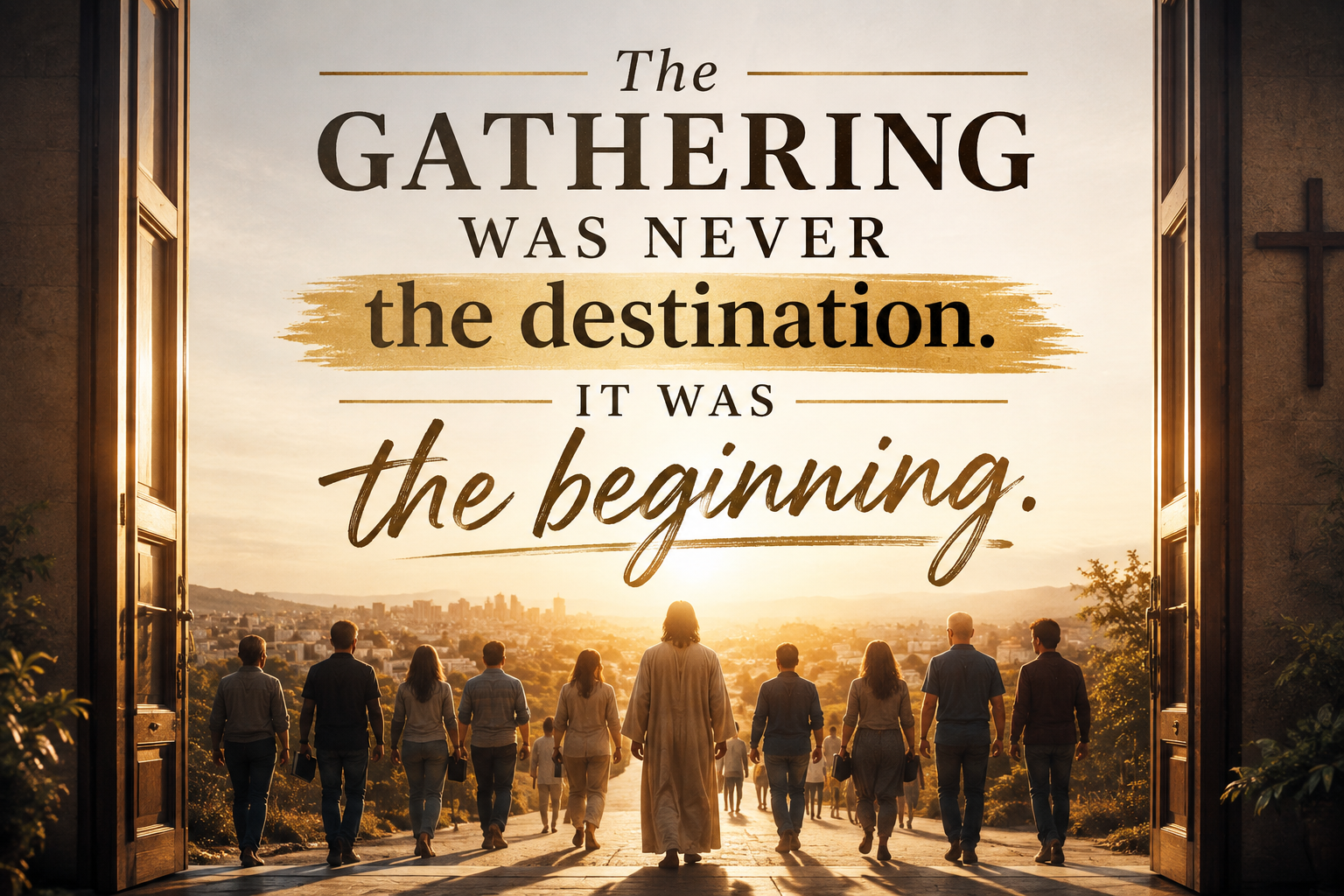
Graphics created in ChatGPT

The Road Less Traveled By: A SOAP Study on John 4

Written 2/15/14; revised 6/1/20

Back when I was a young buck studying the Word, I had a bad habit of downplaying settings. Geography, time, historical backdrops…I figured by skimming the peripherals, I’d discern the passage more quickly without distraction.

However, as I now know, when we consider the Scriptures, we find every word, pronoun, and article carrying strategic purpose and placement.

Take John 4 for instance…

In this chapter, not only do we find Jesus ministering to a woman at a well but [literally] going the extra yard in finding her.

Jesus-Walking-Sand-2

Yet, before the encounter takes place, we’re given important context retroactive to John 3:22-23:

“After this Jesus and his disciples went into the Judean countryside, and he remained there with them and was baptizing. John also was baptizing at Aenon near Salim, because water was plentiful there, and people were coming and being baptized.” 

This in mind, let’s flash-forward to John 4:1-5:

“Now when Jesus learned that the Pharisees had heard that Jesus was making and baptizing more disciples than John (although Jesus himself did not baptize, but only his disciples), he left Judea and departed again for Galilee. And he had to pass through Samaria. So he came to a town of Samaria called Sychar, near the field that Jacob had given to his son Joseph.”

In these two passages, we’re given three regions as backstory to John 4: Judea, Galilee, and Samaria. With Galilee and Samaria, we’re given specifics; with Judea, the reference is less clear. Still, we have enough detail to discern the relationship between the communities.

Note the maps below as they will come in handy in a minute…

This slideshow requires JavaScript.

Going back to v. 2, we find Jesus leaving Judea for Galilee from a somewhat debatable departure point. Assuming Jesus started where John was baptizing, we can deduce Sychar not only as a sensible midpoint but a contrast to how Jews traveled given the cultural climate between them and the Samaritans (see black/white graphic above). While traveling through Sychar made sense in terms of mileage, it’s only fair to wonder:

Why Jesus did go there in the first place?

To answer this, we’ll need to examine two more components…

  1. Relational dynamics

  2. The timeline

Relational Dynamics: Back in Jesus’ time,  it was culturally unacceptable for a Jew to enter a Samaritan town. As we see in the Good Samaritan parable, Samaritans were widely considered half-breeds (half-Gentile, half-Jew). If a Jew was departing Jerusalem on route to Galilee, he likely would have traveled east of the Jordan to avert Samaria (a difference of a marathon give or take); however, in Jesus’ case, he took the road less traveled by for two reasons:

1) To shatter the mold of social norms through his message of unity.

2) To share the Good News and preview the Spirit as part of an emerging worship culture (more on this in a future post).

The Timeline: Additionally, we must consider the timing of this passage as v. 6 indicates:

 “Jacob’s well was there; so Jesus, wearied as he was from his journey, was sitting beside the well. It was about the sixth hour.”

Again, it’s worth wondering why John would emphasize a topical detail like the “sixth hour”. At first glance, one would think the “sixth hour” to be 6:00 am; however, according to the Jewish clock, the “sixth hour” would have, in fact, been 12:00 pm. Like the location, the ramifications of this observation is significant. If Jesus arrived at noon, then he would have appeared during ‘peak heat’ – a time when many were indoors. With well activity peaking during dawn hours, had Jesus wanted to preach, he would have needed to arrive in the morning or evening. Accordingly, one must wonder: Did Jesus arrive at random or did he time his journey to Sychar? 

In short, ‘yes’, Jesus had every intention of meeting the woman exactly when he did; however, the longer answer integrates the ‘why‘, specifically why Jesus came to inspire this particular woman at this particular time in light of her history (v. 16-19).

Based on these verses, I submit the ‘why‘ is as follows…

Jesus came to change a woman’s life through the revelation of his divinity so she could inspire a town through the revelation of his compassion.

As the Spoken Word attests, Christ so loved this woman at the well, he couldn’t help but transform her from an ostracized outcast to a victorious vessel. From the very beginning, this woman had been tapped to speak life into a cultural revolution. And now here she was – once an adulteress, now a mouthpiece with testimony and a message to share. If that’s not the Kingdom, I don’t know what is.

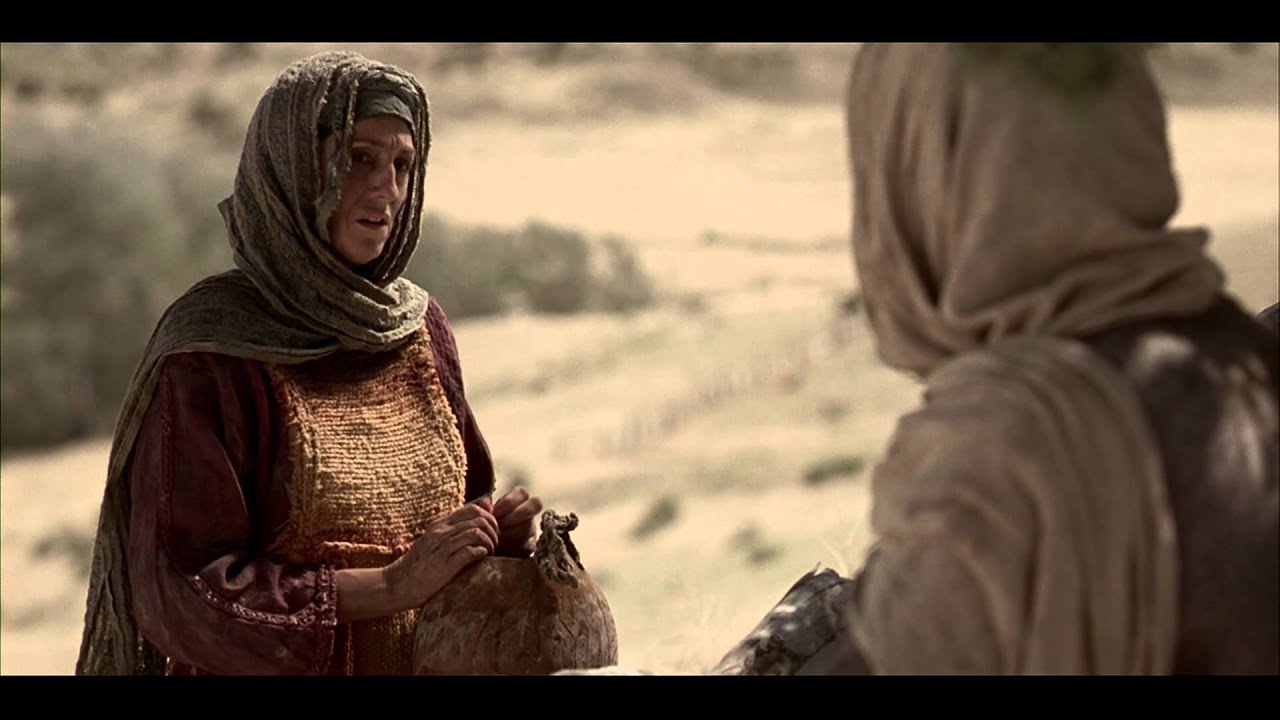
maxresdefault

Bottom line 1: When we consider Christ’s intentionality, his strategy to free this woman from bondage and ignite her hope through his identity, how can we not get excited? Like Jesus, we should want to restore life amidst the broken hearts and dreams we encounter. We should want to ignite change in those who doubt their worth. But above all, we should want to accept the call to lead others to a greater understanding of who God is. Because at the end of the day, God’s love is contagious and captures why we’re here: To encourage the discouraged, to be salt and light, to be unity in community, and stir love as the root of faith.

As the story concludes, the woman accepts Christ, his prophetic declaration (v. 21-24), and fearlessly saves many Samaritans as a result:

“Many Samaritans from that town believed in him because of the woman’s testimony, ‘He told me all that I ever did.’ So when the Samaritans came to him, they asked him to stay with them, and he stayed there two days. And many more believed because of his word. They said to the woman, ‘It is no longer because of what you said that we believe, for we have heard for ourselves, and we know that this is indeed the Savior of the world.‘ After the two days he departed for Galilee.” ~ John 4:39-43 (ESV)

Not bad for an ex-social leper who wasted years trying to find her identity in relationships and social status.

Bottom line 2: Scenic and demographic details are valuable in studying the ministry of Christ. As this chapter reminds us, God can use the lowliest of men to sow the highest good for His glory and in bringing communities closer to Jesus. As for being that catalyst of change in your arenas of influence/expertise, dare to seek God like no one else so you can live intentionally like no one else. By believing God has established your steps, you can trust him to help you get to where you need to be even if it’s mean a few extra minutes or miles along the way.

Selah.

Looking ahead, I will look to build upon this post by examining the worship culture aspect of John 4. I’ll also break down what the ‘radical middle’ (i.e. living in Spirit and in Truth) looks like as present-day Kingdom agents in the marketplace.

‘Til then, you got this.

~ Cameron

Cover photo creds: Million-Wallspaper.com


Work as Worship: Our Story for God’s Glory

Work and worship.

Two words with great power, but for some reason are hardly used in the same sentence.

Of course, we all know what they mean.

With work, you have what you put your hands to, your vocation, where skill meets a living; with worship, you have what (or rather whom) you lift your hands to, the reason for vocation, where purpose meets living.

However, if you think these terms are easily compartmentalized, I get it. After all, as long as the church teaches the principles behind them, we should automatically know how they apply in each setting of life, right? (*Sarcasm*)

Whatever the case, when we talk about how work works as worship, when we consider the origin of work and its modern-day application, there’s fresh freedom and joy to be found.

So for today, I want to discuss what it means to be a worship-thinker as opposed to a work-thinker – what working to the fullest looks like when function becomes a part of our daily abiding in Christ.

For instance…

  • Do we treat work as a source of identity?
  • Do we treat work as a tool of personal fulfillment?
  • Do we treat work as a necessary evil in order to get a paycheck or other “benefits”?

If ‘yes’, then chances are our work has become a place of pressure, performance-based thinking or worse…a means to an end1.

Accordingly, we must ask ourselves:  How then do we treat work if we’re to elevate it as a selfless sacrifice of praise?

For starters, it doesn’t hurt to bridge work and worship with ‘mission’…

…however, to truly answer this, we must flash back to the Garden of Eden as captured in Genesis 2:15-20…

“The Lord God took the man and put him in the Garden of Eden to work it and keep it. And the Lord God commanded the man, saying, “You may surely eat of every tree of the garden, but of the tree of the knowledge of good and evil you shall not eat, for in the day that you eat of it you shall surely die. The Lord God said, “It is not good for the man to be alone. I will make a helper suitable for him.” Now the Lord God had formed out of the ground all the wild animals and all the birds in the sky. He brought them to the man to see what he would name them; and whatever the man called each living creature, that was its name. So the man gave names to all the livestock, the birds in the sky and all the wild animals.”

First off, before we discuss Adam’s work, note how God gave Adam a task before sin entered the world. This has huge implications as to how we’re to understand work. Often times, we see our job as a consequence or choice rather than a gift. We think what we do is a product of what we have done good or bad. But from the very beginning, we find God designating responsibility in the form of delegated authority. Specifically, God entrusted Adam to be an extension of His hand in cultivating the greatest garden ever and be an extension of voice in naming what He’d already cultivated!

35l3na.jpg

Going back to the garden timeline, it’s interesting to see how God appointed man a task, but didn’t define it right away. While God would ultimately bring the animals to Adam2 (v. 19), He knew before this could happen, parameters were required to ensure intimacy and authority had boundaries to flourish.

Similarly, God also knew before He could delegate a particular assignment to Adam, he needed to not only learn dependence on Him in and out of work, but also his identity detached from the helper (Eve) who was to come. Again, this narrative order carries powerful implication given it underscores God’s desire for us to learn spiritual reliance without assurance of task and/or relational affirmation. Yes, God intended a helpmate for Adam before he was created, but more importantly, God intended Adam to learn his identity (and purpose as overflow) before work or wife existed.

Thus, the existence of work evidenced by the Garden is proof God desires to establish intimacy with us outside of work so he can build upon that intimacy as we work.

Not to mention it also confirms…

  1. Work plays a certain role in how we interact with God.

  2. The only way to understand the purpose of work, enjoy our work and the fruit of our labor is by also enjoying God as we work (Psalm 16:11).

  3. For Adam, tending the garden wasn’t his purpose; worship was his purpose.

  4. Accordingly, we can perceive our work has both a necessity and an overflow.

With Genesis 2 set as our backdrop, let’s look at Colossians 3:12-17, 23-24…

“Put on then, as God’s chosen ones, holy and beloved, compassionate hearts, kindness, humility, meekness, and patience, bearing with one another and, if one has a complaint against another, forgiving each other; as the Lord has forgiven you, so you also must forgive. And above all these put on love, which binds everything together in perfect harmony. And let the peace of Christ rule in your hearts, to which indeed you were called in one body. And be thankful. Let the word of Christ dwell in you richly, teaching and admonishing one another in all wisdom, singing psalms and hymns and spiritual songs, with thankfulness in your hearts to God. And whatever you do, in word or deed, do everything in the name of the Lord Jesus, giving thanks to God the Father through him. Whatever you do, work heartily, as for the Lord and not for men, knowing that from the Lord you will receive the inheritance as your reward. You are serving the Lord Christ.”

In this passage, Paul captures ‘work as worship’ once it’s an overflow locked in rhythm. Combined with Genesis, an applicative breakdown of these verses reveals the following benefits (Note: Due to word count, we’ll wrap things up after this list):

Being a ‘worship thinker’…

  • Frees you to enjoy the moment of the work
  • Provides a sense of closure at every juncture of every task even if the project as a whole is not done!
  • Frees you from becoming unnecessarily offended at other teammates since punctuality or accuracy isn’t your first priority
  • Frees you to be honest without agenda/unbiased with your teammates because you know that how you handle yourself is a ‘fragrant offering’ of worship to God
  • Motivates you to work over longer periods because you are no longer experiencing emotional drains that come from the…
    • Fear that your voice won’t be heard
    • Fear that another’s performance will jeopardize project completion
    • Fear of failure, since your definition of success has changed
  • Motivates you to give God your best and embrace accountability
  • Helps you be more open to input/critique from team-members and supervisors
  • Reminds you the work is not your identity, but working unto the Lord is
  • Helps you to see work experiences as learning opportunities
  • Minimizes anxiety during a project/carrying out his responsibilities because you can better compartmentalize (i.e. prioritize at each juncture) the job
  • Minimizes fear on what your boss can do to you
  • Empowers us to not be controlled by the attitudes/behaviors of our co-workers
  • Helps you see business culture as more freeing when bottom lines go beyond profit or position
  • Refreshes the way you perceive success in your organization
  • Protects you from deriving identity from profits and/or positions
  • Protects you from taking on damaging behaviors like over-control and over-accommodation (people or employee-pleasing)
  • Allows you to be more patient in your work because each work moment is treated as a worship moment

giphy.gif

Bottom line: When we see work as an overflow of worship, we find intimacy at the core of success: Bringing pleasure to God through the gifts He’s given us so we can make His name known to the world.

Selah.

Footnotes

  1. Or rather, a means as opposed to an end
  2. Note: The fact God brings the animals to Adam is significant as it emphasizes God’s sovereignty to reveal how our calling merges with our purpose (more on this in a future post)
Cover photo creds: Abstract Wallpapers; Col. 3 content collaborated on with Steve Fry as part of our ‘Commission U’ series at The Gate Community Church


Nothin’ ‘Bout The Blood

So last week I’m on a Messenger Zoom call discussing Triune worldviews when a chilling question is raised:

Are we, as rising, maturing believers valuing the blood1 and living in light of that ‘precious flow [making us] white as snow’?

Certainly, it’s easy to think we are given Christ’s death and resurrection is the cornerstone of Christianity.

But what if I told you to the extent we detach God’s communal nature as a foundation of love from our corporate theological foundation, to that extent we reduce the blood as nothing more than a sacrament. Would you agree?

If not, permit me to connect some dots after laying some groundwork…

1. To construct a worldview from the core of God’s nature, we must accept the fact God is a Communion of Three Persons in perfect love.

2. From there, we can establish and grow Biblical community in the same way God does His work: by multiplying what He is as a communion of love.

3. Only then can we value the Gospel and consequentially, understand the destructiveness of sin.

Unfortunately, as we progress in this post-Millennial age, the more young believers are distancing themselves from the saviorhood of Jesus2. As a former student pastor, I can attest to this. For many youth, believing the universal lordship of Jesus having once saved is far less challenging than accepting their current need for a sovereign Redeemer who continues to save.

Granted, our culture’s emphasis of reason over revelation and self-autonomy allots sense to the trend. That said, one must wonder how a world system based on deficiency is affecting the church’s thirst for relevancy.

Take ‘mission’ for example. For most, mission is seen as a journey, an assignment or a means to an end; however, when we note the Godhead, we find ‘mission’ to be an overflow of an established nature.

You see, before love could be extended, there had to be an identity with the ability to love; hence, why so many feel the weight of performance given they’re trying to abide in love not knowing who they really are and as such, forget the key to anything starts and ends with being loved by God.

The question is…

Are we abiding in love…or are we searching in love to find ourselves? Are we trusting God to fill our needs or filling our needs to trust in God? Are we forgiving having received grace or seeking grace in order to forgive?

Either way, it’s worth reminding ourselves…

  1. There’s no depravity God can’t redeem.
  2. Abiding in who we are in Christ is the blueprint to Holy Spirit dependence.
  3. The bedrock of truth, especially as revealed in revelation, is cemented when we allow God to reveal Himself in all circumstances.

giphy-1.gif

As for the blood’s depreciation among ‘next gen’ believers, it’s important we, as the body, perceive the issue as a conflict between identity and performance. For as long as Western individualism exists, so will the temptation to approach mission as drive, fellowship as metric, sin as shame…and thus, the blood as obsolete.

Yet, when we remember we were bought with a price (1 Corinthians 6:20), when we accept Christ’s atonement as the security of our freedom, only then will we understand the blood’s purpose in all things.

For instance…

The blood is central to our community:

“Take care and be on guard for yourselves and for the whole flock over which the Holy Spirit has appointed you as overseers, to shepherd (tend, feed, guide) the church of God which He bought with His own blood.” ~ Acts 20:28 (AMP)

The blood is central to reconciliation:

“…and through [the intervention of] the Son to reconcile all things to Himself, making peace through the blood of His cross; through Him, [I say,] whether things on earth or things in heaven.” ~ Colossians 1:20 (AMP)

The blood is central to redemption:

“In Him we have redemption [that is, our deliverance and salvation] through His blood, [which paid the penalty for our sin and resulted in] the forgiveness and complete pardon of our sin, in accordance with the riches of His grace.” ~ Ephesians 1:7 (AMP)

The blood is central to cleansing:

“But when Christ appeared as a High Priest of the good things to come…He went once for all into the Holy Place [the Holy of Holies of heaven, into the presence of God], not through the blood of goats and calves, but through His own blood, having obtained and secured eternal redemption. For if the sprinkling of defiled persons with the blood of goats and bulls and the ashes of a heifer is sufficient for the cleansing of the body, how much more will the blood of Christ, who through the eternal [Holy] Spirit willingly offered Himself unblemished  to God, cleanse your conscience from dead works and lifeless observances to serve the ever living God?”~ Hebrews 9:11-14 (AMP)

“Let us approach [God] with a true and sincere heart in unqualified assurance of faith, having had our hearts sprinkled clean from an evil conscience and our bodies washed with pure water.” ~ Hebrews 10:22 (AMP)

Get the picture?

My final thoughts are:

1. To minimize the blood is to minimize our freedom in Christ as it stresses our fear of deficiency over God’s sufficiency (2 Corinthians 12:9).

2. Instead of wanting to be relevant, why make the Good News3 prevalent? After all, the presence of goodwill4 is a testament to the Good News of the Gospel – the fact Jesus continues to heal the oppressed and set captives free having reconciled us to God through…(wait for it)… His shed blood.

3. Accordingly, by downplaying Christ’s sacrifice, we risk performance systems bridging the gap not only between identity and sin, but also church and mission (more on this in a future post).

I don’t know about you, but give me Jesus and the power of the cross as the divide between those medians.

giphy.gif

Looking ahead, stay tuned for a sequel post where I’ll dive into more detail on how we can better educate young people on how to live in God’s present ministry of reconciliation5.

‘Til then, peace be the journey…

~ Cameron

Selah.

Footnotes

  1. Of Jesus
  2. This coming an observation from multiple pastoral colleagues across the country
  3. Which can’t be separated from Christ’s ultimate sacrifice
  4. And our call to extend it
  5. An active reality, not a past occurrence
Cover photo creds: Mudpreacher.org