
Bready or Not: A SOAP Bible Study on Matthew 15:21-28

Note: A more detailed analysis of this passage will be included in the Juby Journey book I’m working on. For now, I’m converting preliminary thoughts into the SOAP Bible study below to archive insight and encourage the saints in the short term.

As one dealing with grief, who went through the ringer last year while Juby was alive, I can’t help but resonate with this passage. Like the protagonist, Lys and I can relate to an afflicted daughter and the desperation for her deliverance. Granted, Juby was not demon-possessed but stricken with chronic lung disease. Still, as we cried out for Jesus, hopefully not to the chagrin of others, we discovered a posture far greater than a spiritual bookmark but of a daily exercise with reproducible influence.

Accordingly, without further ado, I’d like to unpack the remarkable faith of the Syrophoenician woman and how her hope can be a blueprint for those seeking restoration.

Scripture: Matthew 15:21-28

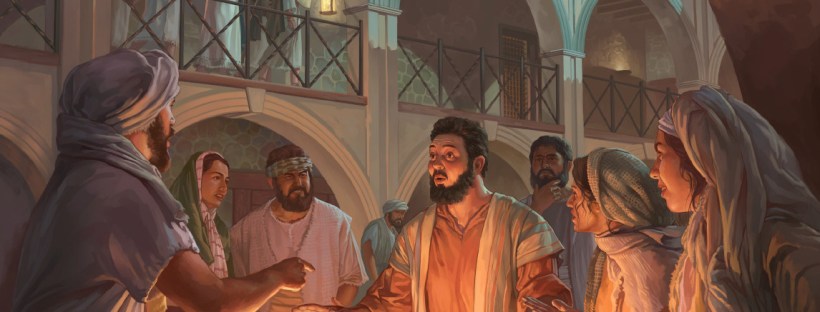
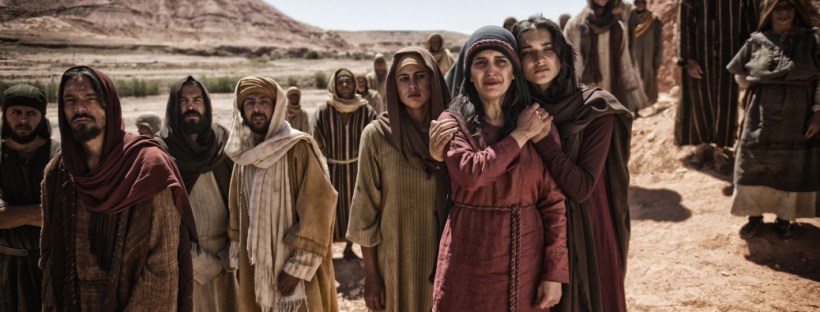
And Jesus went away from there and withdrew to the district of Tyre and Sidon. And behold, a Canaanite woman from that region came out and was crying, ‘Have mercy on me, O Lord, Son of David; my daughter is severely oppressed by a demon.’ But he did not answer her a word. And his disciples came and begged him, saying, ‘Send her away, for she is crying out after us.’ He answered, ‘I was sent only to the lost sheep of the house of Israel.’ But she came and knelt before him, saying, ‘Lord, help me.’ And he answered, ‘It is not right to take the children’s bread and throw it to the dogs.” She said, ‘Yes, Lord, yet even the dogs eat the crumbs that fall from their masters’ table.’ Then Jesus answered her, “O woman, great is your faith! Be it done for you as you desire.’ And her daughter was healed instantly.

Observations

1. Before we can dive into the dialogue, we must first assess the setting. While time and place may seem arbitrary, in this case, they carry notable purpose. With the end in sight, Jesus withdrew with the disciples outside Jewish territory to prepare them for the Cross to come. His days numbered, Jesus realized some final exposures and tune-ups were necessary to groom them for life in ministry without His physical presence. As such, the fact He retreated to the hostile confines of Tyre and Sidon should not be perceived as random as Jesus desired to foreshadow the Gospel going out to all peoples. How amazing it is to know Jesus, even in His last days, never stopped breaking down barriers through radical love.

2. Fast-forward to the woman’s cameo, it’s interesting to note what she requests right out of the gate. Instead of healing or intervention, she addresses Jesus as ‘Son of David’ and calls for mercy, instantly acknowledging the Master’s identity, authority, and sovereignty in one swoop (v. 22). While intellectual origins are unknown, somehow, someway, she understood who Jesus was much to the surprise of the cohort. Per the importance of this sequence, we’ll break this down as we go.

3. I also find Jesus’ response to be somewhat peculiar: “But he did not answer her a word” (v. 23). This, to me, is a critical point to examine and requires us to broaden out to consider the context. Again, this will be explored in the points below.

4. Starting with the woman’s location and situation, we find her labeled as an unclean outsider despite her Canaanite designation and erroneously judged for her non-Israelite daughter’s condition. In terms of geography and timeline, we aren’t informed of any prior wonders performed in Tyre and Sidon prior to this passage. This adds a curious wrinkle to the story as one must wonder how a woman of this stature and status could recognize Jesus as the Messiah.

5. Going back to Jesus’ response, we find multiple motives. For the disciples citing the woman as a distraction, Jesus addresses their bias prior to answering her cry (v. 24):

“I was sent only to the lost sheep of the house of Israel.”

The reason behind this is at least twofold: On one hand, Jesus wanted to remind the disciples who He was in light of what He came to do as clearly, a portion of the twelve were still pigeon-holing His kingship. On the other hand, Jesus’ intended His initial silence to be an opportunity for the woman to show patience…and resilience. From ‘have mercy’ to ‘help me’ in consecutive pleas (v. 25), the woman wasn’t just conveying poetic symmetry but reiterating Jesus’ mission. Already she had correctly identified Jesus as the Son of God (a full two chapters prior to Peter’s declaration in 16:16); now, she was begging Jesus to be consistent to her…

…what you do to Israel, please, Lord, do to me and my household as well.

6. In addition to the woman’s opening inquiry, I’m captivated by her posture. Even if she just said, ‘Son of David, please help me. My daughter is possessed’, Jesus would have recognized the woman’s understanding of His lordship through her positioning. While the woman’s kneel wasn’t evident during her first appeal, the fact Jesus gave the woman more time, in part, to let her go deeper in referencing Him was not part of instinctual circumstance. Rather, it was an intentional maneuver for her to anchor her surrender and confirm her awareness in front of a freshly humbled core of disciples.

7. The exchange between Jesus and the woman immediately following is arguably one of the most profound moments during His ministry. Up to this point, Jesus hasn’t said a word. Now ready, we again see the silence’s effect per His decision to test the depth and sincerity of her invitation. With the woman’s hopelessness on a timer, He uses the woman’s location and sense of identity as a means to assess her heart:

“It is not right to take the children’s bread and throw it to the dogs” (v. 26)

Here, Jesus elects to use ‘dog’ knowing the term was derogatory as a Gentile reference. To be a dog in Israel was to be regarded as a dirty, street scavenger; however, Jesus doesn’t associate the term to her poverty as much as her perceived sense of spiritual destitution. At the time, the rift between Jew and Gentile (between ‘clean’ and ‘unclean’) was still strong but, in a preview, we find a woman authenticating her hope while also foreshadowing the expiration of Gentile believers’ spiritual homelessness.

In the woman’s reply, “Yes, Lord; but even the pet dogs eat the crumbs that fall from their [young] masters’ table” (v. 27), we not only find confidence beyond imminent healing but in the salvation of her people. While the woman’s yieldedness was key as a demonstration of submission, Jesus knew this wasn’t simply a self-centered strategy to obtain instant results.

8. Finally, per the prior point, the significance of ‘crumb’ cannot be understated. For a “lost sheep of Israel” (v. 24) to be so hungry for Jesus that even a mere morsel would tell us the woman saw her situation as secondary to the power and presence of God. In essence, she accepts the status of a family’s dog knowing just a crumb of Jesus would be powerful enough to defeat the demon oppressing her daughter. No question, the woman had her priorities and perspectives set straight, almost as if she had anticipated the moment in advance.

Application 

Despite its short duration, the passage carries immense application and universal relatability potential. Regardless of our situations, we can all identify and empathize with the Syrophoenician woman if not at least through her adamant clinging to hope in a bleak situation. Even when we’re struggling with our identity, a love deficit, and/or challenges outside our control, even when we feel stuck in a dark place, we can approach God in humility with thanksgiving acknowledging who He is and what He can do.

For some of you, you may have a loved one, a son or daughter, burdened by a disease or satanic assignment. You may feel the target on your back and paralyzed to shake it off. If this is you, don’t work to faith and prayer; start with faith and prayer. To the Lord of grace, ask for mercy and request His appointed portion of providence. If you’re lost, don’t deny the position but receive yourself as one worth saving. Like the woman, you may be deeply conscious of the misery of the soul, but this doesn’t disqualify you from bread of life crumbs.

For others, you may not have a grim circumstance on the board, but you may be thirsty to anticipate the proximity and power of God. While we don’t know exactly how the woman learned of Jesus before His arrival, we know she put herself in position to receive Him following His arrival. Like her, you don’t have to limit your bended knee to the moment. Rather you can extend it as a general posture wherever you go. Ask yourself, ‘Do I want more of Jesus? Do I want a fresh touch of Him today?’ If the answer is ‘yes’, know whatever He decides to give is more than enough even if what He offers is partly an invitation to go deeper.

Either way, dare to believe good things will happen when you seek Jesus and ask of God according to His will.

Prayer

Heavenly Father, we come before you today as we are. Heavy laden with our fears, anxieties, and insecurities, we lay them down in anticipation of what you’re going to do. We may feel “dogged” by life, by consequences of past decisions, by unforeseen trials and happenstances. But like Mary, we choose you ahead of any other commitment and priority in our life right now. We thank you for going before us but recognize your faithfulness before us now. For those who are hungry for you, we ask you provide something afresh to they may taste and see a new facet of your goodness. For those who don’t realize they’re hungry, guide and position them to discover the bread of life you carry. Stir in all of us an awakened passion to the wonder of you and help us to see even what we can’t control as opportunities for sharpening, pruning, and maturing. Whether or not we’re personally afflicted, we pray you prepare our hearts for inevitable testings to come and remember those who are going through tragedy, who are journeying through grief. Tend their hearts and make us sensitive to our part in nourishing them just as you are intentional in nourishing us. Whatever piece you intend to give, we receive it with praise on our lips and gratitude in our hearts. In Jesus’ precious and holy name…

Graphic creds: EnduringWord; Mr. Muncle

Fragile Rock: The Denial & Restoration of Peter

Inspired by Matthew 26:31-35, Matthew 26:69-75; Luke 22:31-34...

Imagine being Peter.

The most on-the-sleeve, off-the-cuff disciple. Ahead of his time, ahead of the curve.

You’ve perceived your Master with truth from the Father. Flesh hasn’t revealed it as you have concealed it.

Yet, as you sense His final approach, old habits kick in, you sink past reproach. You want to believe but can’t receive. You want to take part but can’t depart…this idea of loss. How can you take heart?

Though loyal to faults, you are rash in your state. A love for God’s Son meets enemy’s bait.

  • So you ‘buse your devotion pledging death prematurely.
  • You say you won’t stumble though records say contrary.
  • And abuse the blade though you once heard so clearly…I’ve not come to bring peace but a sword.

Stubborn as always, you’re one step behind now, a faith not yet ripe but not far from fruit. Your prayers lack direction though brim with affection. You want to be ready but still lack the steady. Whatever, you’re still holding on.

Imagine being Peter.

Called out by Jesus after vowing your allegiance. Exposed as a shape-shifter, weak as wheat, a coward. You think you are tested but the real test awaits.

While there’s no way to scale the weight of the moment, that bittersweet sting still rings in your ear.

For before He said, ‘Peter, the rooster will crow...’ (v. 34), He said, ‘But I’ve prayed for your faith to still grow‘ (v. 32). And not fail in turn amidst the great smothers. In time you will turn and strengthen your brothers.

And so you proceed to keep tracking and cracking. Heck, you tread water, but still much is lacking. Always bold, always proud, with cling lost in the shroud. Again, that is you, who you will be and then some. After all, who could fathom the darkness to come?

Whatever, you got this. no innocence to preserve. You’ll keep following the Master to whom you still serve. Your forward march, a prophecy unfolding in face, one woman, two men confirming disgrace.

You hear the crow and now you know. Jesus was right; there’s no need to fight.

And so, you’re still holding on.

Imagine being Peter.

Even before the Cross, Jesus was bearing your shame. Why else would He preview your restoration pre-sin? Your call to help others with grief still within?

I tell you why: ‘Cause He knows and He gets you! Your passion’s now fearless, a part of what’s new. Not to mention a prompt to process ahead and heal in front of the others in stead.

Or perhaps I should say it this way: Days from now, when most are still down, you’ll be on the rise with Him, back in stride with Him. From whom are still scattered with tears still bitter, your calling is now, your emotions are fitter. Once slow to conceive it, now quick to receive it. Your chance to eat crow, to make fishers soon after, will sharpen the sheep you tend well thereafter.

Fallen down once, your faith has not failed. ‘Tis why Jesus took it with hands and feet nailed.

Selah.

Cover photo creds: Redeeming God

Job Security: A SOAP Study on Job 23

Since August 2021 (I.e. Juby’s birth month), reading the Bible has been, eh, rather hit and miss.

Take 550 days and probably 500 of them, I could have gone deeper but didn’t on account of feeling too stunned, silent or somewhat afraid of the idea God may not be near when I want Him to be.

Granted, this is a loaded sentiment and not the reason I’m writing this though the choice of intimacy is a category worth unpacking later on. For now, I want to take a SOAP Bible study approach to Job 23 where we find a defeated yet inquisitive protagonist doing what all of us should do when we’re going through hell or hard times in general…talking to/wrestling with God!

Reading this passage afresh and anew, I love how Job pairs his rawness with pure vulnerability. Starting in v. 2, Job calls his shot as a bitter vent only to disclose its motivation in the following lines:

Oh, that I knew where I might find him, that I might come even to his seat!” (v. 3)

I would know what he would answer me and understand what he would say to me.” (v. 5)

But then in v. 8, we see the insecurity, all too relatable but perfectly justifiable: “Behold, I go forward, but he is not there, and backward, but I do not perceive him.”

Per my hesitation to press into divine, I find this transparency encouraging as in banner-like fashion, Job captures an all too familiar fear…

What if everything I’ve thought of you, hoped you would be isn’t there in times I need you the most? You are God! So by default, your nature cannot be conditional. You are unchanging (v. 13). You are just! So by virtue, you will cover me, help me…do something…right? Right !?!

Fast-forward down to v. 15-16 and we see another facet of Job’s skepticism:

Therefore I am terrified at his presence; when I consider, I am in dread of him. God has made my heart faint; the Almighty has terrified me.”

So clearly, Job isn’t just scared of the prospect of God’s abandonment but God Himself! To me, this gives insight not only to the weight of Job’s despair but also to how Satan might sow seeds of distrust within the weary heart. I can only imagine Job’s inner voice desperately fighting off the daggers: I mean…He’s God. He can choose to do whatever He wants including not being true to me. I’ve been loyal but He’s not obligated to reciprocate.

See the danger here in how we can make God out to be a liar when we’re overwhelmed and bombarded? Or even worse, to make Him into a relative, subjective orphan-generating God whose love actually has a reach?

Oh, that we all may find that inner Job in us who though weak, walks in the meek…and is not so easily discouraged by the absence of goodness in the moment but stays hungry through healthy inquisition…

You are all I have, Lord God…so I will cling to my all. True, I may groan and shudder…but I will do those things in Your direction knowing at the very least, the present void is no match for a sovereign God trying me so I will come out as gold (v. 13).

Feel what you may, labor are you will…He will complete what He has appointed for you as many such things are in His mind.

And that is a bottom line for tonight, my friends: Be free to be still but don’t be silent in your darkness. Who knows? God may actually give you words so that you can argue with Him! All for the grand purpose of drawing near to His heart and knowing without a shadow of a doubt, everything will be okay.

And we get there…some way, somehow…together.

Selah.

Cover photo creds: TheNIVBible

Even Now I Know: The Maturation of Martha

Five weeks in, it’s hard to believe we’re almost a quarter into the 21st century. Goodness, where does the time go?

Steadfastness perhaps? Fresh rhythms associated to the pursuit of happiness and meaning? A deep burn for growth, change, and momentum?

Whatever the case, no one is immune to these drives even if our gears are stuck in idle, or worse, broken entirely. I guess for me, I’m still trying to figure out what God has in store this year, not just for me and my family, but for the body at large.

Granted, I can speak to local developments as by now, you probably know Lys and I are expecting again. May the record forever show this new life is the quintessential divine surprise if at the least on account of shattered probability and intended outcome. Praise God He establishes our steps no matter how we chart our course, but dear Lord, please for the love of you, protect this life and keep our family safe in your arms.

As for recent revelations, they are trickling in. Some book fodder, others not so much. One idea for thought, and this may end up in our Juby Journey book to come, is the character arch of Martha as culminated in the death of Lazarus.

Now, I’m sure many of you have some recollection of Mary and Martha especially during their first encounter with Jesus (Luke 10:38-42), how Mary submitted herself like a rabbinic disciple, how Martha lost sight of her priorities as she elevated hospitality over host, etc.

And before I forget to say it, oh, how I can relate to Martha in this passage! Ask anyone who knows me and they’ll tell you I’m the kind of person who would want to eliminate distractions (and the potential variety) before the main event. Honestly, I get what Martha was doing. She just lost sight of what mattered…in the presence of Jesus. In the construct of contrast, Mary not only resonated with Christ’s desire for her to receive first, serve second but swiftly adapted to a reversal of cultural norm. Martha, still conditioned by peer expectations and her spiritual giftings, had a picture of the end game, as if she was working towards a postcard moment; however, Mary continually listened in profound posture. To her, Jesus was the distraction, the ultimate deep dish being served to her for such a time as this. By scene’s end, the opportunity for constructive criticism would take form.

Now, was the time for Martha to listen and receive her portion!

Fast-forward to John 11 and we see progression of Martha’s faith on display immediately after Lazarus passes away.

Starting in v. 20, we note Martha, not Mary, was the first to greet him. Though the rationale behind Mary’s stillness is debatable, what’s clear is Martha, in the midst of tremendous heartbreak, did not let her grief stop her from anticipating Jesus. In fact, in a way, you could say Martha pursued Jesus with trust dripping off the tongue.

“Lord, if You had been here, my brother would not have died. Even now I know that whatever You ask of God, God will give to You.”

Again, for all you Juby fans, these two sentences…they are worth a separate ‘selah’ and I promise you this will be expounded upon. For now, I can’t help but appreciate Martha’s maturation as revealed through her response to conviction. Even in a life versus death situation, Martha knew it wasn’t about an outcome but who God was and what He could do. What Martha missed in the small, she nailed in the big, not to mention she set Jesus up for one of his most memorable lines in v. 25:

“I am the Resurrection and the Life. Whoever believes in (adheres to, trusts in, relies on) Me [as Savior] will live even if he dies; and everyone who lives and believes in Me [as Savior] will never die.”

All in all, this was a home-run moment for Martha in the sense she believed in Christ’s identity and purpose even as she wrestled with raw motion. Per v. 27:

“Yes, Lord; I have believed and continue to believe that You are the Christ (the Messiah, the Anointed), the Son of God, He who was [destined and promised] to come into the world [and it is for You that the world has waited].”

And finally, by v. 35, we come full circle. While Martha’s hope in the Son of God was confirmed, her emotion amidst transcending circumstances would help move the Son of Man to tears and even more notably, into a critical point of relatability. Just as you and me mourn, just as you and me process, so too can we identity to Jesus who knows what it’s like to be overcome by the very things He came to liberate us from. For in this world, we will be worried and bothered and anxious about many things but only one thing is necessary…and just like Mary and Martha in their respective victories, we can choose the good part which can never be taken away from us.

Selah.

Cover photo creds: Redeeming God

Dissecting Divorce: 3 Truths on Breaking Covenant

Written

So today…I’m going to tackle a new subject after an impromptu discussion on it Wednesday night during LEGACYouth.

The subject? Divorce.

Duh, duh, duhhh…

Now, before you panic and exit [p]age left, let me offer a few disclaimers:

1) By no means do I consider myself a marriage counseling expert; I’m just a youth pastor who knows what a happy marriage tastes like and what the Word says about it.

2) By no means do I want to come across as insensitive to what some readers may be going through. So please understand it’s my earnest desire to broach this post with utmost humility.

‘Cause truth is: There’s much for me to learn on the matter; however, I hope the little I do know can be effective, insightful and…dare I say enlightening.

With that said, as many of us are aware: divorce is both a relevant and prevalent issue in society today. And as a pastor of students, a quarter of whom are struggling/have struggled with divorce in the family, it’s an especial concern. Yes, I know it can be “taboo” to talk about divorce outside of closed doors (trust me…I balked initially at writing this); then again, I’m not one to feel ashamed of affirming God’s purposes. After all, how can the truth speak if it’s not heard?

Moving on…if someone came up to you and asked why divorce is such an epidemic…what would you say?

  • Financial stress?
  • Unmet expectations?
  • Lost sense of meaning/identity? 

I mean…if you were to start there, I’d certainly see why.

But I guess for me…I’d have to start with man’s dissatisfaction with what God has appointed him (i.e. everything we need for goodness/godliness, which for many of us, includes marriage at some point in our lives)…and his satisfaction in making conditional aspects of God’s nature we’re called to emulate.

To put it simply: I believe we, as a culture, have long lost sight of what covenant is. Even in the church, many have bought into the idea marriage is more about compatibility than companionship. Granted, there’s nothing wrong about compatibility. I just think if we’re quick to [ab]use a perceived lack of it as a means to separate ‘lifetime’ from ‘commitment’, then we’re flirting with unholy prioritization1.

Still, for those who’ve ever waked through marital turbulence, you know the tension is an entirely different animal in it than outside it. Thus, how we cope when the temptation to divorce knocks and how we encourage those holding onto their marriage for dear life are worthy discussions.

But before we dive in, we must first consider what God thinks…which leads me to my first truth:

1God absolutely hates divorce.

Consider Malachi 2:16: “I hate divorce, says the Lord God of Israel.”

Pretty strong language, right? Then again, this makes perfect sense. After all, God is love and by nature contests his antithesis. Whatever the case, whenever we hear ‘God’ and ‘hate’ in the same sentence, it should arrest our attention, especially since fearing God means to love what God loves and hate what God hates.

2) God’s intends our vows to be unbreakable.

Consider Proverbs 20:25:“It is a trap for a man to dedicate something rashly and only later to consider his vows.”

After further review, I think it’s fair to say many of us don’t always weigh the weighty obligations of life before committing to them…and I submit part of the reason is our penchant to sub in our [largely subjective] conviction for God’s [absolute] conviction.

The crux here is: if we know the love/fallenness combo platter is a messy one, why then do we only consider the consecration of our vows after-the-fact when truth isa) God has given us the commitment blueprint outline(i.e. consider your ways first and then hold true to them second) and b)  God’s faithfulness and good intentions never waver. 

Selah.

Note: For some of you reading this, it’s not a matter of not considering your vows first before making them as much as it is you’ve grown numb to the magnitude of them. If that’s the case, then I encourage you: ask the Lord for fresh love for your spouse. Again, since God is love, the receiving is only contingent on your choice to accept it. Even the strongest couples in the world reach points when they must ask God for renewed devotion/passion for each other.

3) Apart from certain exceptions, divorce isn’t an option3.

Consider Matthew 5:32 and Matthew 19:9.

“But I say to you that everyone who divorces his wife, except on the ground of sexual immorality, makes her commit adultery, and whoever marries a divorced woman commits adultery.”

“And I say to you: whoever divorces his wife, except for sexual immorality, and marries another, commits adultery.”

Note how both passages raise up an exception clause (i.e. “marital unfaithfulness”) and subsequently the million-dollar question: Is it okay to divorce under the grounds of sexual immorality? Well, given such sin is an egregious breaking of marital covenant, I’d have to say ‘yes’; however, we must remember…

1) God is a God of grace who makes walking in repentance and restoration possible…

2) In God’s eyes, there’s no such thing as “irreconcilable differences”…

3) A one-time act of sexual immorality versus a pattern of sexual immorality are two [very] different things…

4) In the same way we’re called to be slow to anger, we must be [very] slow to divorce (hence the word “quickly” in Ecclesiastes 4:12). Regardless of the situation, divorce must be seen as a “no resort” before it’s treated as a “last resort”…

5) Achieving reconciliation is only possible if it’s pursued first; if the pursuit is one-sided, pray, seek counsel…and pray some more. Even if you feel alone, don’t ever underestimate the power of prayer…

6) Requesting help isn’t a sign of weakness…

7) As long as two people are married, they’re called to multiple a godly legacy. Sure, it may not be easy, but couples who fight the good fight together in sun and storm not only are more likely to stick together, but are more likely to inspire other couples to do the same.

But Cam, what about couples mired in verbal/physical/child abuse? 

In these situations, I contend some form of separation is often a smart move if one side is unwilling to cooperate; however, if the abuser is willing to receive help, then it’s best both spouses walk in reconciliation hand-in-hand. ‘Cause again, the main objective is finding freedom from sin/strongholds together. Yes, be Spirit-led in setting boundaries and expectations; yes, do what’s best to preserve health and safety. Just remember to do these things a) trusting/relying on God every step of the way and b) resisting the urge to make self-preservation your default response to fear.

Anywho, I could say more, but given I’ve breached the 1,000 word barrier, I’m going to peace out and leave some questions for thought (see below). As always, feel free to comment or shoot a PM my way if any of this hits home. 

‘Til then…have a blessed weekend and I’ll catch ya on the fry…

~ Cameron

Reflection Questions

  • What’s been your experience with divorce?
  • Why do you think so many couples split?
  • How has your concept of covenant changed after reading this?
  • What truths do you abide by when it comes to being faithful in relationships (to friends, spouse, etc.)?What would you say is the best way to save a marriage? What are the absolute ‘musts’ when it comes to reconciliation? 

Footnotes

1) Which in general hurts Christian community in many other ways…more on this in future posts…

2Note: By ‘hold true’, I’m including prayer, verbal/behavioral expressions of commitment, setting goals, choosing joy, and integrating accountability into the mix.
3) i.e. There are no valid grounds for divorce.

Cover image creds: Wallpaper Access