Recently, during a discussion with a local pastor, the following question came up: How would you explain God’s anger and jealousy to a junior higher?
A fair inquiry since teaching these attributes of God’s character can feel like threading a needle at times. Fortunately, there are practical truths and illustrations ministers can use to teach these qualities.
For instance, before tackling God’s wrath and jealousy head on, we must define love and God’s identity as love (1 John 4:8). Once this relationship has been established, a young person will understand not only their ‘loved-and-valued-by-God’ identity, but also how love and wrath are not emotions as much as they are choices!
This in mind, we can…
Emphasize the fact when God gets angry, He gets angry for us, not at us!
Associate free will and eternal separation to God’s respect for human freedom.
Explain anger and jealousy in the context of being the objects of God’s love.
Once the difference between the “self-ed” individual and the “loved” person has been specified, we can start to cover related topics such as…
The connection between freedom and relationships
The connection between freedom and God’s authority
How God’s authority is another word for His love
The danger of independence
The insanity of sin
The importance of the cross
How there can be no love without justice since justice validates love
Furthermore, if we’re to successfully educate students on this subject, we must contract the wrath of God versus the wrath of man.
While man’s wrath is emotional and indefensible, God’s wrath is holy and justifiable.
Often times, when the hearts of men harden, we demand justice as a response to offense; however, when God’s heart hardens, He desires offense to be righted as an overflow of His original design being known. Accordingly, it could be said that within His wrath, He wants us to be free from His wrath!
For those who give glory and honor to ‘other gods’, the Bible says He feels a divine jealousy for them (2 Corinthians 11:2). What is this exactly? For starters, let’s consider the rest of 2 Corinthians 11 and how it breaks down. In summary,
All glory and honor belong to God and God alone.
Although man’s jealousy is often sinful as a function of entitlement, God’s jealousy is upright since it centers on communion with His beloved.
In conclusion, addressing the theme of God’s wrath, especially with students, requires precision and order. In this age, many family and academic structures are broken and lack empathy. As pastors, we must understand enemy ploys as any stake where love and wrath are separated and twisted with the tapestry of performance, reciprocity, and tolerance. While the task may be difficult, the freedom we can facilitate is worth the undertaking. Biblical example: Exodus 11 (Moses & the burning bush – when God says, “Who gave human beings their mouths? Who makes them deaf or mute? Who gives them sight or makes them blind? Is it not I?”
Real-life example: A God who is rightfully angry can be compared to an athletic coach who is leading an underachieving team loaded with potential. A good coach doesn’t get angry at the players for losing the game. Rather he is jealous for them because he knows they are better than the outcome – that their talent level is better than what’s being realized. He doesn’t give up on his players, but instead pushes them harder and keeps working with them on an individual/team basis.
On Monday, I had the privilege of leading devos at Mercy Multiplied’s weekly meeting. Here’s a cut from my share which includes a slice of recent testimony… #lordhavemercy 🦋
…Still, I wonder about those among us, even under our care who are suffering, in full on survival mode. How do we cope as we hope? How do we trust when internally we’re about to bust? How do we endure and suffer the way God intended?
Whatever the answers are, both at the 20,000-foot level and at the surface, the truth is: Suffering is part of our divine call, not just individually but corporately. Often, we take a head-down approach to perseverance. We sense a challenging situation and tackle it through our ‘more than conqueror’ identity. Granted, there is nothing wrong with that in a vacuum; however, the potential problems I see are at least two-fold:
1) In the day-to-day grind, we individualize and compartmentalize our endurance. 2) In the day-to-day chaos, we fail to consider the beauty in our suffering.
The premise of this devo is a charge for us to view perseverance as more than enduring with character but also embracing the beauty in suffering. Are we pausing each day to be still with God, to receive His grace and smiles in the personal and corporate challenges we’re walking in?
I’m reminded of a Point of Grace song from their All the World album. Does anyone remember ‘Heal the Wound’ co-written by Nicole Nordeman? Here is an excerpt from the song:
I have not lived a life that boasts of anything I don’t take pride in what I bring But I’ll build an altar with the rubble that You’ve found me in And every stone will sing of what You can redeem.
Heal the wound but leave the scar A reminder of how merciful You are I am broken, torn apart, take the pieces of this heart And heal the wound but leave the scar.
Don’t let me forget Everything You’ve done for me Don’t let me forget The beauty in the suffering!
This song is music to the ears, inspiration to the heart, and emphasizes certain realities of Scripture.
Jesus, the one we can boast in, has carried our greatest burden (Isaiah 53:3-5) and out of that, still helps us with our sorrows and burdens to this day. Accordingly, we don’t have to strive to ‘make it through’ or ‘get to the other side/the finish line’. We don’t have to carry the burden of making sense of our struggles (as I like to call them – “victories in progress”). Rather, we can lean on Jesus who felt the demands of ministry, who knows what it’s like to feel drained, yet with the joy set before Him, referenced the Father, the ultimate source of His power. Like Him, we’ve been given what we need for goodness and godliness but can still ask for wisdom, help, strength, grace, etc. as paupers in Spirit (Oswald Chambers).
As co-sufferers in Christ (Romans 8:17), we can help others endure through suffering and share with them the comfort we’ve received from God (2 Corinthians 1:3-6) as we bear our own crosses (Matthew 16:24, 1 Peter 2:19-21, Romans 8:16-18). We may feel compromised on account of our weakness, but this can allow the Father’s heart to resonate in realness with people assuming our abiding in Christ is in rhythm.
Difficult circumstances outside of our control can be prompts to remain vertically reliant, to seek first God and His Kingdom. Without adversity, we cannot live as tested, faithful, and dependent vessels. The beauty of suffering is that it gives us the opportunity to become like Jesus, to see our redemption as secure, and our victory as imminent even if the pathway doesn’t make sense, even if the breakthrough and miracles we crave don’t happen the way we anticipated.
Why are these points important? Because they confirm how God works! Specifically, the breakthrough we need, the challenges we endure in Jesus’ name, and the miracles we’re contending for aren’t limited to timely answered prayers (or even answered prayers at all). As Paul writes in his letters, finding freedom isn’t confined to what we get over but what we get through. Put another way, God doesn’t promise us we’ll get over everything, but He does promise we’ll get through anything.
For my wife, Lys, and I, we’ve learned and re-learned this truth many times during our 11-year marriage. Yet, by far, the greatest challenge for us came in August 2021 when our daughter, Jubilee, was diagnosed with intrauterine growth restriction four months ahead of her due date. While Lys and I did everything we could to stay healthy, the combination of Juju’s growth environment and Lys’ preeclampsia proved too much. Only 18 days post-diagnosis, our small Fry would make her worldly debut as a micro preemie coming in at 25 weeks, 10 inches, 1.2 pounds, chronic-lung disease, pulmonary hypertension, less than a <10% of living past day 1, and less than 5% of making it past the first week.
Thankfully, God had other plans and proved Himself mighty as we clung to hope at the end of our rope. While our prayers for Juju to survive the NICU and make it home did not materialize, as our hearts healed, we learned to see her miracle as the impact she made on the thousands of lives, including us, shattering medical expectations and probabilities along the way.
In hindsight, Lys and I know the miracle of Juju’s life would have still been clinched even if she hadn’t lived past the first day. For even as we contended with God in our pain and despair, He was faithful to enlarge our capacity to sense His sovereignty and the sweetness of His nearness, His tender hand holding ours.
Now, were we beyond angry and tempted to fold on certain days? Absolutely! I remember in the weeks following Juju’s death, wrestling intensely with God, asking Him why He would let her overcome her greatest afflictions only to succumb to a freak bout of sepsis. God, why wouldn’t you keep the miracle going having sustained it this long?
Having successfully stiff-armed the why’s (I.e. those subtle entitlements that tempt you to think you must have it all together or understand why you’re going through what you’re going through), throughout Juju’s life, I couldn’t help but be overwhelmed by them in the aftermath. The mental torment was off the charts and on the precipice of depression, I was in desperate need of a spark heading into the last quarter of 2022.
That spark would manifest as a dream right before Juju’s Celebration of Life. In the dream, I’m thrust back in time storybook style. A dusty road, a mass of people, and one Jesus walking in front of me. In a unique role reversal, I’m the woman with the bleeding problem trying to keep pace with Jesus yet unable to do so. Desperate to touch Jesus’ robe, I cry out: ‘Jesus, can you please slow down? I’m trying to get to you. If I can just touch a piece of your robe, I know you can heal Juju!’
Suddenly, I’m on my knees with a warm hand on my shoulder. I can’t make out the face in front of me, but I know such a presence could only be Jesus. As I ponder how He jettisoned a football field in a millisecond, I hear Him speak to me: “You were never meant to touch my robe. You were meant to believe in and follow me. Now, look behind you and see how many are following me because you kept going.”
I look back and see a new body of people who weren’t there before. Picking up steam, I turn my head back to where the voice came from only to wake up…with a fresh understanding of the miracle Jesus accomplished during Juju’s life and how it would continue.
As for us in this room, I share this testimony to remind us how God is faithful to give purpose to suffering and anoint our steps as we walk through adversity…with Him. Sometimes, it takes seasons of discomfort and/or dislodging for a worldview or perspective to reset. Sometimes, it takes a walk through fire for us to see how God can redeem fallenness and fallen spirits alike.
My final encouragement to you is to not view your weaknesses, your limitations, your incompleteness, as something to ‘get through’ or stitch together. Don’t stiff-upper lip and head-down the challenges in front of you, blindly trusting they’ll blow over. Rather persevere in hope…with character…and with your heads up. After all, how can we be still and know He is God if we’re not postured as such? Position yourself to see God’s goodness within the grander scheme unfolding. If you come face to face with what makes you feel uncomfortable, rejoice! If you confront a situation that makes you feel unsettled…rejoice! If you’re reminded of something in your past or hit the wall of your finiteness and feel incomplete…rejoice…knowing we were never created to be completed in this life anyway.
And so, take joy and heart together. Embrace childlikeness in the sense you don’t need to make sense of your circumstances to reference and follow Jesus. Despite what others may say, you can be earnest and eager simultaneously and find peace in times when the lights of life turn off. As long as you let your light shine before men and stiff-arm those why’s, you will reach a promised land with rebuilt temple walls…in the name and wake of Christ.
Those, my friends, are just a few of the many beauties in suffering the way God intended. Again, the why’s, the how to’s, the hurdles we clear may vary, but the nature of God in the presence of our distress is absolute and a foundation for us to walk confidently on.
Some quick scratch notes on our work identity as seen specifically through Genesis 3:
Scripture:
17 And to Adam he said, “Because you have listened to the voice of your wife and have eaten of the tree of which I commanded you, ‘You shall not eat of it,’ cursed is the ground because of you; in pain you shall eat of it all the days of your life; 18 thorns and thistles it shall bring forth for you; and you shall eat the plants of the field. 19 By the sweat of your face you shall eat bread, till you return to the ground, for out of it you were taken; for you are dust, and to dust you shall return.”
20 The man called his wife’s name Eve, because she was the mother of all living.21 And the Lord God made for Adam and for his wife garments of skins and clothed them. 22 Then the Lord God said, “Behold, the man has become like one of us in knowing good and evil. Now, lest he reach out his hand and take also of the tree of life and eat, and live forever—” 23 therefore the Lord God sent him out from the garden of Eden to work the ground from which he was taken. 24 He drove out the man, and at the east of the garden of Eden he placed the cherubim and a flaming sword that turned every way to guard the way to the tree of life.
Scratch Notes
We don’t work because of the fall. We work because God intended it to be a divine partnership!
A primary consequence of original sin as it relates to work are the thorns and thistles, the strife we experience within our occupational calling.
The thorns and thistles can look a number of different ways; however, they often involve the collision of our depravities, the interlocking of our sins and limitations, the lack of justice and fairness in some cases.
While our walk with God can prune us as vessels in the marketplace, we must realize our effectiveness is tied to our vertical reliance, our commitment to being like Christ on the clock.
Again, we were created to work as co-partners with Christ/ambassadors for God’s Kingdom as part of our original design (see Adam’s animal naming assignment in Genesis 2:20-22). Despite the fall, we still have a vocational calling. The problem is the overflow of grace, peace, joy, etc. in our jobs can be significantly harder.
While sin’s entrance into the world reversed the natural current in which we effort upstream, our intentionality to be faithful can become rhythmic as we depend on God. This is largely why discovering Him is so important!
God is with you always, so lean on Him when things aren’t working out. After all, He wants the marketplace to be the market space in which He speaks and moves! Why not cry out to Him when you’ve overwhelmed, when you’re burnt out, when you’re being misused or mistreated? Remember He wants to hear from you, so don’t you dare stay silent in times of trouble.
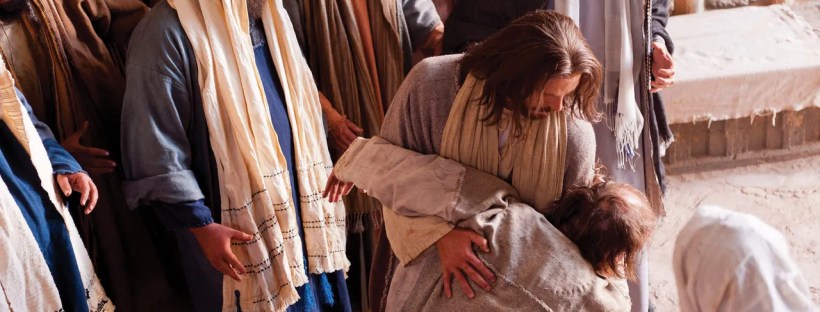
So last week, I’m revisiting the prodigal parable when it dawns on me: Before there could be a party (v. Luke 15:23) for the son, there first had to be ‘fashion statement’ (v. 22), an opportunity for him to know why he was being celebrated.
Like others, my last read through of Luke 15 wasn’t the first time in which I visualized the father decking his son with boughs of jolly. To be honest, I used to skim over this part as a side detail. ‘Nice! The dad is thrilled his son is back,’ I’d think to myself.
But having marinated in this passage further, I can’t help but wonder if this excerpt is the most profound part of the entire story.
For starters, not only does the passage highlight a daily reality of God’s father-heart of love, but it also emphasizes the progression of God’s ministry of reconciliation, a progression as follows:
God’s confirmation of our identity
God’s admittance of ‘as we are’ in light of who we are
God’s celebration of #1 + #2
Per the list above, part of the revelation for me lies in how easily we skip from #1 to #3 when reading the parable. We remember the father’s compassion (v. 20) and the party he throws (v. 23), yet we forget how the father loved on purpose in between as evidenced by his desire to adorn his son with specific garments:
The robe representing a fresh outpouring of grace…
The ring representing a symbol of sonship and authority…
The sandals representing a charge for the son to walk afresh and anew (under both coverings)…
…pretty remarkable, right?
Clearly, the father wasn’t content on just running to embrace his son.
Was he overjoyed? Of course! Was he relieved? Absolutely.
However, as much as the father wanted to welcome his son, he wanted even more so to establish him into a renewed sense of identity, place, and purpose! Accordingly, one has much to gain connecting the parable to real life.
‘Cause truth is: We’re ALL prodigals in some capacity. We’ve all stumbled into rough places and tough times at one point or another. We’ve all encountered rude awakenings involving unexpected setbacks, and in some cases, our own depravity.
Yet, when we receive the power of this parable, we ultimately discover how the story doesn’t end with God forgiving us. In fact, it’s only the beginning!
For even in the wake of our setbacks, our Papa God never stops seeking a way to reconcile us as heirs with an inheritance (Romans 8:17), as anointed children blessed with a destiny. Put another way, God always has a party invitation with your name on it secured in an envelope sealed with grace. And while you’re not forced to open it, if you decide to, you’ll not only find directions, but also information on how to prepare for it. How awesome is that?
The next time you’re tempted to mentally wallow with the pigs, remember God isn’t satisfied to slap an “I forgive you” onto your wrongdoings, your past hurts and failures, and call it a day.
Moreover, God wants to remind you…
…your identity is not lost… …your place at the table is unclaimed… …and oh, by the way, when you choose to change, heaven celebrates. Like a good neighbor, He’ll not only help you arrive at a better place, He, by His Spirit, will help you stay there, too.
My encouragement to you today is to claim the robe, the ring, and the sandals, put on the garments of praise (Isaiah 61:3), and live knowing you’ve been fully reinstated into wholeness with God. Sure, there may be days when your self-perception seems hopelessly chained to dark, dreary memories, but that doesn’t mean there’s not a way to walk in your sonship!
For me, whenever I find myself in that taxing tug-of-war, I…
Confess I’ve been forgiven and set free…
I declare my identity as a mighty man/son of God…
Recommit my ways unto the Lord.
Abiding by this pathway, I affirm God’s confirmation, admittance, and celebration of who I am and *wallah*…God’s mission of reconciliation is complete in that moment.
Well, folks, I’m out of words today. As always, if you need prayer, a word of encouragement, a dose of stimulating dialogue, Lys and I are here.
So yesterday I’m reading Mark 5 and it hits me: Why does Jesus tell the once demon-possessed man to go home to his people and tell them how much the Lord has done for him (v. 19), but gives strict orders to the sleeping girl’s family not to let anyone know about her miraculous healing (v. 43)?
At first glance, Jesus seems inconsistent. Why tell one party one thing and contradict it with another?
I mean…yeah, Jesus was always yielded to the Father following the Spirit’s lead. Fair enough. Still, I can’t help but dive a little deeper. As always, let’s grab a shovel and dig in.
Scripture/Observations
In Mark 5:1, we find Jesus, fresh off of calming a tempest (4:35-41), crossing the lake to Garasenes, a country region lying on the east side of the Sea of Galilee. Upon arrival, a demon-possessed man decked with torn chains coming out from the tombs approaches Jesus (Spooky, right? Talk about the ultimate Halloween Bible read). Once within range, the demon reveals itself as Legion (“for we are many” – v. 9) and begs to be cast into swine. From there, Jesus grants the request and inspires the man to proclaim the good news of what He had done John 4 style.
Now, check out v. 21: “When Jesus had again crossed over by boat to the other side of the lake, a large crowd gathered around Him while He was by the lake.”
Like similar encounters, we see life flocking to Jesus upon arrival, perhaps more causal than coincidence given the west side was more populated, not to mention Jesus’ reputation had established momentum. Yet, it’s here I want to pause to highlight a key contrast.
When Jesus arrives at Gerasenes, how many people come to him? At least one that we know of, right? How about the flip side? If you said ‘large crowd’, you’d be correct. Granted, the population difference may seem like a subtle detail; however, when we stack it against proceeding context, we see its connection to part of the answer.
That answer, you ask?
I’ll get to that shortly. For now, we must understand the correlation between Jesus’ intimacy with the Father and how this enabled Him to know the best way to unleash the truth. In the case of Mark 5, Jesus, having already revealed His nature on the west side, knew the best way for the good news to spread at Gerasesnes was for the ex-possessed man to ‘go tell it on the mountain’. After all, what occurred at the Decapolis post-healing centered, in part, on Jesus’ identity being made known to the masses.
Yet, as I teased earlier, the truth of Jesus’ identity was already spreading on the west side. Therefore, it’s fair to say Jesus’ cross-country trek was just as much about manifesting love through power as it was confirming the truth of who He was (see v. 25-34).
Quick side note: I find it amusing how ‘crowd’ is mentioned not once, not twice, but five times between v. 21-31. If in fact the author intended the reader to grasp the chaotic backdrop, mission accomplished. The point here, I submit, is less about Jesus having to endure uncomfortable circumstances than it is Him loving in spite of them. Imagine having zero personal space, teaching to the culprits responsible, and being interrupted mid-sermon setting commotions between people crying and wailing loudly (v. 27). I’d probably lose my mind and grey my hair all at once!
But not Jesus. Instead, look at how unruffled he is, first in v. 36 when he says, ‘Don’t be afraid; just believe’ in response to the disciples telling Jairus’ people, ‘Why bother the teacher anymore?’ and second in v. 39 when he says, ‘The child is not dead but asleep’ after the entire house thought Jairus’ daughter was dead.
Seriously, it’s like Jesus is calming a second storm here.
Now, for most, the story ends here, but the truth is Jesus had one more thing to say before peacing out, which in my paraphrasing, goes something like ‘Shhh! What happens here, stays here.’
But again, why would Jesus demand this? Well, go back to v. 36: ‘Don’t be afraid; just believe.’
Throughout this whole chapter, we’ve seen three miracles, three transfers of power; however, this doesn’t mean Jesus was on the ‘power play’. Rather, Jesus was on a mission to inspire belief in people’s hearts. Accordingly, we can assume what mattered most to Jesus more than signs, more than miracles was the truth of His Word.
In this context, Jesus knew if He allowed the news to break in synagogue central, it would lead to a major distraction. Remember there was enough pandemonium leading up to Jesus’ encounter with the little girl. Any more attention would likely have caused an uproar and reduce Jesus to the role of ringmaster. How fascinating it is to see how timely silence was sometimes part of Jesus’ strategy to further the Gospel!
Bottom line: While Jesus was Spirit led in all He said and did, He also discerned the theology of the land and time He was in as He constantly yielded to the Father. As a result, Jesus was able to reach more people through love and teach them with the truth and power of his Word.