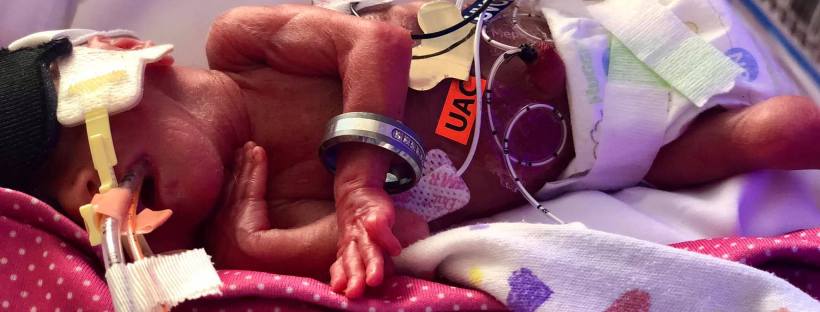

When Unbelief Becomes a Coping Mechanism

What if our struggle with unbelief isn’t that we believe too little, but that we’ve learned to trust the wrong things?

I had a difficult time sleeping last night. Somewhere between 2:00 and 5:00 in the morning, while unsuccessfully trying to quiet my mind, I found myself wrestling with a thought I haven’t been able to shake. What if unbelief isn’t always the absence of belief? What if, sometimes, unbelief is simply misplaced belief?

We tend to think of belief and unbelief as opposites. One represents confidence, conviction, and trust. The other represents doubt, skepticism, and uncertainty. But I wonder whether we’ve oversimplified the relationship. Because unbelief doesn’t always begin when we stop believing. Sometimes it begins when we start believing something else.

We believe our circumstances are unlikely to change. We believe our disappointments are reliable indicators of what tomorrow will bring. We believe our fears are reasonable, our expectations are unrealistic, and our interpretations of what’s happening around us are probably accurate. Somewhere along the way, what began as an attempt to understand our circumstances becomes an alternative to trusting God within them. We haven’t stopped exercising confidence. We’ve simply relocated it.

When Doubt Feels Safer Than Hope

I wonder how often unbelief functions as a form of self-preservation. Most of us don’t enjoy being afraid. We recognize what fear can produce: anxiety, insecurity, indecision, exhaustion, and an overwhelming desire to control anything within reach. Naturally, we want relief. But what happens when our pursuit of peace becomes more important than our willingness to trust?

If I convince myself that a relationship will never improve, I no longer have to endure the vulnerability of expecting reconciliation. If I convince myself that an opportunity will never materialize, I can spare myself the disappointment of hoping for it. And if I convince myself that my circumstances are unlikely to change, I can stop wrestling with the uncertainty of what God might do.

In each case, unbelief offers something resembling relief. Not because the underlying fear has been resolved, but because I’ve adjusted my expectations to accommodate it. Sometimes we’d rather experience the certainty of disappointment than endure the vulnerability of hope. But certainty and peace aren’t necessarily the same thing. Neither are resignation and surrender.

The Internal Control Weakness of Unbelief

As an accountant, I’ve spent considerable time reviewing financial statements, reconciling accounts, and identifying weaknesses in internal controls. There’s an analogy here that I find particularly revealing.

Imagine reviewing financial statements that appear perfectly balanced. The numbers agree, the discrepancies have disappeared, and everything seems reconciled. But upon closer examination, you discover that someone inserted an unsupported adjustment simply to make the numbers work. The statements balance, but the underlying issue hasn’t been resolved. The appearance of reconciliation has replaced the work of reconciliation.

In accounting, that’s a serious problem. In our spiritual lives, I wonder how often we do something similar.

We encounter circumstances that don’t reconcile with our understanding of God’s goodness, faithfulness, or promises. We pray, but the situation doesn’t change. We pursue community, but meaningful relationships remain elusive. We seek direction, but the path ahead seems increasingly uncertain. We believe God has called us toward something, yet our circumstances appear to contradict that calling.

Rather than continuing to wrestle faithfully with the tension, we begin making adjustments to our expectations. We insert doubt where trust feels uncomfortable. We substitute resignation for surrender. We allow our interpretation of circumstances to become the controlling authority over what we believe is possible. Eventually, everything seems to balance, but only because we’ve made an adjustment that was never properly supported.

Unbelief becomes the faulty entry that makes our emotional ledger reconcile while leaving the underlying problem untouched.

That’s what I mean by an internal control weakness of the heart. Not merely the presence of doubt, but the failure to recognize when our fears, assumptions, and interpretations have become more authoritative than the One we’re called to trust.

When Understanding Becomes a Prerequisite for Trust

Proverbs 3:5–6 instructs us to trust in the Lord with all our hearts and not lean on our own understanding. I’ve spent enough time trying to solve my own problems to recognize how easily understanding can become an obsession. I analyze, investigate, revisit conversations, consider possibilities, and try to anticipate outcomes. Sometimes I practically Sherlock my circumstances into submission.

While there’s nothing inherently wrong with discernment or careful thinking, there comes a point when analysis stops serving wisdom and starts serving our desire for control. We begin believing that if we can understand everything, perhaps we can protect ourselves from anything. But faith doesn’t require comprehensive understanding. It requires trust in the One whose understanding exceeds our own.

“I Believe; Help My Unbelief”

One of Scripture’s most encouraging confessions comes from a desperate father seeking healing for his son. In Mark 9:24, he cries out to Jesus: “I believe; help my unbelief!” The father doesn’t pretend his faith has eliminated every uncertainty. Neither does he deny that genuine belief is present. He acknowledges both, and he brings both to Jesus.

That distinction matters. Fear isn’t automatically unbelief. Questions aren’t necessarily rebellion. Even Jesus experienced profound anguish in Gethsemane while remaining obedient to the Father. The problem isn’t that we occasionally struggle to believe. It’s what we do with that struggle. Do we bring our uncertainty to God, or do we quietly allow it to become the foundation of our expectations?

Hebrews 11:6 reminds us that without faith, it is impossible to please God. But faith isn’t the ability to predict how God will act, nor is it the insistence that every circumstance will resolve according to our preferences. Faith is confidence in God’s character even when His purposes remain difficult to understand.

Perhaps the invitation isn’t to become people who never experience fear, but people who recognize when fear has begun masquerading as wisdom, realism, or even peace. Because unbelief doesn’t always announce itself as rebellion. Sometimes it arrives quietly, disguised as self-preservation. Sometimes it sounds remarkably reasonable. Sometimes it even makes everything feel balanced.

But a reconciled emotional ledger isn’t necessarily a trusting heart.

And maybe the most faithful thing we can do is stop adjusting the numbers long enough to admit what the father in Mark 9:24 understood:

Lord, I believe. Help my unbelief.

Cover photos creds: ChatGPT

When Faith Gets Put on Trial

There is something I have been noticing. It tends to surface after the prayers have been prayed, faith has been exercised, people have contended—and the ending still isn’t the one everyone asked for.

Eventually, someone starts looking for the variable. Maybe there wasn’t enough faith. Maybe doubt got in the way. Maybe someone didn’t believe hard enough.

I have heard enough variations of that idea to think it is worth naming. Somewhere along the way, some corners of the Church created an equation Scripture itself never gave us:

Desired outcome = sufficient faith.
Undesired outcome = insufficient faith.

To be fair, the equation did not appear from nowhere. Jesus tells us to believe when we pray. James warns about asking while doubting. Hebrews tells us that without faith it is impossible to please God. The Gospels even contain moments when Jesus directly confronts unbelief. Those passages matter. Faith matters. Unbelief matters.

I believe God hears us when we pray. I believe He draws near. I believe He heals, restores, delivers and intervenes. I believe we should ask boldly, contend earnestly and invite God to expose unbelief wherever it has taken root in us. But Scripture does not permit us to turn those truths into a formula.

There is a garden just outside Jerusalem where that formula falls apart.

The Cup Didn’t Pass

Jesus entered Gethsemane in anguish and prayed, “Father, if you are willing, remove this cup from me.”

Then He prayed again. And again. Luke tells us that His anguish intensified and that He prayed even more earnestly.

The cup did not pass.

Was the problem Jesus’ faith? Of course not. Jesus’ faith was perfect. And somehow, perfect faith looked like weakness that night. It looked like anguish, persistence, dependence and surrender:

“Nevertheless, not my will, but yours, be done.”

The unanswered request was not evidence of deficient faith. His persistence was faith. His surrender was faith. His trust in the Father while standing inside unbearable anguish was faith. That distinction matters.

Sometimes we treat surrender as the fine print beneath believing prayer—as though “Your will be done” is what we say when we are afraid to expect too much. Gethsemane suggests something very different.

Surrender itself is an expression of faith.

Prayer is worship because prayer acknowledges something fundamental: God is God, and I am not. He invites our participation. He teaches us, encourages us and empowers us. He tells us to ask. But partnership is not parity. God did not surrender His sovereignty when He invited us to pray.

When Faith Becomes About Us

This is where an inflated theology of faith can subtly shift the center of gravity. Faith stops being trust in God and begins becoming confidence in our ability to produce an outcome: my faith, my declaration, my certainty, my ability to receive.

Eventually, God begins looking less like Father and more like a mechanism: apply sufficient belief and receive the requested result.

But faith is not currency. God is not a genie. Grace is not wages for believing correctly.

Paul learned this when he repeatedly asked God to remove his thorn. The thorn remained. Christ answered, “My grace is sufficient for you, for my power is made perfect in weakness.” Apparently grace can be sufficient even when the thorn remains.

Romans 8 tells us something similar. The Spirit helps us in our weakness, even when we do not know how to pray as we ought. Notice where grace enters the story—not after we overcome helplessness, but inside it.

Even the desperate father who cried, “I believe; help my unbelief!” discovered that Jesus was willing to meet a man whose faith and doubt somehow occupied the same sentence. Helplessness is not a disqualification from grace.

That should make us extraordinarily careful about placing additional weight on people who are already suffering. There is enough vulnerability in asking God for something we cannot fix ourselves. When the answer does not resemble what was prayed for, the Church should be very cautious before adding an indictment to the grief.

Same Faith. Different Outcomes.

Hebrews 11 makes that caution unavoidable. Some people, through faith, conquered kingdoms, escaped the sword and received back their dead. Others, through faith, were imprisoned, tortured, afflicted and killed.

Scripture commends them all. Same faith. Different endings.

Faith was never intended to function as a mechanism through which we control God. It is trust in God.

That is why the words of the three Hebrew exiles in Daniel remain so powerful. They believed God was able to deliver them from the furnace. And then came the words that kept faith from becoming entitlement:

“But if not…”

God is able. But if not, He is still God.

That is not unbelief. Sometimes it is one of the bravest expressions of faith available to us.

Don’t Put Their Faith on Trial

So ask. Believe. Contend. Keep praying when the answer has not come. Ask God to expose unbelief and deepen your trust. Believe that He can intervene in ways only He can.

But when someone else’s cup does not pass, resist the temptation to put their faith on trial.

Sometimes grace removes the thorn. Sometimes grace becomes sufficient while it remains. Sometimes what God is doing becomes clearer years later. And some answers may require eternity.

Romans 8 does not promise that we will understand everything that happens to us. It promises something larger: that God is at work even while creation groans.

Our faith is ultimately in the Lord—not our ability to secure the outcome we prayed for.

God is able. And even if not, He is still God.

Gethsemane led to a cross. And for a little while, the cross looked like the end of the story.

It wasn’t.

Commit, Then Trust: A Key to Life in 2026

Well, folks. A new year is upon us. Time to take inventory of the good, the bad, and yes, the awesome!

For some, 2025 was a rough year, easily worth leaving behind; for others, the year wasn’t so bad, perhaps the kind one can build from. Regardless of the narrative, there’s a way to find footing and advance with confidence into the new year. While the steps are unique depending on the person and situation, there exists a holy outline from which we can corporately adhere; hence, why I’m sparing no time (and expense) in publishing this post.

As always, let’s dive in…

Some of you may recall last year’s post, in which I challenged us to invite God into our midst and request a divine reset. This year, my thoughts are more centered on the notion presented to us in Psalm 37:5 and Proverbs 16:3.

  • “Commit your way to the Lord; trust in him, and he will act.” ~ Psalm 37:5
  • “Commit your work to the Lord, and your plans will be established.” ~ Proverbs 16:3

Assessing these two passages¹, one quickly notes how these passages emphasize ‘commit’; specifically, we’re not called to trust God, then commit our ways, but to commit our ways and let God establish our steps as we trust. To me, this order is more than significant; it’s a complete game-changer. Often, when we perceive our faith as ‘half-mast’, we assume we must raise it to ‘full’ before we can ask God for anything, be it clarity, an intervention, or a modicum of peace. However, that’s not at all what the Psalmist is suggesting.

Rather, his imploration for us is to commit our ways to the Lord, regardless of how we feel, and marvel as He reveals and straightens our paths. Granted, this doesn’t mean the journey will be easy or lack detours and scenic routes. Certainly, there may be times when we struggle out of the gate, get off track, and/or wander into uncalled/unchartered territory; however, the beauty of committing our way unto the Lord is not only its simple starting point but in its liberating follow-through. If you ever wonder what you have to lose by clinging to Jesus, the answer is always a detriment to where you want to go and, more importantly, who you are designed to be. I’m looking at you, pride, ego, fear, jealousy, and anger, just to name a few.

I don’t know about you, but I desire to tap into holy curiosity more in 2026 than ever before. Sometimes, I succumb to partial surrender and stray from steadfast belief. It happens to the best of us. Yet, as long as I have breath, I long to praise the Lord from a heart that desires integrity and congruity in all things.

God save me from the places, even curses of old, that sought to discourage me past the point of fair application. Keep me steady on the straight and narrow, so I may be vertically anchored while pointing people to Jesus as the appropriate steps are taken. I may not fully grasp how the journey has evolved, I may not know where I’m going, and I may struggle with occasional distractions. But Christ in me, the hope of glory, I will not give up on the God who doesn’t give up on me. I may not understand the next move or where I’m at; however, I can still choose to reset and abide in you as I pour out my aims, goals, and hurts.

To those who felt 2025 was a ‘step back’ kind of year, I want to encourage you not to lose hope, to seek help and wisdom, and to abandon any internal space where hate and pride may be marinating. I say this as one who struggled last year, believing the lie that God abandoned him through the saints and past vocational misplacements.

Yet, as one who is back in counseling for the first time post-Jubilee, I employ you, my friends, not to grow weary. By all means, in prayer, and with God, don’t be overcome by evil or withhold love to your brother. Instead, confess hope, encourage each other, and press onward with all your heart, soul, mind, and strength. From there, pause, be still, and watch what God will do. You got this, as hard as it may be to believe right now.

He will renew your strength, revive your bones, and reset your course. All you have to do is submit and surrender.

Cover graphic creds: AI iStock/Canva

Footnotes

  1. Also see Proverbs 16:9; Psalm 32:8

Miracle in the Making: The Jubilee Journey (Part 3)

Lately, I’ve been marveling at how the past seven weeks have mirrored the past eighteen months.

On one hand, it’s been the worst of times; on the other, it’s been the “first” of times…

…with every day an exhausting, sometimes unprecedented mix of trial and turbulence.

However, as I’ve continued to study 2 Corinthians 12:7-10, I’ve been captivated by a certain truth, a keen illumination as once eloquently captured by Joe Novenson:

“The feel of faith is not strength, but dependent weakness.”

Mmm…just let that sink in a little.

The feel of faith…a dependent weakness. What a remarkable association. And apologies in case you heard that noise in the background.

That was just a mic drop echoing deep within the bowels of my soul.

For as many of you know, this Jubilee journey has been the epitome of humbling. In all sincerity, words can only go so far as the joyride (Jubilee’s name compels me to call it as such) has left me mesmerized wrestling with the scale of God’s sovereign strength amidst the chaos.

Still, the more Lys and I have endured and persevered, the more we’ve been able to taste God’s providence and assurance. To the extent we’ve anchored our trust, to that extent we’ve been able to mutually rely on God in unison, even harmony.

Again, it’s a unique paradox but one I’m discovering and profoundly grateful for.

‘Cause the way I see it: The specific season we’re in, from Jubilee to Covid caution, is more than one we’re supposed to ‘get through’…but one we’re meant to bear through.

The question is: In our various conflict resolutions and troubleshootings, what are we bearing (or forbearing) along the way?

While I’m still seeking God for solutions, what I can say is sometimes all we can do is stay the course and know God will set our paths straight. Especially in a time when many are forcing restarts, from marriage and relationships to work and church life, we can be prone to manufacture tranquility. Why we’d rather rush to refresh and blank our slates as opposed to conquering with confidence? Honestly, your guess is as good as mine.

Yet, as I continue to struggle amidst the unrest, I will gladly embrace a holy dependence that isn’t withdrawn like the trends around me. What I’m learning in my walk with God, with Lys, even at Foundation Group, is the sweet reminder the greatest victories are shared and beared. As much as we want to thrive, as much as we crave a new chapter, we can’t possibly ‘get there’ without partnering in weakness with what and whom God has already established.

My charge to you, dear ones, is two-fold:

  1. Keep heart, take heart…but don’t lose heart!
  2. You can struggle and live abundantly at the same time.

Don’t disengage what your challenges are tied to; rather engage the reason you’ve been entrusted to overcome them. Sure, it may take some time. Perhaps a year or two or ten. But together, we will ‘get there’.

‘Til then, don’t sign off yet. At least until God says it’s time.

Selah.

Miracle in the Making: The Jubilee Journey (Part 1)

Written August 28, 2021

A few thoughts coming off a quick coffee chat with dad…

No question, it’s been a crazy month – the most intense, unpredictable stretch I’ve ever endured. But somehow, someway, I’ve unlocked a few secrets on how to overcome anxiety while operating in stillness. While a second post will debut later this month, I figured I share a few breakthrough breadcrumbs for now:

1) Slow It Down – When we sense the target on our back, human nature is to panic and accelerate to resolution. Unfortunately, this is where many of us trip up. While prayerful proaction is ideal, when we’re striving for answers to stay ahead of the arrows, we tend to create more stress for ourselves. We beg God to know ‘why’ to justify the cry as if there’s no silver linings in persevering; however, when we surrender amidst the chaos and still ourselves in the face of uncertainty, only then can we truly embrace that James 1:2-4 joy.

In my case, there have been many problems of late. Yet, I’m grateful for them as they’ve helped me learn how living in slow motion can be a bridge to calmness. Granted, it’s a paradox to any cultural definition of pace. Then again, we’re called to run the race, not race the run. Given the latter doesn’t even make sense, I’d say all the more reason to stay cool when…

2) Defer Worry – When we feel stuck in a rut, like the cosmos is out to get us, the temptation to worry (and the emotions involved) is completely valid. I know for me when the break I crave seems far out of reach, I often cater to self-preservation as a means to sanity. Yet, as the Juby journey has taught me, when we acknowledge our weakness as an extension of worship, we find God’s perspective scaling our issues to the point deferring worry makes more sense than yielding to it.

To use a football analogy, the next time you feel sacked by negativity, invite God into the fear, press into His promises, and punt the worry away*. As Psalm 57:2 says, “[We] cry out to God who fulfills his purpose for [us]”. We may not understand the timing of them or the reasons for them; however, when we silence our ego, we enhance that still small voice reminding us how God’s faithfulness is far greater than our ability to see how it applies in any given situation. Put another way, our contentment and dependence does not have to be rooted in knowing how God works but rather knowing God, especially through the ups and downs of life.

Going back to Psalm 57:2, this makes perfect sense. Check out this context:

“Be good to me, God—and now! I’ve run to you for dear life. I’m hiding out under your wings until the hurricane blows over. I call out to High God, the God who holds me together. He sends orders from heaven and saves me, he humiliates those who kick me around. God delivers generous love, He makes good on his word.” ~ Psalm 57:1-3 (MSG)

This tells me even though I don’t know what the future holds with Juby’s health, even though I don’t know if my car’s radiator will bust again, even though I don’t know how work and home life will balance out for the foreseeable future, I can count it all joy as I ride out the storm.

‘Cause frankly, I’m so weak right now, I have no margin to do otherwise.

Selah/Stay tuned…

Footnotes

*More specifically, as you rely on God, punt worry to the point it becomes obsolete the next time it makes sense

Cover photo creds: Cameron Fry