When Grace Clocks In: Grief, Disability, and the Workplace

There are phrases you forget. Others hang around.

This one came from a leader two gigs ago. Years later, it still hasn’t left:

“An above-average series of unfortunate events.”

Interesting way to put it. Especially when you know what the “events” were.

My daughter had died.

Jubilee spent 393 days in the NICU. For more than a year, our family learned to live somewhere between home, work, church and a hospital room. Then she was gone, and we had to figure out how to live in a world that kept moving without her.

Money was tight. Really tight. I kept working. Kept functioning. I donated plasma on my lunch breaks for extra money until one day I nearly passed out afterward. Something inside me was running out of road, and I didn’t understand why.

I know more now.

Earlier this year, my spectrum results came in. Suddenly, parts of my life that had never quite made sense started talking to each other. The masking. The exhaustion. The mental real estate consumed by unresolved conflict. The invisible cost of navigating environments that seemed to cost other people almost nothing.

Then I looked back at that season: bereavement, financial pressure, neurodivergent burnout. All stacked on top of each other before I even had the language to understand why my own wiring made some of that weight so costly to carry.

So, sure. “Unfortunate events.” Might as well call a hurricane an above-average amount of wind and rain.

I don’t believe that leader was trying to be cruel. I can’t know everything behind the words. But intent isn’t really why the phrase stayed with me. It stayed because language can be technically defensible and still be painfully inadequate for the human being standing underneath it.

That’s where I’ve landed on something I wish more leaders understood:

Context isn’t the enemy of accountability.

I haven’t always communicated as clearly as I could have, and I certainly haven’t navigated every professional situation perfectly. Being neurodivergent doesn’t absolve me of responsibility. Neither does grief. But context isn’t an escape hatch from accountability. Understanding someone more fully makes accountability more accurate.

If somebody who was once engaged suddenly isn’t, get curious. If performance changes after catastrophic loss, get curious. If someone trusts you enough to disclose a disability, get curious.

Not “What’s wrong with this person?” but “What’s happening to this person?”

I’ve started calling that holy curiosity.

There was real kindness during Jubilee’s 393 days. Coworkers gave their time. People helped me get to the NICU. My employer gave our family flexibility during an impossible season. Distance has helped me appreciate those things more, not less.

I’m also a words-of-affirmation person. Looking back, I can see times when I was waiting for care to arrive in the language I understood best while missing some of the ways people were already speaking it. That’s mine to own.

But kindness and understanding aren’t necessarily the same thing. The fairest way I know to say it is this: I received more kindness than I knew how to appreciate at the time, but less intentional understanding than I needed.

We also understand neurodivergence differently than we did when I was growing up. People like me can make it through school, relationships and entire careers without understanding why seemingly ordinary environments exact such an extraordinary internal cost.

We know more now. That should make us more curious now.

We talk about grace. Truth. Mercy. Restoration. Bearing burdens. Eventually those words have to clock in. They have to survive somebody’s grief affecting performance, somebody’s disability complicating communication, somebody making a mistake, somebody becoming inconvenient.

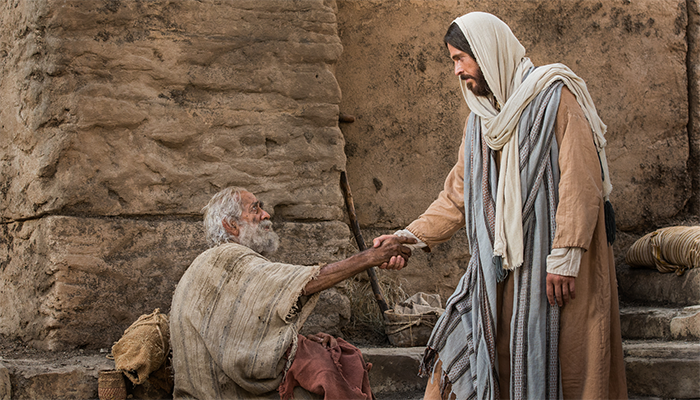
Jesus had a way of refusing to reduce complicated people to the most immediately visible thing about them. He noticed. He asked. He moved toward suffering.

Maybe that’s where better leadership begins too.

There is another place where this conversation matters just as deeply: the church. Faith communities can be remarkably good at showing up when tragedy arrives. But what happens when the meals stop, the crisis passes, and grief or special needs simply become part of a family’s everyday life? That’s where I want to go next—in Part Two, When the Church Moves On.

Making Room for New Creation: Do We Still Believe Christ Changes People?

Lately I’ve found myself thinking about something I don’t hear discussed very often.

As a disclaimer, I’m genuinely grateful that the Church has become more willing to talk about healthy boundaries, emotional well-being, and protecting people from abusive or destructive situations. Those conversations matter, and Scripture certainly leaves room for wisdom when safety is at stake. There are circumstances where lasting distance is not only appropriate but necessary.

But I’ve also been asking myself another question: When genuine repentance is present and safety is no longer the issue, are we still making room for God’s ministry of reconciliation?

Sometimes I wonder if we’ve become so accustomed to protecting ourselves that we’ve quietly lost the expectation that Christ still transforms people. Either way, our responsibility remains an absolute as outlined in the Word.

In Acts 11:18, we see that God alone grants repentance—a gift of His grace that Paul echoes in 2 Timothy 2:25. This highlights an essential reality: The grace that forgives is also the grace that transforms.

Consider Jesus’ teaching in Matthew 18. While the passage is often remembered for confronting sin, His aim is ultimately restoration—winning back a brother or sister.

Paul paints the same picture in Corinth. He instructed the church to discipline a man living in open, unrepentant sin. But after that man repented, Paul’s instruction changed:

“You ought rather to forgive and comfort him… reaffirm your love for him.” (2 Corinthians 2:7–8)

Notice the progression: Accountability. Repentance. Restoration.

Repentance doesn’t erase consequences. It doesn’t instantly rebuild trust. It doesn’t obligate anyone to return to an unsafe relationship.

Reconciliation doesn’t always mean restoring a relationship to what it once was. Sometimes it simply means laying down bitterness, extending forgiveness, and remaining open to whatever measure of restoration wisdom permits.

Yet neither should we treat genuine repentance as though it changes nothing.

I’ve also found myself wondering whether our desire to protect our peace can slowly become something else. While boundaries can absolutely be an expression of wisdom, they can also become places where reconciliation quietly stops.

That’s worth examining—not to produce guilt, but to ensure our instinct is still moving toward the ministry Christ entrusted to us whenever wisdom allows.

Every Sunday we proclaim that Jesus makes people new. We celebrate that He removes hearts of stone and gives hearts of flesh. If we truly believe Christ transforms lives, shouldn’t we expect to recognize His work when genuine repentance appears?

Paul writes: “If possible, so far as it depends on you, live peaceably with all.” (Romans 12:18)

I appreciate those opening words: “If possible.” Paul recognizes that reconciliation isn’t always achievable because it doesn’t depend on one person alone. Some wounds require lasting distance. Some relationships remain unsafe. We cannot control another person’s response.

But we can control our own.

As far as it depends on us, we’re called to pursue peace, own our failures, confess our sin, forgive as we’ve been forgiven, and remain open to the restoring work of Christ whenever wisdom allows.

I don’t write this to minimize the importance of boundaries. I write it because I don’t want to miss the work of Christ when He begins changing someone’s heart.

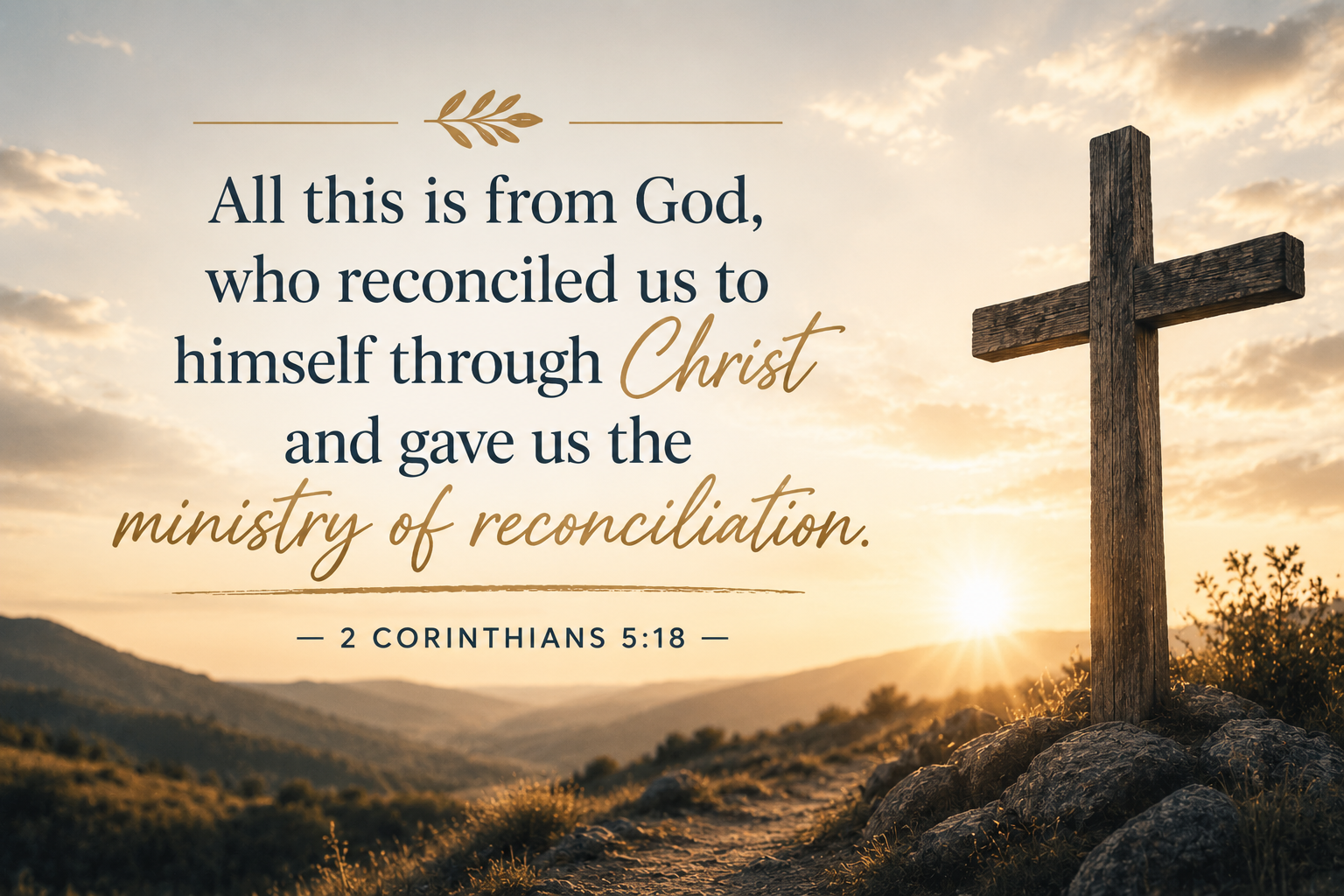
The ministry of reconciliation isn’t only about God reconciling us to Himself. Through Christ, He also entrusts His people with becoming ambassadors of that same reconciliation in a broken world (2 Corinthians 5:18–20).

Perhaps one of the greatest evidences that we truly believe the gospel isn’t simply that we rejoice over God’s power to change us—but that we remain humble enough to recognize His transforming work in someone else.

If we proclaim that Jesus makes all things new, may we never become so guarded that we fail to recognize His new creation standing right in front of us.

Cover graphic creds: ChatGPT

The Renew in You: How to Refresh, Restart, and Reset with God

Well, folks. We’ve made it.

The summer solstice, the midyear equinox, the halfway point, whatever July is to you, we’re here and still in one piece. Who would have thought making it this far would feel like such an accomplishment?

This slideshow requires JavaScript.

Memes aside, as some of know, this is a special time of year for me – a time when I reflect and consider adjustments for the year moving forward; however, this year, I want to shake things up a bit. Rather than share reflections on lessons learned, I want to focus today’s post on finding rest through refreshing, restarting, and resetting with God. Yes, I get how the series sounds similar. Outside of our personal computers, I bet most of us use these terms interchangeably. Still, there are critical differences worth discussing as they relate to our emotional and spiritual well-being. As such, I encourage you to keep an open mind and a sensitive heart as we explore the depths of this topic.

Without further ado, let’s dive in…

giphy

  1. Refresh

When I say ‘refresh’, what immediately comes to mind? An emerald beach resort, snow-covered slopes, a sparkling beverage?

Okay, okay…so these are some of my favorite things. But to an extent, you can see the common denominator. Generally, when we consider what refreshes us, our minds gravitate to what instantly gratifies us. Whatever can elevate our spirits in the heat of the moment, whatever can distract us from despair, chances are we receive it as refreshing.

Yet, while there is an interim component to refreshment, from a biblical standpoint, refreshment isn’t refreshment without sustaining momentum. For example, if you’re in a desert and find an oasis, the kiss of water to your lips is just as much refreshment as the long-term fill you carry on with. While the express relief is undeniable, it’s made more powerful through the restoration of heart, soul, mind, and strength to its original design.

Perhaps this is why the theme is threaded through all Scripture:

“And I will bring a piece of bread to refresh and sustain you; after that you may go on, since you have come to your servant.” And they replied, “Do as you have said.” ~ Genesis 18:5 (ESV)

“The law of the Lord is perfect (flawless), restoring and refreshing the soul; The statutes of the Lord are reliable and trustworthy, making wise the simple.” ~ Psalm 19:7 (ESV)

“He refreshes and restores my soul (life); He leads me in the paths of righteousness for His name’s sake.” ~ Psalm 23:3 (ESV)

“Come to Me, all who are weary and heavily burdened [by religious rituals that provide no peace], and I will give you rest [refreshing your souls with salvation].” ~ Matthew 11:28 (ESV)

“Your body has many parts—limbs, organs, cells—but no matter how many parts you can name, you’re still one body. It’s exactly the same with Christ. By means of his one Spirit, we all said good-bye to our partial and piecemeal lives. We each used to independently call our own shots, but then we entered into a large and integrated life in which he has the final say in everything. Each of us is now a part of his resurrection body, refreshed and sustained at one fountain—his Spirit—where we all come to drink.” ~ 1 Corinthians 12:12-13 (MSG)

Upon further review, these passages tell me four things:

  1. Refresh is not only a footstool to rest, but can be the rest itself ¹.
  2. Refresh is often the next step towards righteousness (in particular resisting fear, receiving grace, and stilling our inner being).
  3. Refresh is designed to lead us towards places of freedom, health, and unity.
  4. Refresh is centered in the abiding of God’s nature.

Therefore, if you ever feel like a stalled webpage, don’t just receive God’s ‘refresh’ as momentary rest, but embrace it as sustenance taking you deeper into His love. ‘Cause truth is: Refresh is not simply what you take in, but what you allow to put out. All the more reason to rest in knowing even when there’s a setback, there’s a kickback with God to pursue. 

  1. Restart

Rolling with the browser analogy, as many Mac users know, a ‘refresh’ is not always a surefire cure-all to the ‘death spiral’.

Rainbow_Spinning_Pinwheel_of_Death_Explained_Mac_Spinning_Beachball

Sometimes, you need a hard restart to reboot your system to access files more quickly; think ‘have you turned it on and off again‘ but next level.

Assuming you can relate, consider the parallels to mental peace. Like refresh, restart implies calibration, alignment, and engagement to a higher form and by proxy, an ideal intent. Granted, a restart is more disruptive but it can also lead to more enlightening outcomes.

Take this year, for instance. These days there’s no question we’re experiencing unprecedented disruption. While we’re not encountering radical crises such as world wars or great depressions, we’re still seeing almost every nation being impacted by the ongoing coronavirus pandemic. On the surface, this captures a historic screenshot, but digging deeper, look at what it’s inspiring. Despite so much on hold, we’re seeing people revising their priorities, pursuing dormant dreams, and encouraging their way out of complacency. Even in the most unlikely scenarios, people are beginning to care again at fundamental levels once taken for granted. An exciting, if not, thrilling development in a year many have thrown the towel on.

tenor

As for how we ‘restart’, I submit we first take inventory of what we’re clinging to. Ask yourself, ‘What and where are those internal points of desperation? Are they guiding me to Jesus or pulling me away?‘ Be honest and know your wilderness is not the problem, but rather your commitment to the road God has made in it. From there, remember the secret of being content in every situation is God as your strength providing all you need for good work, faith, and life in abundance. Where you need to ask for purity, ask for purity. Where there’s past to surrender, surrender it.  Where there’s pleasure in stronghold, ask God to orientate your perspective. No matter where you are, what situation you’re in, you can pray, ‘God, I long to see not only what you see, but how you see‘ so I may not lose sight of your faithfulness and the ‘why’ to which I am called.

Of course, this is just a proposed template; obviously, be Spirit-led and discerning in your approach. For now, I pray and trust this guide can help start your ‘restart’.

  1. Reset

Finally, we come to reset, which if you think is similar to ‘restart’, you’d be correct. To reset is to essentially restart, but with one caveat: A reset requires change; a restart doesn’t.

You see, unlike the glorified mulligan that is a restart, a reset goes beyond a redo and into the realm of upgrade. To upgrade anything, you have to put it all on the table. Every detail, every piece, every character…every little thing must be re-examined in the spirit of inevitable revision.

tenor-1

Now, if you think I’m taking a scenic route in describing repentance, I’m not trying to per se, though it is certainly applicable. Rather, my takeaway with ‘reset’ is the context of the action. Specifically, all of us should regularly take time to get away with God – to retreat with Him for the sake of being intentionally disrupted.

Consider this the full-circle moment of this post: To be disrupted is to know God has a message for you. Whatever the message is, you have to first position yourself to receive it. Hence, why resetting often can’t happen without a break from the ordinary. To receive from the Lord, you have to eliminate potential interferences including innocent routines. It’s not a knock on your daily rhythm, but a call to push to pause knowing God is more important.

My encouragement to you, my friends, is to heed these differences to know the season you’re in. For some of you, God wants to refresh your moment. For others, He wants to restart your walk and/or reset your faith. Whatever the case, don’t hide in the shadow of uncertainty or anxiety. Instead, know the time has never been better to supplicate – to ask God in earnest, ‘Is there a new idea, a fresh work you want to begin in me? Is there a lost truth you want to illuminate in me? Is there anything in my heart that needs to be uninstalled so you can install something in its place?”

And if it helps, think of this way: When you let go of the ‘me’, you can receive the ‘re²’; when you receive the ‘re’, you can find the ‘renew’ – the Isaish 40:31 – in each step:

“…but they who wait for the Lord shall renew their strength; they shall mount up with wings like eagles; they shall run and not be weary; they shall walk and not faint.” 

 Selah.

Footnotes

  1. Or is the start of rest itself
  2. Whether it be a refresh, restart, or reset
Cover photo creds: Generals.org (edited in Canva by Lyssah Fry)


Integrating Ministry & Marketplace: The Temple Template

The vocational life is hard work.

Early mornings, long days, rough nights…if you wear many hats and juggle multiple responsibilities…you know the drill.

Yet, as tempting survival/‘just get ‘er done’ mode may be, truth is: we were never meant to live this way.

Yes, strategic compartmentalization can center the gravity of focus and break busy days into doable, bite-sized moments; however, when we consider our identity as effective influencers in light of Jesus’ ministry,  we ultimately find…

a) Work (what we commit our hands and minds to) and faith (what we commit our beliefs to) were never meant to be mutually exclusive.

b) The marketplace can be just as much a hub of powerful, life-changing ministry as the church1.

Take Matthew 21:12-17 for instance…

After Jesus kicks off the triumphal entry (v. 1-11), note the first place he targets (i.e. the temple – v. 12) and the reason why (i.e. to cleanse it).

I don’t know about you, but when I consider the fact Jesus deliberately went to the temple to make its original intent known as opposed to simply stopping for a cup of coffee and the ‘Daily Jerusalem’…that speaks to me.

Granted, Jesus channels his inner Adele for time, turning tables and all (v. 12b), but the key here isn’t so much Jesus reacting in frustration as much as Jesus setting things right, being fearlessly intentional in speaking truth and breathing life into what had become a lifeless environment.

So while this passage reference may seem random, when we talk about what pastoral ministry in the marketplace looks like and how to rightfully use our spiritual gifts in similar arenas, I believe there’s important application to be found.

First off, to be an effective marketplace minister, we must be courageous and purposeful with the truth. Yes, we can be highly skilled with the gifts God has given us; yes, we can be articulate, persuasive, and emit confidence, but if what we’re divinely given is utilized with limited integrity, it’s like trying to build a sturdy structure on quicksand.

Secondly, when we consider what grieved Jesus most, we deduce how wise marketplace leaders understand the time and place to deal with financial affairs as they understand the providence of God (i.e. the difference between a love for money and a love for God who provides the money2 ;more on this in future posts).

And finally, when we consider Jesus straight up calls the temple “my house” (v. 13 – “My house will be called a house of prayer…”), we find the a) confirmation of marketplace as an extension of sanctuary and b) value in declaring God’s original design over an establishment intended for our good.

In this case, Jesus calls the temple a “house of prayer” not only to reveal the truth of its purpose3 (i.e. a place of dwelling, influence, and vertical communication), but to set the stage for the spiritually/physically impaired to better know that purpose (v. 14).

I-Was-There-at-the-Temple-Image

Hence, it should be no surprise to see a completely transformed temple by the time Jesus peaces out in v. 17.

Bottom line: when we reflect on how Jesus integrated his ministry and spiritual gifts into the marketplace, we see…

  1. Jesus was intentional (in going to the temple courts)…
  2. Jesus was bold with the truth and how he handled conflict…
  3. Jesus lived out the identity he declared over the temple…
  4. Jesus loved at every opportunity…

Thus, I submit if we’re going to thrive in employing our spiritual gifts in our areas of business, we must be willing to live on purpose, be bold with the truth, pray without ceasing, be the change we long for…and most importantly…love at all cost, at all times.

Next time, I’ll look to build upon this foundation with more specifics, more real-life application, but for now, if any of this hits home with you (or if you want to add a point to the list above), feel free to comment below. And as always, if you have a prayer request/praise report, you’re more than welcome to drop us a line.

‘Til then, may you find peace and joy in abundance as you go about your week…

~ Cameron

Footnotes

  1. Sure, the church may be the heart of the operation, but what’s to say the marketplace can’t be the hands and feet?
  2. Seriously…how often are good leaders corrupted by sneaky, under-the-table, ‘will do anything to get an advantage’ maneuvers? More than we’d like to admit, right?
  3. As well as His authority

Photo creds: gospelmovements.org (edited by Cameron Fry) & lds.net