
As discussed in my last post, there is a difference between honoring leadership and respecting image preservation.
While Scripture commands us to respect those who labor among us, it also refuses to place any leader beyond examination, correction, or accountability. Somehow, in many churches, ministries, and organizations, we’ve managed to preach the first half while burying the second, using “protect the anointing” phraseology as an umbrella where insecurity, favoritism, micromanagement, even misconduct are tolerated.
But it usually doesn’t start there.
Most toxic cultures don’t begin with self-serving intentions. They begin with leaders who once did tremendous good.
Perhaps they pioneered something meaningful. Maybe they sacrificed deeply. Maybe they built ministries, companies, schools, nonprofits, or movements that changed lives. Maybe they weathered storms that others never saw.
All of that can be true.
But yesterday’s faithfulness does not exempt today’s behavior from scrutiny.
Past fruit is not a lifetime immunity badge. No organization is above the law. No leader is above correction. No “good old days” testimony can serve indefinitely as a veil covering present dysfunction.
Tweet
The danger emerges when the narrative becomes: “Look at all the good they’ve done.”
As though that somehow settles every concern. As though the people closest to the problems simply lack perspective. As though those asking questions are disloyal. As though silence is maturity.
It isn’t.
Because the moment preserving an image becomes more important than pursuing truth, the culture has already begun to drift.
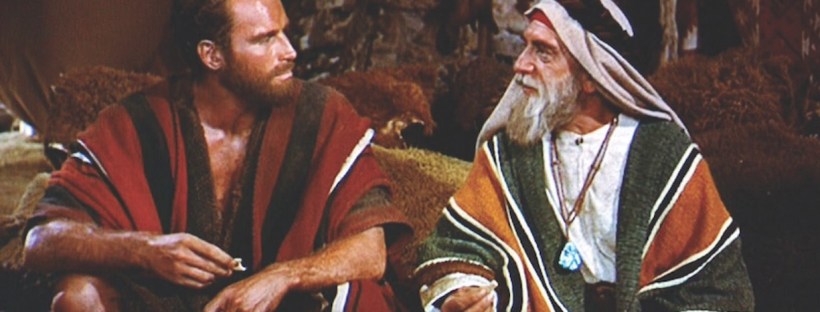
Jethro Saw What Moses Couldn’t
One of the most overlooked leadership moments in Scripture comes in Exodus 18.
Moses loved God. Moses was called. Moses had demonstrated extraordinary faithfulness. Yet Jethro looked at him and essentially said: “What you’re doing isn’t working.”
“What you are doing is not good. You and these people who come to you will only wear yourselves out.” (Exodus 18:17-18)
Imagine that.
Moses—the man through whom God parted the Red Sea—was told that his leadership structure was unsustainable. Jethro wasn’t dishonoring Moses. He was protecting both Moses and the people.
He recognized something leaders often miss when responsibility concentrates at the top: The people suffer.
Jethro’s solution wasn’t blind loyalty. It wasn’t, “Everyone just support Moses harder.” It wasn’t, “Stop questioning and trust the process.”
It was accountability through structure. Shared responsibility. Distributed leadership. Healthy support systems.
“Select capable men from all the people—men who fear God, trustworthy men who hate dishonest gain—and appoint them…” (Exodus 18:21)
Notice the qualifications. Capable. God-fearing. Trustworthy. Hating dishonest gain. Not merely agreeable. Not merely loyal. Not merely protective of leadership’s reputation.
Their purpose wasn’t to become professional yes-men. Their role was to support both Moses and the people.

Middle Managers Aren’t Human Shields
Healthy organizations understand this instinctively.
Middle leadership exists to bridge. To advocate upward and downward. To communicate concerns from subordinates to executives. To translate vision into practical care. To equip teams. To identify problems before they become crises.
They do not exist to absorb dysfunction generated from above. Nor do they exist to suppress concerns to preserve appearances.
If every concern raised by frontline employees dies in middle management because someone fears upsetting the Executive Director, CEO, President, Senior Pastor, or founder, then leadership has ceased to function as stewardship and has become image management.
The lower half of an organization cannot continually compensate for the gaps left by the upper half. Subordinates cannot indefinitely provide the emotional intelligence, conflict resolution, humility, and accountability that senior leadership refuses to exercise.
People eventually run out of capacity. They burn out. They disengage. Or they leave.
“If You Don’t Like It, Leave”
Sometimes that’s exactly what happens.
And ironically, unhealthy leadership often interprets the exodus as validation.
- “Good riddance.”
- “The wrong people are leaving.”
- “God is purging the disloyal.”
- “They couldn’t handle authority.”
But what if the departures aren’t evidence of rebellion?
What if they’re evidence of unresolved problems? What if sensible people with both healthy minds and compassionate hearts simply recognize fire when they smell smoke? What if repeated turnover isn’t proof of purification? What if it’s proof of suffocation?
The irony is painful.
The tighter toxic leadership closes its fist to secure control, the more people slip through its fingers. The very thing they fear losing becomes the outcome their methods produce.
Because fear can force compliance for a season. It cannot cultivate trust. Manipulation can manufacture unity for a moment. It cannot sustain genuine loyalty.

Unity Is Not Uniformity
Biblical unity was never intended to mean unanimous agreement with leadership.
Why? Because real unity makes room for truth. For questions. For dissent without retaliation. For hard conversations conducted with humility.
Paul publicly confronted Peter when Peter’s actions compromised the Gospel (Galatians 2:11-14). The early church gathered to reason together through conflict in Acts 15. Even Nathan confronted David.
Correction wasn’t viewed as betrayal. It was understood as love.
“Faithful are the wounds of a friend…” (Proverbs 27:6).
Yet some environments redefine unity to mean certain cooperation, even silence.
Don’t ask. Don’t challenge. Don’t notice patterns. Don’t connect dots. Just smile. Support. Protect the anointing.
At that point, unity becomes something entirely different. It becomes coercion wearing spiritual language.
Everyone Has a Voice
- Will every complaint be valid? No.
- Will every accusation prove true? No.
- Will every frustrated employee be completely objective? Of course not.
But when concerns repeatedly surface from thoughtful people across different levels of an organization, dismissing every voice as bitterness eventually becomes its own form of deception.
Especially if those voices are consistently met with defensiveness rather than curiosity.
People can accept difficult answers.
What they struggle to accept is being unheard. A voice that perpetually falls on deaf ears eventually stops speaking. Not because it lacked merit. But because it learned the outcome had already been decided.
James instructs believers to be:
“Quick to hear, slow to speak, slow to anger” (James 1:19).
How often do organizations reverse that order?
Quick to defend. Quick to explain. Quick to protect. Slow to listen.
The Strongest Leaders Don’t Fear Accountability
The most secure leaders I’ve encountered don’t panic when questioned.
They don’t interpret feedback as mutiny. They don’t demand perpetual affirmation. They don’t surround themselves exclusively with people who echo their opinions.
They understand something profoundly important:
- Accountability doesn’t diminish authority. It legitimizes it.
- Correction doesn’t weaken leadership. It strengthens it.
- Transparency doesn’t destroy trust. It builds it.
And repentance—when necessary—is not evidence that anointing has departed. It’s evidence that humility remains.
Tweet
Perhaps protecting the anointing has less to do with shielding leaders from scrutiny and more to do with protecting the integrity of what God entrusted to them in the first place.
Because God’s people deserve healthy leadership. Leaders deserve healthy support.
Middle managers deserve the freedom to advocate truthfully in both directions. And organizations deserve cultures where righteousness is valued more highly than reputation.
Christ-centered institutions should be the safest place in the world to tell the truth. Not because truth is painless. But because Christ Himself said:
“Then you will know the truth, and the truth will set you free.” (John 8:32).
Anything less may preserve appearances for a season.
But eventually, every veil wears thin. And when that happens, the question won’t be whether concerns existed. The question will be whether anyone had the courage to listen before people felt they had no choice but to leave.

Cover graphic creds: Pkfuel.com