
Awaiting Advent: The Joy of Perpetual Hope

Well, folks, it finally happened.  

Last week, as I was sipping on some hot brew on a chilly pre-winter morning, my oldest son, Caeden, walked up to me and asked, Is Santa Claus real?

At first, my inner Michael Scott started to blare.

But after realizing I’d appraised a response years prior, I knew what I needed to do. Citing some Vintage Richard Attenborough from Miracle on 34th Street, I facetiously replied:

Santa is more than a whimsical figure who wears a charming suit and affects a jolly demeanor. He’s a symbol. He’s a symbol of the human ability to suppress the selfish and hateful tendencies that rule the major part of our lives. If you can’t believe, if you can’t accept anything on faith, then you’re doomed for a life dominated by doubt.” 

After a few seconds of awkward silence, I could tell by Caeden’s deadpan demeanor, he needed more clarity. Thus, I restructured my answer.  

No, son. Santa is not real based on how he’s portrayed today, but like many of our favorite movies and books, he’s inspired by real people and events.” 

Satisfied, Caeden dropped the inquiry knowing the intel he obtained days before aligned with my wording. But for me, the moment was far from over. Rewatching the movie, I realized how profound the scene is specifically when one substitutes ‘truth’ for symbol and ‘Jesus’ for Santa. With mental wheels grinding, I started to wonder: Throughout the world, how many have Jesus in their hearts but with the truth suppressed? To those who follow Christ, are we wearing our faith to buzz our spirits or are we letting joy and goodwill organically overflow from being present with people?  

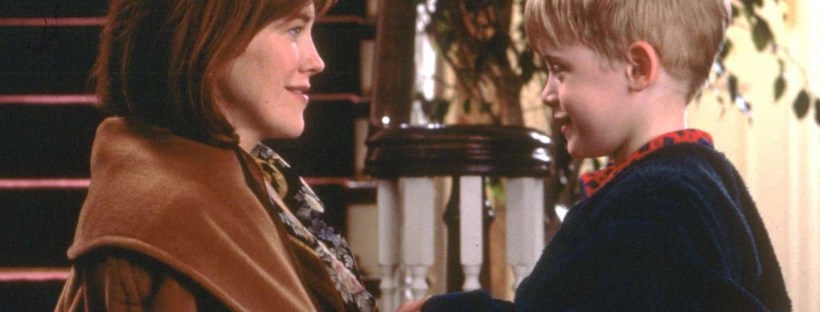
Weighing the contrast, I considered another cinematic sequence in Home Alone during which Kevin’s mom attempts to secure a flight from Scranton to Chicago.

Desperate to see her son, she reminds the airline agent that Christmas is a season for perpetual hope and threatens to hitchhike, even sell her soul to the devil to be reunited. In this case, her franticness drives her anticipation, her hope nothing more than a means to an end, a bartering tool for it to be realized. Unfortunately, this can be a popular posture for those facing adversity in December; hence, why we should heed what the Word says about perpetual hope:

  1. “Blessed be the God and Father of our Lord Jesus Christ! According to his great mercy, he has caused us to be born again to a living hope through the resurrection of Jesus Christ from the dead.”1 Peter 1:3 NIV
  2. “Therefore, with minds that are alert and fully sober, set your hope on the grace to be brought to you when Jesus Christ is revealed at his coming.” 1 Peter 1:13 NIV 
  3. Recalling unceasingly before our God and Father your work energized by faith, and your service motivated by love and unwavering hope in [the return of] our Lord Jesus Christ.” 1 Thessalonians 1:3 AMP
  4. “To them God has chosen to make known among the Gentiles the glorious riches of this mystery, which is Christ in you, the hope of glory.” Colossians 1:27 NIV
  5. “Let us hold unswervingly to the hope we profess, for he who promised is faithful.” Hebrews 10:23 NIV
  6. “But those who hope in the Lord will renew their strength. They will soar on wings like eagles; they will run and not grow weary, they will walk and not be faint.” Isaiah 40:31 NIV
  7. “…we ourselves, …wait eagerly for our adoption to sonship, the redemption of our bodies. For in this hope, we were saved. But hope that is seen is no hope at all. Who hopes for what they already have? But if we hope for what we do not yet have, we wait for it patiently.” Romans 8:23-25 NIV
  8. “I wait for the Lord, my whole being waits, and in his word, I put my hope.” Psalms 130:5 NIV
  9. “May the God of hope fill you with all joy and peace as you trust in him, so that you may overflow with hope by the power of the Holy Spirit.” Romans 15:13 NIV
  10. “It is for this that we labor and strive because we have fixed our [confident] hope on the living God, who is the Savior of all people, especially of those who believe [in him, recognize him as the Son of God, and accept him as Savior and Lord].” 1 Timothy 4:10 AMP

Taking a systematic approach, we find this version of hope to not only be a glorious fusion between Advent and Immanuel, but a testament to why faith and freedom can co-exist. As Christ’s first coming reminds us, patience carries virtue to the extent it anticipates with, you guessed it, perpetual hope. Not wishful thinking, not warm musing, but a steadfast belief in our Savior who conquered death and is alive today. Knowing He will come again, we engage Christmas by celebrating the incarnation and the eternal relationship we have with Jesus.  

Yet, as we wait and hope in full, we must receive Christ into our brokenness as we reflect his nature to the world. Often, we undermine or overextend the call we have to emulate Christ to those who need him most during the holidays. Like Kevin’s mom, we see a need for life, a wake-up call if you will, and want to pull hope down from the heavens, put a bow on it, and say ‘Merry Christmas’ as we casually go about our way. If only serving as conduits of hope was that easy.  

Passive as it may seem, particularly to Elf enthusiasts, the best way to extend Christmas cheer is not singing loud for all to hear, but making bold the name of Jesus, the hope of the world, so those who don’t know him have a chance to see, at the very least, hear. That’s, in part, the beauty of Matthew 12:21. At some point, those who don’t yet believe will find and have a chance to receive hope, even if the sole prompt is the sound of his name. While our goodwill may be genuine in the short term, for it to be effective in the long term, it must be vertically aligned so that our hope may reflect what it personifies, the God of all comfort.   

Of course, I’m not suggesting I’m as consistent as I need to be with this. I just know the authority I have in Jesus to speak his name while receiving the season as a cue for holy declaration, even during seasons of chaos and crisis. Take it from one who knows what it’s like to hold his child as she takes her last breath, I get how Christmas can trigger the blues at a swifter rate than the reds and greens.  🦋🦋🦋

But Christ in me, I know the emotional amplification is a testament to why we commemorate this season. In the same way saints of old yearned for a Messiah, we long for him to come again and in the meantime, make straight his ways, to complete the work He’s started in us. Cheesy as it sounds, Christmas truly is a ‘present’ to the believer given it stitches our past to our future. Knowing what God has done before, we can remain active in our hope as divine construction in our hearts and worlds occurs. We can smile as we groan, laugh as we cry, and believe when it doesn’t make sense. We can be present with people even when we feel alone. We can even share the little we [think we] have to offer with another who regards it as plenty. 

Quite simply, the paradox of Christmas is its lasting legacy. While the light of Christmas is the gift of Jesus, the current in which it flows is its unceasing element compelling us to seek him, to make our hope perpetual, and lay down our doubt, pride, and offenses for heart-healing alternatives. 

One day we will get there. Until then, the charge is simple: Don’t force the hope this Christmas; reflect it. Don’t burden yourself trying to fix problems outside your control. Rather, refocus on rediscovering and realigning with the One who makes all things new. As for those struggling with grief this Christmas, remember God sent his begotten Son to earth so our literal and spiritual deaths could be reconciled. As timely hymns attest, there’s profound peace to be found when we consider Mary carrying Jesus, a son who was born to die so our loved ones, in some cases, our babies, could live.

No matter what season or situation you’re in, may what you believe be a transparent means for those on the outside to know there is a God who is love who is there for them. Take joy in your part, but more importantly, your King, who makes a way even when there is no way.  

Cover photo creds: Chicago Magazine

Faith in Advance: The Ultimate Trump Card

In the sands of American history, there’s arguably no stretch more nerve-racking than the final weeks of October during an election year. Even if you’re not on edge, you can still sense the tensity in the air. With only one week left until Election Night, the curiosity across the country is palpable as anticipation builds and pique nears its peak.

Like many, I don’t fancy myself with deep political acumen or tempt egocentrism as the center of a finite worldview. If anything, I just want to keep up with the news to know how to pray for my county, city, state, and country. Apart from that, I’m not one to hitch my faith to narratives rooted in intimidation and fear.

Yet, as for the point of this post, I want to encourage us to anticipate trust in the coming days. Not anger, not disappointment, but vertical confidence ready to be humble. As a wise voice recently reminded me, the time is now not only to have faith in the present…but in advance. While human nature seeks certainty to offset discomfort, to calm the storm ahead of us, when we consider Jesus, we find the opposite. When He was distraught, when the storm was imminent, He counted it all joy to wait on the improbable and believe in the impossible respectively. By His example and the Comforter in tandem, we can receive the gift of faith, pursue the power of prayer, and believe with purity intact for the breakthroughs we crave.

Having said that, there’s hardly a solution that instantly quenches our anxieties this side of heaven; hence, the call we have to lean on God as we cast our cares upon Him (1 Peter 5:6-7). Among my concerns is the tendency we have to leave the backdoor open for anger, doubt, and entitlement to manifest.

For instance, in my case, there are times I will declare confidence in prayer yet simultaneously cling to the thought of wrestling with God about our country’s future later on. The conviction here lies in what I’m making room for. While yielding to God is a wise move, if we’re preemptively giving our faith an out, is it really faith at all?

Regardless of where we stand, we must ask ourselves if there’s anything or anyone outside the divine to which we’re anchoring our trust. If our belief is confined to the moment, in the ways of man, then the holy perspective in which it’s designed to thrive will likely suffer. Far too often, we’re content to reference God as a cause-to-effect, as a reaction to the storm. Little do we know in doing this, we sustain the historic pattern of misappropriating Christ’s identity amid conflict desperate for a worldly king to set us free.

My charge to us is as we contend for God’s will to be realized in this nation is two-fold:

1) Let’s recognize the Messiahship of Jesus by anticipating the experience of God out of the present into the future. In doing this, we can create room for our emotions, thoughts, and beliefs to find rest, even if our surface goals and expectations aren’t realized.

2) Let’s surrender our contingency plans to grapple with God if we don’t see the immediate fruit of our hope. As many social media posts have highlighted, the same God who sent His one and only Son, is still on the throne regardless of the election outcome; however, we must understand this isn’t a call to passivity, but to lift our faith and sow gratitude into our hope for a better tomorrow.

At the end of the day, God is faithful to establish His purposes through the authorities He appoints and the decisions we make. At the very least, knowing God’s desire to partner with us is not subject to the color of democracy, is enough for me to stiff-arm simmering apprehensions.

Whatever compels me to lean in, I’m all in.

Cover photo creds: Gallup News

A Time for Sorrow: The Beauty of Lament

I don’t have much to say today. Based on this post’s time stamp, you can deduce how sleep…just isn’t easy on September 18. Perhaps rightfully so.

That said, I want to set a friendly reminder to all who believe and profess the name of Jesus to stay intentional in making room for Him. As recent Mercy devos have reminded me, there’s a sweetness in meeting Christ in the incarnation, delighting in His Immanuel presence, and declaring His Hosanna. All day, every day, He’s in the business of being with us, His arm never too short to save and settle what we’re meant to cast upon Him.

For me and the fam, we will be visiting a couple places today to remember Juju in a way that allows lamentation to become celebration. For those wrestling with grief, we must understand both realities have their place and must be entered into with expectancy. When we lament in the Biblical sense, we’re not only emptying ourselves before God in vulnerability but surrendering to His Lordship in confidence.

Applied to the road, think of lamentation as the slow-down before the yield. To drive defensively in this situation, one must prepare the car’s direction by first adjusting the speed necessary for it to align to the proper course. In many ways, this is how we should view the heart when we’re asking God for help, relief, even salvation. When in doubt, slow down, anticipate the yield, and invite God into your space.

Once your inner man is at the right speed, sound out your gratitude and heartache in praise knowing there will be glory after this. To me, this is the beauty of lamentation given it’s almost always the first or second leg in our immediate journey to refreshment and release. Although it’s never a straight line, you can count on it as a bee-line to the Father’s heart of love.

In due time, some media will emerge as snapshots on the wall of a day done well; however, if you’re reading this, you now know the framework, the ‘why’ if you will. Wherever you’re at, whatever you’re going through, understand lamentation is more than the expression of sorrow meets honesty, but a key way we say ‘yes’ to God as we make room for Him. Be encouraged to go and do likewise.

Selah.

Cover photo creds: Beth Barthelemy

The Adamant Fig Tree: A SOAP Study on Mark 11

Scripture: Mark 11

Question: Why did Jesus curse the fig tree post-triumphal entry in Mark 11?

A few nuggets for thought… 

Observations: Like other instances in the Gospels, the account of Jesus scolding the fig tree appears random at first until we consider the context. Let’s break the chapter’s first segment into three layers:  

  • Layer 1: v. 2-6 – Jesus enters Jerusalem on a virgin colt a week ahead of His death and resurrection.  
  • Layer 2: v. 7-10, Jesus hears ‘Hosannas’ from the crowd, many of who misappropriate His identity. 
  • Layer 3: v. 11, Jesus travels to the temple for His first of two cameos.  

All layers applied, we can see how Christ metaphorically entered the future home of His bride to love and purify her with holy intent.  

Yet, as the scene changes in v. 12, so does the tone. On route to Bethany, Jesus notices a fig tree in leaf and after searching for fruit to no avail, He curses the tree: “May no one ever eat fruit from you again.” 

Again, this seems harsh, albeit justified considering His rumblings. Still, the ‘outburst’ is necessary. Here’s why… 

Jesus, being the Master of big picture symbolism, rebukes the tree, not so much for the lack of fruit, but because His created failed to recognize His identity in the construct of its original design. Although the season isn’t conducive for figs (v. 13), the tree should have produced sustenance for Him prior to His temple return. No wonder Jesus responds in hangry fashion!  

After cleansing the temple (v. 15-19), Jesus and the disciples return to the fig tree where Peter observes the tree has withered to the root. Factoring in the temple’s distance from the tree and the likely duration of their temple stint, one can deduce a 24-hour decay, not as swift as Matthew’s account (21:19b), but impressive nonetheless. 

This miraculous transformation highlights three tactics of Jesus in the moment: 

  1. He empowered the disciples to believe in greater measure, to have faith in anything being possible in His name (v. 23 – “I tell you the truth, if anyone says to this mountain, ‘Go, throw yourself into the sea,’ and does not doubt in his heart but believes that what he says will happen, it will be done for him.”) 
  2. He encouraged the disciples to know the authority they carried within on account of such faith.  
  3. He associated the power of prayer and forgiveness to knowing Him with expectant hope (v. 25 – “And when you stand praying, if you hold anything against anyone, forgive him, so that your Father in heaven may forgive you your sins.”) 

Application: Zooming out, we find some powerful connections. Within the passage, the adamant tree represents the people of Israel, specifically those who cried out “Hosanna” yet failed to recognize His Messiahship; however, closer to home, the fig tree emphasizes the value of staying connected to Jesus as branches to the vine. Without Him, there is no original design or ability to yield fruit. Thus, it does not make sense to live as if Jesus doesn’t exist when the universe’s pulse is to the contrary.

The cautionary tale of Mark 11 is simple: If we live a life cut off from the root of faith, the cornerstone Himself, we will deprive ourselves of bearing fruit and witness alike. May we be a body who not only discovers and references God in all seasons, but stays in position to give what He asks us so the world may be blessed by the fullness of life we carry.

Selah.  

Prayer:

Cover photo creds: Heartlight.org

Full Runnings: A Guide on Referencing God (Part 1)

Every so often, I catch myself humming ‘Be the Center’ by Vineyard Worship.

Jesus, be the center. Be the reason that I live, Jesus.

No doubt, it’s a catchy song fit with symmetrical lyrics and a soothing melody.

But frankly speaking, sometimes this ‘center’ feels far away in a distant land where the line becomes blurred between poetic license and figurative expression. In my heart, I crave Christ as my epicenter. Yet, like a geologist who cares about his audience, knowing how this translates to the surface is harder to discern.

Thankfully, when we look at Matthew 11, John 15, and 1 John 2-3, we find a key word integral to the conversation, ‘abide’. To abide with Christ, we must make holy habitation where we walk and talk with God. Applying various translations, to abide in Christ, we must accept Him as a safe place of dwelling and refuge where His love can be known, especially in times of trouble (Psalm 91:1-2).

That said, what makes the word one of the most versatile in all Scripture is the fact it extends past place and addresses our internal posture. See John 6:56, for instance, where communion is defined as a way to remain in lockstep with Jesus or Revelation 2:26, in which abiding is conveyed as a connector between perseverance and salvation. Taking the mean of these passages, when we remember the Cross and repent within the shadows invading our sanctuary, we can experience true freedom where our capacity to exalt God is extended.

For many of us, we desire the supernatural rest and peace that overflows from being present with God; albeit, for some, the effects of spiritual abiding are more preferred than the intimacy required. Deep down, we know there’s nothing sweeter than God’s presence and essence, in being held and kept under His wings.

Still, there’s a gnarly disconnect we occasionally encounter, a spiritual fly in the ointment compromising our pursuit of the divine. For years, I figured complacency and unbelief were the primary reasons we sometimes fail to yield to God in challenging circumstances; however, upon further review, the greatest divides hover over the areas where we’re most resistant to ask and receive God into…

…which brings me to why I’m writing this.

As believers, we must be willing to invite God into every aspect of our lives, not just our brokenness but every part of our identity from vocational to relational, even our sexuality. Far too long, I resisted this practice in full viewing the call as redundant per my belief in God as sovereign author over all things. Little did I realize how I was flipping ‘abide’ on its head as an excuse not to invite God into the deepest, most intimate places.

Accordingly, the reason I struggled to welcome God into my messiness was pride masked by the belief that God should already be where I sought to invite Him.

If you can relate, we can address one of the biggest elephants in the room removing this circular reference: Why aren’t we quicker to God in certain situations? Apart from the ‘scroll’ problem our society has, what keeps us from instantly defaulting to God in times of breaking and shaking?

The answer, in part, lies in how we split our abiding with Christ from inviting God into our every place of our being. Sure, our hearts may be willing, but what about the rest of our inner man? When we sense division communally or even within the confines of our own earthly vessel, when we’re tempted, are we running to God with expectancy, the joy set before us?

These are questions we must ask ourselves daily, not just when small fractures become gaping cervices. Regarding marketplace implications, I will revisit this topic in future months to unpack how this looks on the clock.

For today, I encourage you to take inventory of where there’s spiritual latency in your life. What specific areas are you hesitant to invite God in, are more likely to stiff-arm His presence? Or better put, where are you stalling? In what ways are you quicker to other options apart from God?

Begin to ask these questions as you abide and watch what God will do as He speaks to and through you.

Cover photo creds: Adobe Stock