Commission U homily as shared @ The Gate Church on January 31, 2021
Many times, we as a church have acknowledged pastoral leaders, trailblazing missionaries, even ministerial entrepreneurs recognizing their calls to churches, nations and organizations. But seldom have we collectively celebrated the unique giftings in vocational leaders and those appointed to corporate frontlines.
For many of us, there’s been a convergence of conviction in recent years centered on the idea that fivefold ministry gifts aren’t exclusive to those with fivefold ministry callings. For instance, like vocational ministers, a CPA with God-given financial skills, a physician with a prophetic voice, a businessperson bent on benevolence can function in pastoral, evangelical, and apostolic anointings.
The question is…
Are we helping professionals, these Kingdom agents, connect their original design to their occupation? Are we helping them bridge the sacred and secular while on the clock?
While many answers could be said, the truth is we, at The Gate, believe works of the Spirit are manifold and meant to manifest in the marketplace. It’s also our belief anyone who is saved and aligned with Christ has difference-making, culture shaking potential as part of their appointed skill and spiritual gift mix…
…which brings us to today where it is with great pleasure we celebrate these [3] individuals who have fulfilled their Commission U requirements as part of Messenger’s initiative to equip marketplace ministers.
For those unaware of what Commission U is, we’re more than a credentialing course, more than a biweekly small group, more than a quest for frameable accomplishment; rather, we’re a tribe of iron sharpeners, a community helping disciple-makers discover and apply their spiritual gifts in worldly systems. Our aim is to train the saints to mature their faith and reach within their arenas of influence. That is our heart, the flow of our lifeblood.
In Scripture, the word ‘commission’ is used several times. In Genesis, we find Joseph being commissioned by Pharaoh as the vizier of Egypt. In Numbers, we find Eleazar the priest and Joshua being commissioned in front of large assemblies. In Acts, we find Paul being commissioned through the laying on of hands by Ananias.
While these cases may seem random, the point is in each of them God appointed his chosen to succeed. And it’s for this reason we are gathered here today: To charge these ambassadors to go and make disciples of all nations as well as their offices – to teach them to obey not only what they’ve chosen to follow, but what they continuously choose to abide in.
So, to our graduates, we employ and empower you to build upon the insight you’ve received and to see the Scriptures as God-breathed in what you put your hands to. As 2 Timothy 3:16-17 says:
“Do your best to present yourself to God as one approved, a worker who has no need to be ashamed, rightly handling the word of truth [knowing] all Scripture is breathed out by God and profitable for teaching, for reproof, for correction, and for training in righteousness, that the man of God may be competent, equipped for every good work.”
And as 1 Peter 4:10 charges, may “each of you use whatever gift you have received to serve others as faithful stewards of God’s grace in its various forms.”
And for the rest of us, know that we all carry a priestly identity embodying the incarnate – an ‘Immanuel’ (God with us) identity with ignitable Kingdom influence where we work.
On this note, we consecrate this moment by commissioning our Commission U graduates.
I’ll be honest: Sometimes, I don’t [fully] understand “community”.
I mean…I know we were made for it. I know God ultimately is it. But I guess I just don’t know how to live it the way we were intended.
Granted, my perspective is a tad crusty, dare I say, cynical due to former friends fading away and misplaced support voids.
But skepticism aside, I do wonder if part of the confusion is tied to the increasingly blurred line between perceived “community” and proximity.
For instance, with proximity, you’re generally around people who are apathetic in knowing you. I’ve seen this with former employers. If you’re ‘different’¹, then people are indifferent. If you don’t fit in, you can’t stand out. As a result, unhealthy cliques form, outskirts are treated as outcasts, and communications are compromised.
Contrarily, with community, you’re around people who are open to the idea of seeking relationships and in some cases, building koinonia. I’ve seen this at my current job as well as select churches in my area. When a new person enters, he/she’s not only taken in, but walked with until they’re communally integrated (or at least have a clearer understanding on direction). Accordingly, life begets life, sincerity abounds, and gratitude becomes the hallmark of interaction.
Now, before I continue, let me clarify: I’m not saying nearness and/or involuntary forms of togetherness are wrong. If you know me, then you know I’m a huge advocate regarding the ministry of availability. What I am saying is if we desire to be fishers of men, to be influential stewards in the marketplace, we must discern the difference between proximity and community. Especially in a year like 2020, if you’re feeling discouraged trying to make sense of veiled social circles and structures , permit me to share some empowering thoughts…
1) Whether or not we desire community, it must be a priority in our lives.
While this point may seem straight-forward, the nuance is worth noting. After all, part of our uniqueness boils down to weighted values as filtered through personality, wirings, and spiritual gifts. As many wise men have said, loving yourself should not come at the cost of loving and serving others. Even if it’s quality time or encouragement at an inconvenient moment, the ripple effect can be profound; for who knows the exact words and gestures God has prepared for us at any given point.
Think of this way: If we want to be love, we must desire intimacy with God.; however, to desire intimacy with God, we must understand walking in stride with Him often means doing likewise with others. While this may seem overwhelming, by cultivating a sensitive heart of worship, we can learn to rely on God in relational situations knowing…
God, as part of the Trinity, has been a relational reality for eternity.
God has entrusted us to be intentional in our approach to unity.
God has given us what we need to effortlessly abide in community.
Bottom line: To live as Christ is to live as one with one another.
2) Community isn’t just a good idea but one of the greatest mandates in Scripture.
So random question: How many of you like chocolate milk? Remember Ovaltine back in the day? As a kid, I used to love buying the Chocolate Malt container and stirring some scoops into a icy cold glass of milk before bedtime.
If you can relate, you likely know chocolate milk isn’t really chocolate milk unless the chocolate is stirred in. I mean, have you tried tasting unstirred chocolate milk? No bueno! Basically just milk with a subtle hint of cocoa residue.
Visual secured, I submit community is like a chilled glass of chocolate milk². If we don’t allow the Spirit to stir us through genuine relationship, if we’re so easily satisfied by fenced-off fellowship, then the flavor of whatever community we’re experiencing is going to be compromised.
Therefore, if we truly want to live out Hebrews 10:24-25 we must be willing to allow the Spirit to stir us up so people can taste the sweetness of God’s presence through our interaction.
“And let us consider how to stir up one another to love and good works, not neglecting to meet together, as is the habit of some, but encouraging one another, and all the more as you see the Day drawing near.” ~ Hebrews 10:24-25
“And they devoted themselves to the apostles’ teaching and the fellowship, to the breaking of bread and the prayers. And awe came upon every soul, and many wonders and signs were being done through the apostles. And all who believed were together and had all things in common. And they were selling their possessions and belongings and distributing the proceeds to all, as any had need. And day by day, attending the temple together and breaking bread in their homes, they received their food with glad and generous hearts…” ~ Acts 2:42-47
Bottom line: Just as God is love, He is community. When our lives are tasting and seeing that God is good, no question our corporate devotion to do likewise will strengthen.
3) Community starts by drawing near to One.
Here’s a question: In terms of relationship, if there are walls or barbed wires involved, can we honestly say what we’re experiencing is real? Not to suggest ‘real’ and ‘complete’ are synonymous or that there can’t be camaraderie behind closed doors or in passing. Certainly, obedience and courage can help us embrace empathy and the missional aspects of community.
But as for intentional brotherly devotion, for ‘everything in common’ life, while it’s okay to accept scraps in dry seasons, we must remember…
True community can only be experienced by a group of people willing to love without agenda and encourage without fear.
When we talk about how this looks in the church, we note community isn’t a vehicle to do life together, but God’s life together since the church is a reflection of the Godhead.
Similarly, in the marketplace, community can be seen as the relational modeling of work as worship and the God community with respect to business.
While I’ll aim to unpack this in my next post (given both sides are essential to our ‘Kingdom influencer identity), for now, know regardless of your situation/setting, if we’re content on not loving past our relational defaults and resentments, then our community will be nothing more than a shadow of God’s origin intent.
Take it from one who occasionally feels disoriented by what he’s not experiencing. Whenever I’m wrestling with relational voids, I’m reminded to draw near to God, resist fear, and pour out my anxieties upon Him. By doing this, I allow the Spirit to stir up a desire to encourage others with the good news that Jesus is near (proximity) and eager to abide with us (community).
Bottom line: Love is not contingent on acceptance but is calibrated by humility seeking the interest of others, making kindness evident, and proclaiming the goodness of fellowship’s Creator (Philippians 2:4 + Romans 12:10 + 1 Peter 2:9).
As such, my encouragement to you is to ask the Lord to fill you with passion and compassion for His people, to not only move you to physical presence but to the inner courts of the Spirit’s presence.
Selah.
Footnotes
1) By ‘different’, I mean anything from calling and character profile to age and race
So lately, I’ve been thinking about church and marketplace leadership.
Contrasts and comparisons, how the Kingdom applies to governance, management, and authority, things like that. Yeah, yeah, I know this isn’t a new trail of thought. If you’re a regular on here, you know these ideas define a deep-rooted passion within. Still, I can’t help but return to this well especially in a time when there’s so much disruption and disorientation.
In days like these, knowing the grassroots of our identity and calling is critical. As mentioned in past posts, we are all designed as Kingdom agents with appointed influence and spiritual gifts. From the beginning of time, we had a name and a purpose – a destiny to abide through, a God to abide in. The question is: How do we model the everlasting within the expirations of this life? How do we reflect and capture the Trinity in our way of conducting everything from behavior to business?
While the answers are many, I figure for today we can assess some new angles and later on address how these issues might be changing in the years ahead.
As always, let’s dive in…
To understand the Kingdom is to see the Trinity wherever there is appointed structure. This not only includes what God has established for our good but also ‘original intent’ when structures stray from this good.
A classic example of this is the principle we’re all created diverse in function, co-equal in value. While many accept this truth in theory, few default to and apply it due to cultural programming and our quest for meaning. To be fair, this shouldn’t surprise us. After all, in today’s world, we’re told if we want to make a difference, we have to make something of our lives; if we want to change the world, we need to attract attention to what we have to offer. Unfortunately, this not only inflates a sense of survivalism but hinders how we trust in communal contexts. With a societal rise in cynicism as self-preservation, no wonder so many struggle to define servant-based leadership given serving, leading, and relationships are regarded as mutually exclusive.
Wherever we find ourselves concerning this, we must be unified in our aim to lean on Jesus. By leaning I mean trusting God in what He has modeled and shared from the very beginning – from His love, delight, and compassion to His heart for community and habitation. Remember before there was a creation, there was a culture of safety enjoyed by a Godhead who foreknew the Cross and the ministry of reconciliation to come. By proxy, we can know the Trinity was identifying with our uniqueness long before it existed. As the Psalmist and prophets declared, we were searched and consecrated before our birth (Psalm 139:16, Jeremiah 1:5, Romans 8:29); hence, why we can rest knowing God was engaging relationship with us before we could reciprocate.
Applied to leadership in marketplace and ministry, we can champion these Kingdom grids knowing serving is the leading and the way we approach worship and prayer as a lifestyle. In essence, leading by serving is not only the ‘radical middle’ (i.e. the Spirit/Truth life) at work but also an affirmation of prayer and worship as the core to vocational ministry. Locked into this belief, we can better discern the difference between our aims and what we experience as overflows.
For instance, one of the signs of a healthy church and/or work environment is a culture of humility. To facilitate a culture of humility, one must first trust God to inspire a culture before sowing prophetic encouragement into it. This makes sense given to facilitate at all, there must be people to facilitate to. As the Trinity implies, before anything can be created and developed, there must be time and space granted in the context of rest and relationship. This is why in any setting, people must come before process and procedures.
In business, we see this practically in formation phases: People create the program, not the other way around. If you want to accomplish ground-breaking initiatives, don’t just seize the opportunity to serve, but pour into connectedness and maximize your availability. Don’t simply seek to learn, but seek to burn for what motivates your team. Whatever you do, do until the glory of God knowing you can cultivate community through prayer and worship…even if you can’t always pray and worship together. Remember as servant-leaders, the greatest impacts start by perceiving each function, each engagement as an expression of praise to God. From there, the Spirit/Truth life at work becomes clear, which in summary, is as follows:
Value comes before function.
People come before program.
Safety comes before creation.
A few words to the wise: Don’t ever use programs to manufacture safety and or emotional margin as leverage for productivity. While dependency keeps us accountable to community, this dependency must always be anchored in Christ alone; otherwise, whatever expression of fearless love we convey will be contained or misleading. Also, comparisons based in insecurity can be just as lethal as untimely agenda. If you ever need a litmus test to gauge the purity of your relational intentions, ask yourself, “Am I resting in my faith? Am I giving God room to invade? Am I helping others taste and see that God is good?’ In doing this, you calibrate to God’s faithfulness operating within you and are rest assured any effort rooted in striving will ultimately not succeed.
“Do you see what we’ve got? An unshakable kingdom! And do you see how thankful we must be? Not only thankful but brimming with worship, deeply reverent before God. For God is not an indifferent bystander. He’s actively cleaning house, torching all that needs to burn, and he won’t quit until it’s all cleansed. God himself is Fire!”
In light of much shaking in the world today, it’s fair to wonder how the church is to become more Kingdom-aligned.
From liturgy to doxology, theology to ecclesiology, there are many topics worth discussing, perhaps more than we like to admit. But before we dive into any ‘ologies’, it’s important we examine the church relative to God’s first command (Genesis 1:28): The family.
As Scripture attests, belonging to a family culture is not only a crucial part of our relational perspective but also our call to engage fellowship and know intimacy. A brief exegesis of Genesis 1 and John 1 confirms this: Before man could exist, there had to be a communal model for him to operate in; however, for this model to also exist, there had to be a holy community sharing everything in common (Acts 1-4) in perfect harmony. Hence, why from the very beginning, the church¹ was a sparkle in the Father’s eye.
Unfortunately, this sparkle is now contending with a culture eager to redefine identity and blur the line between love and tolerance. Stir in a coronavirus, racist divides, and fear propaganda, and there’s even more to distract us from what matters these days. Take it from a brother: If you’re a believer and have struggled lately to combat new deceptions while living your faith, my heart goes out to you. You’re certainly not alone.
Still, despite the challenges, we can’t let temporary headlines shield us from important questions worth asking. In this case…
1. While the church may be conveying truth, is she allowing it to be tasted and seen? Is the church delighting in what she’s demonstrating?
2. If not, how can we expect those outside the church to do the same?
While most would cite an answer between leadership and service, I submit part of the solution to both questions concerns how the church develops and facilities discipleship within the family dynamic.
For instance, in most structures, discipleship is perceived as in-house mentoring with evangelism serving as the primary faith vehicle into the ‘real’ world; however, if the church desires to be more Kingdom-aligned, it should further seek to prioritize these elements in the home. Yes, small groups are essential, but then again, so are Zoom calls, spontaneous texts of encouragement, one-on-one coffees, even charitable support. Like any family, tending community involves systematic and impromptu engagement. And if the church is to be the church today, we must realize this can’t happen without interactive/virtual collaboration on curriculums, events, and leadership/volunteer development.
But reeling it back to 2020: While the COVID-19 epidemic has been discouraging, the evolution of church into the home has been a significant silver lining. While not every experience has been the same, many congregations are discovering new ways to be salt and light in a crooked and twisted time. Accordingly, it’s my hope the church will continue to be Spirit-led as…
1. Her boundaries adapt 2. Her creativity sharpens 3. Her definition of evangelism expands remotely 4. Her definition of discipleship expands virtually
Assuming all four mature in rhythm, no question, believers will be more equipped to walk in authenticity, confidence, and love (1 Peter 3:15) as immediate and church family relationships strengthen.
Bottom line: If the church wants to mature in her ‘unshakability’. she must also extend her ‘open door’ policy to the home and places of influence. After all, before the church can model grace and love to a deceived generation, she must already be doing so to the next generation. Given we want our church families to be more effective in culture and at work, let’s remember to the extent we desire the unshakable Kingdom, to that extent we must pour into unbreakable family.
Selah.
Stay tuned next time when I’ll explore how faith in the marketplace can help bridge family dynamics at work and home. I must admit I’m excited about this new series as it seems largely unchartered.
‘Til then, have a great week, everyone.
Rootin’ for ya as always,
~ Cameron
Footnotes
Not to mention her approach to family discipleship and co-equal in value, diverse in function theology
When I say ‘vocation’, what immediately comes to mind?
The 9-5 grind, the hustle and bustle, doing anything and everything to make ends meet?
If so, you’re not alone. After all, the world loves to condition us to view work as a ‘got to’, not a ‘get to’.
Yet, as I was reminded over the weekend, our marketplace vocation goes far beyond immediacy, intellect, and [our sense of] importance. Even though the nature of our jobs may require these elements, the aim of our jobs…the aim of our calling…is to serve as a royal priesthood, as Kingdom agents functioning in personal commission.
The question is: What does this look like and how does this happen?
For starters, it’s imperative we understand the difference not only between call and vocation but gifts and function.
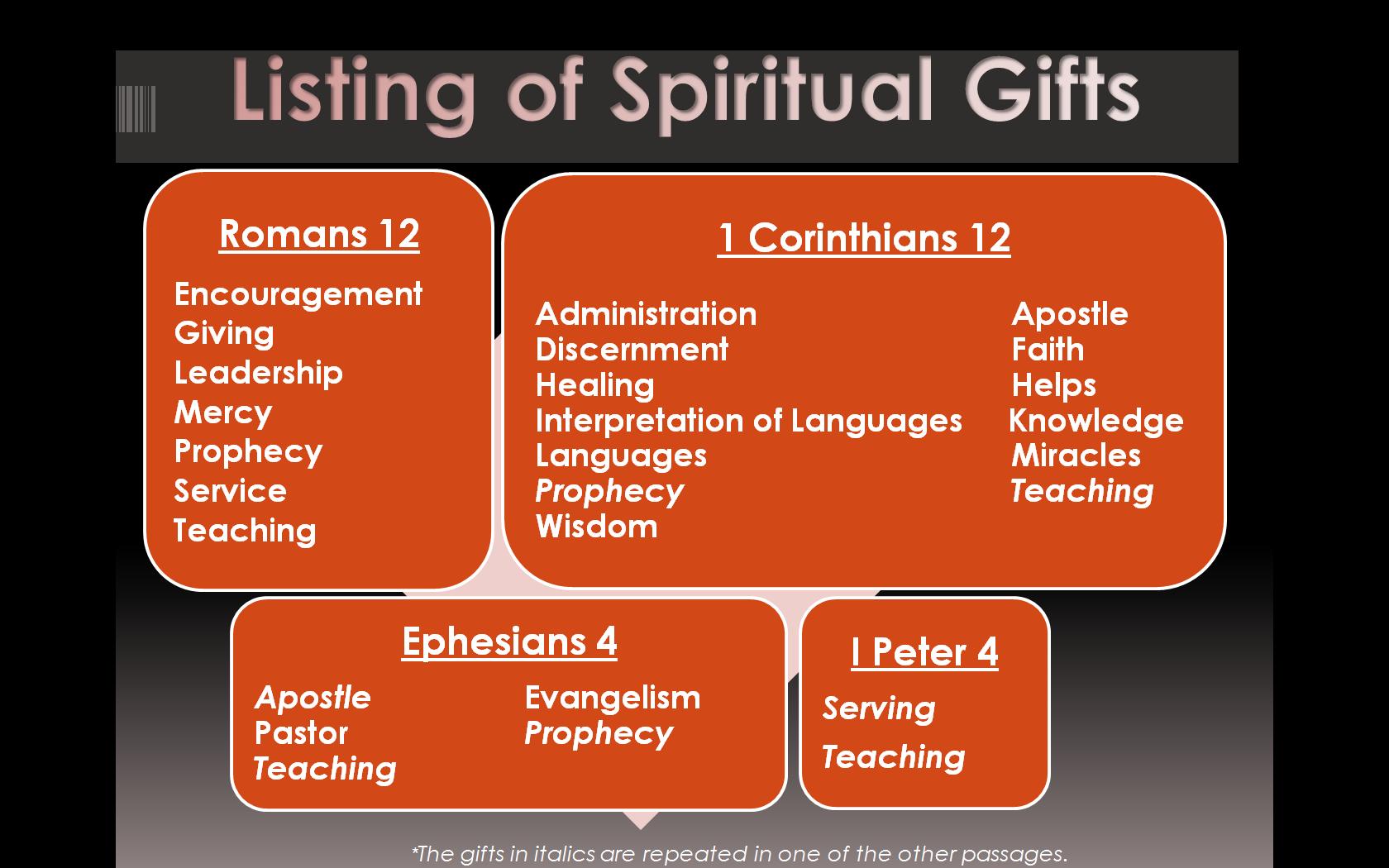
To do this, let’s recap the spiritual gifts as outlined in the New Testament:
*Jesus gifts (Ephesians 4:1-3) – These are part of our vocation and include ascension and equipping gifts as well as the fivefold spiritual gifts (i.e. apostle, pastor, teacher, evangelist, prophet).
Note: While all are wired to shape influence, not all are wired to employ these gifts in the church/in these specific occupations. More on this in a sec.
*Spirit’s gifts (1 Corinthians 12) – These belong to the Spirit and are gifts in a gathering. Some examples include administration, discernment, wisdom, healing, and miracles.
* Community gifts (Romans 4:4, 12:4-8) – These help us function in a local body. Some examples including leadership, encouragement, service, and mercy.
Due to word count, I’ll link these passages rather than copy/paste; however, after you read them, consider their Greek roots:
1. Romans 12:4-5 – The word for function is the Greek word ‘praxis’ meaning “practice function” and signifies continual activity.
2. Romans 12:6-8 – The word for gifts is the Greek word ‘charismata’ meaning “grace function” and signifies communal activity. In the workplace, we can know these functions as influencing functions.
In both these cases, it’s important to note the origin of gifts point to corporate functions created for unity, not individual skills and talents.
3. Ephesians 4:1-3 – The word for vocation is the Greek word ‘klesis’ meaning “calling function” and signifies the work in which a person is employed. This not only references our occupation but our acceptance of it as a divine call to a particular pathway/course of action.
In this case, it’s critical we know how vocation and calling work together. As Martin Luther once said, “Every person is capable of having a vocation”; however, our universal calling is to be a royal priesthood.
I like how Timothy Williams, author of The Spiritual Gifts, captures the vocational aspect of our spiritual gifts: While we know there are 5 ascension gifts and 7 community gifts, it’s important to note “each ascension gift has a corresponding functional gift.” For instance, a certain accountant may not be called to serve as a prophet in a ministry setting (i.e. a liturgically designed ascension gift); however, he can still employ prophetic insight through encouragement and counsel in financial arenas (i.e. a vocationally designed ascension gift with specific communal functions). Of course, there may be times the accountant imparts guidance for church staff in critical situations. But the bottom line is: The man of God is at peace serving the body as a financial advisor with a prophetic anointing as opposed to a prophet with financial skills.
Before I continue, I want to share a couple quick points on ‘vocation’ and how we’re to perceive it in light of our identity:
1. Gifts and vocations are NOT meant to soothe your ego or confirm your identity. If you base ‘who you are’ by ‘what you’ve been given’, you’ll reinforce territorialism in place of influence. Don’t do it!
2. Gifts and vocations are meant to enhance a sense of intimacy. If you base ‘what you’ve been given’ by ‘who you are’, you’ll reinforce a radical dependence on God and radical equality in how you view authority and hierarchy.
3. If we see ourselves as ‘Kingdom agents’, then we’ll a) desire to use our vocation to emphasize the work cultures that already point to Jesus (i.e. redeem our work environment) and b) seek to give clients and colleagues a taste of God by ‘calling forth their destinies’ (i.e. restore people).
4. If we don’t see ourselves as ‘Kingdom agents’, not only will we risk compartmentalizing our sacred and secular lives, but we will also miss opportunities to help people discern spiritual things with their natural minds.
5. Remember we’re all co-equal in value, diverse in function. Therefore, let’s engage our vocation as a holy partnership in influencing people to discover the fruit of their work/organization and in speaking restoration to people without agenda.
Looking ahead to ‘part 2’, I want to revisit William’s quote to help bridge the gap between Ephesians 4 and Romans 12.
‘Cause truth is: If we’re to better understand the relationship between gift and function within our vocation, we’ll need to apply additional grids and principles.
*Cough, Jethro. Cough, perichoresis. Cough*
Additionally, we’ll also need to add ‘elders’ and ‘deacons’ to the pastoral cluster so we can match 7 gifts with 7 functions. But I’m getting ahead of myself.
For now, I hope you were able to glean something out of this introduction. If you have any thoughts or questions, please don’t hesitate to leave a comment or contact me at your convenience.
Until then, God speed on your week. May His sweet presence be fresh wind in your sails as you press into His goodness.
You got this!
Selah.
Cover photo creds: Fast Company; body graphic creds: Msinop; content written by Cameron & Steve Fry; audio voiced by Steve Fry at the 2020 Commission U Leadership Retreat on February 29, 2020