
Work as Freedom: Hearts of Flesh (Part 2)

After starting a new series on hearts of flesh last week, I want to spend this post extending the theme into the workplace.

‘Cause truth is: While discussing theological intricacies has its place, if a Gospel principle isn’t tangible…if it’s ambiguous in application…one must wonder if we’re fully taking it to heart.

tenor

Thankfully, we’re believers in ‘part 2’s here at His Girl Fryday. As such, the goal of this post is to discuss what hearts of flesh look like in the marketplace using the three core concepts of ‘part 1’ as a foundation.

Without further ado, let’s dive in…

giphy

No question, we live in a complicated world addicted to hurry, prosperity, and high expectation. We want well, we mean well, we work well…but by day’s end, there always seems to more weighing us down than lifting us up. Ever wish you could fix just one issue knowing the ripple effect it could have? I know I do.

However, I also know at the core of many prevalent issues are hearts of stone burdened by systems of performance and self-effort. This arguably is no more evident than our cultural idolization of individual accomplishment over collective partnership. As a society, we say we value the idea of collaboration; we preach the principles of teamwork and leadership. But in an ‘I must get this done’ age, can we honestly say our bottom line emphasis is more ‘done’ than ‘I’? Or are we so caught up in progress and status, we’ve lost the point of why we work all together?

Regardless of where we’re at, as mentioned in ‘part 1’, there’s a common thread we can adhere to: By aligning ourselves to God, we can know not only is our salvation secure for those who believe (Romans 10:9-10), but our purpose, our destiny, and our future as well.

This has massive implications in the marketplace.

For starters, we can enjoy our work free from offense, agenda, and anxiety since our idea of success is rooted in worship and completion, not affirmation and accomplishment. Ever worry about your voice being heard or if ‘x’ project will get done? Perhaps you feel trapped knowing advancement can only happen is certain metrics outside your reach are met.

If so, dare to rely on God as your higher power in those moments. Put into practice, you’ll find this posture will not only free you from insecurity, but also redirect a fear of man/failure to a fear of the Lord.

As Solomon says in Ecclesiastes 12:11,13 (ESV):

“The words of the wise are like goads, and like nails firmly fixed are the collected sayings; they are given by one Shepherd. The end of the matter; all has been heard. Fear God and keep his commandments, for this is the whole duty of man.”

Remember when we surrender our anxieties, when we cast our cares upon the Lord, we create space God can invade.

Note how 2 Peter 3:8-9 literally captures this in the Message translation:

Don’t overlook the obvious here, friends. With God, one day is as good as a thousand years, a thousand years as a day. God isn’t late with his promise as some measure lateness…He’s giving everyone space and time to change.”

Unfortunately, for many of us, this reality falls flat before we recognize it. We pray before each day, we ingest truth through the Word, and yet somehow the emotional gravity in conflict remains unchanged. Why is that?

I know for me after I graduated college, I’d feel guilty if I had time to kill or margins to clear. I’d think to myself I must be doing something wrong if I’m not productive or ‘on the go’ all the time. But looking back, I realize this burden was self-inflicted having believed no mountain to conquer was a sign of faithlessness. As I now know…

…voids created through surrender is an apex of spiritual maturity.

More specifically, to create voids righteously, one must repent and acknowledge God as the provider of opportunity, the way to resolution, and sustenance when either is lacking. True, our margins and capacities may vary (see parables of the talents), but it’s ultimately God who entrusts us with them. Knowing this, we can experience work as freedom by viewing business ethics, accountability, communication, and motivation as ‘fragrant offerings’ to God.

giphy

Furthermore, if we accept our future as known and pre-determined rather than unknown and self-determined, then we can view our work as done since our purpose is already secure. Granted, this idea may be hard to grasp at first. I’m not suggesting you approach responsibility with a cavalier attitude; however, I am encouraging you to see aligning to God as a way we engage His fullness, faithfulness, and the belief that what good can be donewill be done.

If it helps, consider this: You are made a new creation. To be made is to have an identity. What you do is not your identity. Accordingly, what you make, what you earn is not your identity. So what is your identity? It’s who you are. God…God made you who you are. However, He also made work. Why? So people can know Him and discover their purpose. Hence, why work isn’t your identity, but working unto the Lord is.

2jpc80

Knowing God is why we work means He’s the subject of our work. Our co-workers and supervisors? They are not the subject. They are the object…equal in value, diverse in function…just like you. Even the confusing characters, those who think success is all profit, position, and power, God sees the ‘finished them’…not only what they could be, but what they will be.

In light of this, we can embrace helplessness and accept weakness knowing we’re a new creation continually transformed as we receive from glory to glory (2 Corinthians 3:18). Even when others condescend on weakness, we can take heart knowing the Cross has meaning and power because of it. Oh, how sweet it is to know this same wonder-working power can be alive in and through us…even as we work.

All that said, next time you’re on the clock, delight in the fact you can be open to constructive criticism since work is more than learning; it’s freedom. When you’re micromanaged, manipulated, or indirectly communicated to, rejoice. God hasn’t given you a spirit of fear on what your boss or colleagues can do to you, but of love, power, and a sound mind in what you can give back. Again, if you align to Christ, the reproach, the dying to self…it all takes care of itself. Besides, you can’t control what others do or think, but you can trust in God who works all things for good and is progressively transforming us into His image.

Cause to God, it’s not about the bottom line…or even the finish line; it’s about the finished line…

…a reality we can know as Christ’s finished work alive in us.

source

In closing, I bid adieu with one last verse from 2 Peter…

With these qualities active and growing in your lives, no grass will grow under your feet, no day will pass without its reward as you mature in your experience of our Master Jesus. Without these qualities you can’t see what’s right before you, oblivious that your old sinful life has been wiped off the books.  So, friends, confirm God’s invitation to you, his choice of you. Don’t put it off; do it now. Do this, and you’ll have your life on a firm footing, the streets paved and the way wide open into the eternal kingdom of our Master and Savior, Jesus Christ.” ~ 2 Peter 1:8-11 (MSG)

Stay tuned next time when we’ll discuss how merging bottom lines with finish-ed lines ultimately sets the stage for cultural transformation in our arenas of influence. In addition, we’ll contract intimacy versus independence before relating each reality view to weakness (as Paul describes throughout 2 Corinthians 12).

‘Til then, be blessed and stay refreshed…

Selah.

 Cover photo creds: Steemit

 

Work as Freedom: Hearts of Flesh (Part 1)

Inspiration passages: Ezekiel 11:19; Ezekiel 36:26-27; Jeremiah 31:33; Hebrews 8:10

Backdrop passages: 2 Corinthians 3; 2 Corinthians 5:13

Core concept 1: God has qualified us to communicate the Gospel as Kingdom influencers; however, to walk in this competency, we must receive hearts of flesh in place of hearts of stone.

It’s no secret the world bombards us with the idea success is an identity we achieve through ability. If we want to get something, we got to first become something; if we want to reach ‘x’ status, we must set an ‘x’ goal; to reach an ‘x’ goal, we must get there by ‘x’ effort, etc.

However…

37xlq2

For example, you may have a counselor’s heart, but doubt its validity since you’re not a licensed counselor. The world would say until you receive the proper credentialing, you’re not a counselor. But to God, you are a counselor because that’s what He’s made you to be. Of course, you may have much to learn and have to wait a few years until certification. But this doesn’t mean you’re not who God has called you to be.

You see, the world wants you to think it’s all about the process…that what you hope to be can only be accomplished through how you get there. But think about it: In order for there to be a ‘how’, there has to be a ‘what’ and for there to be a ‘what’, there has to be a ‘who’, right?

The question is: Who do we believe when it comes to who we are?

While the outcomes are many, by allowing God to be the answer, we can know the sweet reality that not only is our salvation secure for those who believe (Romans 10:9-10), but our purpose, our destiny,  and our future as well.

Accordingly, growth and improvement should not be seen as functions of development, but of yielding. After all, what you hope you are, you already are because your identity is not a matter of be-coming and self-refining (heart of stone thinking), but be-lieving and aligning (heart of flesh thinking).

This in mind, if what you seek to experience has already been prepared, why not enter into God’s best with a ‘yes’  than effort with a sigh? Why not accept His ‘realized new’ than take a chance missing it all for the sake of going your own way?

Core concept 2: To receive a heart of flesh is to believe God always sees the ‘finished you’. Accepting this sets us up to experience radical life in the Spirit…to be transformed through the Spirit’s inner power.

Consider this illustration from my dad/Gate senior pastor, Steve Fry (8:46-11:30)…

As created (or in this case, painted)…

…there’s amazing freedom to be found when we accept our future as known and pre-determined rather than unknown and self-determined.

Understandably, this can be challenging to accept since we often seek to control our destiny through achievement and effort. We think as long as we work hard and ask God for the right things, they’ll be given to us and to a certain extent, this is true; however, if making requests to God and modeling faith through excellence are detached from alignment, are we not craving what He can give versus valuing what He creates?

If so, dare to view present and future struggle through David’s Psalm 51:10-12 heart-cry, where he asks not only for a clean heart, but a new one! (more on this in a sec)

NewHeart-iPad

As Paul emphasizes in 2 Corinthians, we’re not changed into a new creation, we are made as a new creation. We aren’t born again through accrued improvements; we’re born again through the Spirit’s transformative power which enables us to become what God has and continues to declare. As for us, all we have to do is align to God by His Spirit and walk His appointed paths through daily tuning and reliance. In a sense, that is life in the Spirit – an ongoing presence meets power, abiding meets trusting reality with God.

Think of this way: If the Good News is ‘Jesus is alive and has set you free‘, then by extension, you don’t have to earn your freedom because your efforts aren’t the keys to your life. Instead, you can relish in your freedom knowing you don’t create it by self-effort, but discover it being present with God.

Core concept 3: Believing God sees the ‘finished you’ allows you to embrace helplessness and surrender your veils.

When Paul mentions ‘veil’ five times in 2 Corinthians 3:12-18, it’s easy to assume he’s talking about revealed glory; however, when we consider v. 17 and its modern-day application, we find Paul is doing, at least, three things:

  1. He’s linking Christ’s finished work on the Cross to our finished person (to see freedom through the lens of the New Covenant is to accept both Cross and weakness as the plan for our transformation). 
  2. He’s charging the church to fearlessly turn to the Lord.
  3. He’s cautioning the body against obedience through self-effort.

Concerning point #3, it’s worth noting even when we do the right thing, if the act is rooted in fear, our hard hearts will remain since trust is self-reliant. That’s why the flip-side is so radical. To do the right thing by trusting God is to allow God’s tender heart to tenderize your own. This is evident when we turn to Jesus in moments of dependence, desperation, and/or negative thinking. When you turn to Jesus, you’re essentially abandoning fear of conviction and exposure for the sake of discovering new levels of His nature, character, and glory. It’s the ultimate ‘His fullness exceeds my voids‘ proclamation…an acceptance of God and His desire for us to know His heart out of abundance, not fear.

As mentioned in Core Concept #2…

God doesn’t want to change your heart; He wants to give you a new one! He doesn’t want to improve you; He wants to take out your heart of stone and put in a brand, new heart of flesh. 

Yes, God is able to fully restore health (Jeremiah 30:17), relationships (2 Corinthians 13:9-11), fortune (Job 42:10), strength (Isaiah 40:29), and the joy of our salvation (Psalm 51:12), but with our hearts, our inhabitable being, He never stops wanting to go deeper; hence why God implants new hearts in His people so the larger dimensions can contain the future ‘more’ He’ll inevitably reveal.

As for our response, remember we don’t believe the right things so we can experience the cool buzz of God’s presence. We contend for them so the glory of Lord can fill our spaces…work, church, living, family/friends, etc. God desires His created to be free from performance and fear-based systems of thinking; however, we can’t tap into this desire if we try to effort our way there. Instead, we must yield our way to His way. That’s the hope of glory meeting the Good News as modeled in our own life!

Final Thoughts:

  1. Stop trying to be a Christian and turn to Jesus regardless of how you feel
  2. Accept God’s acceptance of yourself
  3. Pain is real, but irrelevant when you consider we are his workmanship created not only for good works, but for fullness from our finished future. Side note: Combining Colossians 2:10 and Ephesians 2:4-10 is super fun!)
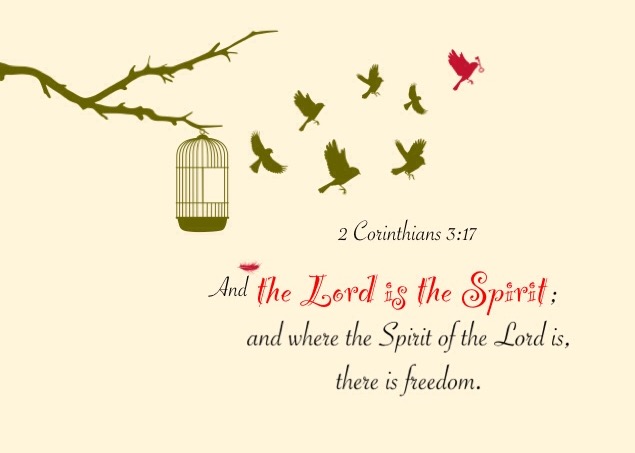
  4. (see graphic below)

where-the-spirit

from your effort, self-reliance, systems of performance, and the deepest of emotional hurts.

Stay tuned next time for ‘part two’ when I’ll discuss how this theology works in the marketplace. ‘Til then, praise the One with the key not only to your heart, but your future as well.

Selah.

Cover creds: Heartwell
Content inspired by ‘New Heart’ series @ The Gate Community Church

Work as Worship: Scratch Notes on Titus 2:7-15

TDOT Bible Study – WORK AS DOXOLOGY (WORSHIP)

Question: What are some of the ways we can approach work as worship?

v 7 – Behave wisely – take life seriously

v 8 – Sound and beyond reproach in instruction

v 9 – Subject in everything, pleasing and not talk back so that in every respect they will adorn and do credit to the teaching of God our Savior

What does ‘adorn’ mean?

  • Adorn – Implies advancement, a passing on of something; not just something you put on (Proverbs 25:20)
  • Adorn – An active/direct extension of majesty (God’s sovereignty)
  • Adorn – Transitive property applied, adorn is all about sharing good news with people. But to share good news with people, it has to be evident in our lives as well.

v.10 – Proving themselves trustworthy*

*Note: ‘Work as worship’ doesn’t mean you effort to prove your maturity. You don’t effort to live above reproach. Without Jesus, you have to rely on yourself. But with Jesus, this becomes an overflow of daily submitting yourself to Christ and His lordship (i.e. ‘not my will, but your will be done’). There’s an investment in doing this, but it’s a joyful one if our heart is to give God all glory.

v 11 – Scriptural evidence that points to God’s grace finding a way to all men

v 12 – Sensible repeated for the fourth time; this is significant.

What does ‘sensible’ mean?

  • Sensible  Acting within God’s definition of balance; receiving God’s discernment made practical through the Spirit.
  • Sensible   Spiritual moderation exemplified by “a man who does not command himself, but rather is commanded by God‘” (K. Wuest, Word Studies, 2, 46).
  • Sensible   The marking of a decision that contributes to the regulation of life; self-control aids this process since the virtue helps us mature as a safe place (evidence) to people and as workers with reliable attitudes and behaviors (manifestation).

Root origins: The root (phrēn) is the root of “diaphram,” the inner organ (muscle) that regulates physical life, controlling breathing and heartbeat.

Example: A good opera singer controls the length and quality of their tones by their diaphragm. This also controls their ability to breathe and moderate heartbeat; hence, why the disaphragm is so valuable as it regulates (“brings safety to”) the body, keeping it properly controlled.

v 13-14 – ‘Work as worship’ means we do good with a good attitude to bring others the good news/into God’s presence. This point only is why we should see self-control as surrendering our control in terms of relationships. Remember God will take care of the possession (making His nature/will known to those around us) as long as we don’t make entering God’s presence all about us.

v 15 – “Tell them these things” – This implies instruction is being modeled with the authority we’ve been given from Christ. Active encouragement and constructive criticism working in tandem. If we do this right, our colleagues and co-workers will be regularly edified.

Thoughts on etymology influenced by Strong’s Concordance; cover photo creds – Logosphere 


Two Way Street: The Next for Next Gen (Part 1)

I got to get something off my chest.

As a Millennial, I’m starting to wonder if the church is exhausting the ‘next’ in ‘next generation’…if what she considers ‘next’ is ‘new’ and what she considers ‘new’ is ‘more’1.

‘Cause truth is: While I’m all about the emerging generation being poured into, I can’t help but think we, as the body, need to re-evaluate ‘next’ relative to God’s discipleship intent. Granted, I’m a part of the rising leadership community and have much to learn; still, the splinter lingers in the back of my mind:

Should the church replace, ‘The future of church leadership is the next generation‘ with ‘The future of church leadership is discovering the next for each generation‘ in its ‘life on life’ vernacular?

If ‘yes’, then I believe the Lord wants to unveil specific strategies on how we’re to walk this out. But before we can dive into application, we must first bask our context in the Word.

As always, let’s dig in…

tumblr_m088t7ZxS21qioot0o4_400

Starting in Psalm 1452:4

 “One generation shall commend your works to another, and shall declare your mighty acts.” (ESV)
One generation shall praise Your works to another, and shall declare Your mighty and remarkable acts.” (AMP)
Generation after generation stands in awe of your work; each one tells stories of your mighty acts.” (MSG)
One generation will declare Your works to the next and will proclaim Your mighty acts.” (HCSB)
Let each generation tell its children of your mighty acts; let them proclaim your power.” (NLT)

Right away, we see why contrasting different translations is important when studying Scripture. For instance, if you read the ESV, HCSB, AMP, or a similar translation, you might interpret ‘one generation’ to literally mean one generation; however, in context, this is not what David is implying. Rather, David is stating how worship should be a successive and progressive tradition – a two-way street from which one generation can learn from another. Had David been posed with the idea praise3 could only be experienced from top to bottom, it would have been a compromise to adoration in his mind.

As such, the key takeaway here is delighting in God is not only at the core of who we are, but also the core of our unity…which cannot be reduced to a unidirectional expression.

Now, let’s collate this with the parable of the wineskins:

“’No one tears a piece from a new garment and puts it on an old garment. If he does, he will tear the new, and the piece from the new will not match the old. And no one puts new wine into old wineskins. If he does, the new wine will burst the skins and it will be spilled, and the skins will be destroyed. But new wine must be put into fresh wineskins. And no one after drinking old wine desires new, for he says, ‘The old is good.’” ~ Luke 5:36-39 (ESV)

Exegesis applied, Luke is illustrating the fact no one can mix legalism with new faith or religious tradition with divine grace; however, in this case, let’s assume old wineskins apply to older generations and new wineskins apply to rising generations. When Luke suggests the old is good4, he’s not saying aged is better in all regards (though with wine, this is certainly the case) as much as he’s emphasizing the Ecclesiastes 3 reality that for each option, there is a season, a time, and a place.

In other words, what’s new and what’s established are not only meant to co-exist, but partake under the heading of ‘fresh’ or as Hebrew translates it, ‘mechudash’ meaning ‘renewed’. Accordingly, while the literal pouring of wine from new skin to old skin doesn’t make sense, when we consider ‘fresh’ relationally from God’s perspective, we can know God as faithful to renew fresh works in all men for cross-generational education and exultation.

Think of it this way: As disciple-making Christ followers, we can be like wine poured out as drink offerings (Philippians 2:17, 2 Timothy 4:6) upon the sacrificial offering of faith; however, unlike wine, we can serve free from the yoke of wineskins seeking to compartmentalize how that faith operates in action! For example, if you’re an elderly leader, you don’t have to feel your place in church is limited to on-call mentoring and if you’re a teenager, you don’t have to feel disqualified due to youth. Christ in you…if anything is possible, who says you can’t team and serve alongside those twice or half your age? If God has called you, then go for it!

As the Spirit impressed upon me before writing this…

…how sweet it is knowing each generation has the capacity to pour into another? That no matter who is involved, as long as God is being praised and exalted, there is a place for His fresh work in all modes and peoples of life.

To tie this up, I’m all for Millennials, Post-Millennials/Zennials having their opportunity and time to step up. But I also don’t believe the retired generation has to be retired from leadership roles if they’re called and appointed in that season. History has constantly shown the emerging generation to approach the older ones with a ‘what about me‘ mentality. And don’t get me wrong. I get my peers looking around wondering who is willing to pour into them. But the flip side is also true. We can’t neglect pursuing places for those who naturally have more insight or pigeon-hole them where they’re not called as a plug-in for program.

After all, leadership is not a function of age, but a) a way the God can be glorified and b) an outlet for the fear of the Lord to be known. If the body wants to know the fullness of ministry as God intended, age can’t be a primary (key word) filter in finding the balance between giving/receiving…pouring in/pouring out. As long as you have breath, you not only have a purpose, but a place for that purpose to manifest.

giphy

Stay tuned next time when I’ll dive deeper into the ‘next’ vs. ‘new’ vs. ‘more’ dichotomy as alluded to in my opening. Until then, be blessed and refreshed even when pressed and don’t forget to rest in His best.

Selah.

Footnotes

  1. Or visa-versa
  2. One of David’s favorite psalms
  3. In any form, be it discipleship/mentoring, teaching, prophesying, pastoring, etc.
  4. Or ‘better’ in some translations
Cover photo creds: The Beck Group

Proverbial Life: A Quick Guide to Possessing Your Soul

Context: This post was inspired by a May 16 conversation with my dad prior to his Sunday AM message @ The Gate Community Church on May 19. Moving forward, any content centered on internal endurance (and/or a ‘Proverb outside of Proverbs’) will be categorized into this new series called ‘Proverbial Life’.

It’s a complicated theme in Scripture…

God, as love, authoring His will in the deepest still; the epitome of fellowship perfecting faith before it could create.

No question, the infinities of life are complex, sometimes intimidating; however, when we consider God at the beginning, we converge on a central truth:

We were made for connection (for love, with love, by love)…

…to pursue peace with all people1

…and to be unity in community.

Unfortunately, this is easier said than done in a day when relationships are compromised by  busyness, striving, even insecurity. Perhaps you’ve encountered similar barriers wondering how to navigate around them.

If so, I want to encourage you with a Proverb that somehow found itself in Luke 21.

But before I dive in, allow me to uplift the down heart reading this…

  1. You are not alone. You are not here by accident. You are a treasure. You are an asset to an unshakable Kingdom. You are a chosen child of God. Just marinate in these identity statements a bit.
  2. If you’re not in the rhythm of daily dying2, staying the course in any situation will be challenging. An odd segue, I admit, but one I speak from wanting you, the reader, to surrender all trust in God knowing He understands your wants, needs, desires, and dreams better than you do.
  3. In writing this, I don’t want to downplay the struggle of connecting to those preserving their rhythms, content with you being on the outside looking in. I get it. If there’s one mountain in recent church testimony, it’s this. Still, even though the purest of intentions can become unyoked priorities, you can’t take on the wrong burdens even if you’re the only one who sees them.

Having said that, let’s dig into the Word…

giphy

By your patience possess your souls.” ~ Luke 21:19 (NKJV)3 4

By your endurance you will gain your lives.” ~ Luke 21:19 (ESV)

By your [patient] endurance [empowered by the Holy Spirit] you will gain your souls.” ~ Luke 21:19 (AMP)

Stand firm, and you will win life.” ~ Luke 21:19 (NIV)

Staying with it—that’s what is required. Stay with it to the end. You won’t be sorry; you’ll be saved.” ~ Luke 21:19 (MSG)

As expected, wording varies upon translation, but the general concept is the same. When we reference this verse to Matthew 4 and note the heart of Jesus, we find the Son of Man walking in authority by the power of the Holy Spirit. Everywhere he went in this power, every time he returned in this power. Even when Jesus was tempted, Jesus was centered in his identity by…you guessed it…the power of the Holy Spirit.5

Often times, when we think power of the Holy Spirit, we think wonders and miracles, but for Jesus, the most frequent manifestation of the Spirit’s power in him was his reliance upon the Father to possess his emotions. A simple anecdote upon first glance, but one with significant applications when we consider Jesus was tempted in every way like we are today. This in mind, we can’t take lightly the vain thoughts we tolerate in place of deferred hope given the power of fear ultimately numbs us to the power of the Spirit.

Again, Jesus is the way we must model. To him, his ‘standing identity’ wasn’t mutually exclusive from his identity in God. He knew to walk in real authority, whether resisting the enemy or healing the sick, he had to possess his soul to keep it from ruling him. The more opportunities he had to cultivate endurance in this way, the more he walked confidently in his identity and the authority that overflowed.

Furthermore, it’s worth noting Jesus never asserted his authority as a self-evident right, but out of a posture of rest. This is key for us concerning spiritual warfare. To say Jesus asserted his authority out of rest means he didn’t contend for authority with the enemy; rather he exercised it knowing he was free from needing God to approve himself and defend his rights.

This, in turn, allowed his faith to flow from identity and empowered him not to be offended that his purpose was rooted in dying.

So in a weird sense, we should delight in the fact God tests us through relational voids6 given His heart is to refine our rest and trust in our ‘loved by God’ identity. Not to suggest every relational lack is a test from God. I’m just saying when we look at how Jesus lived and what He longs to develop within us, how can we not be grateful knowing our patience can mature as we master our inner man? How can we not be excited our ego-triggered fears can be subdued by the same power Jesus abided in?

giphy (1)

Bottom line: Every day is an opportunity to die to self, receive God’s life, and discover our purpose through our ‘loved by God’ identity.

Accordingly…

  • Next time, you’re alone, remember Jesus was often alone…yet relied on the Father in those moments.
  • Next time, you feel judged, remember Jesus was constantly misunderstood, even in praise…yet consistently ran to the source of his confidence.
  • Next time, you feel drained, remember Jesus was tired on many occasions…yet knew the fruit he bore strengthened his perseverance. 
  • Next time you feel disconnected or discouraged, remember to rejoice as you suffer in steadfastness!

After all, God is always up to something special, something incredible beyond your comprehension. Just keep your eyes centered on the perfecter of your faith, surrender what you think should be present in your life, and stand firm regardless of how you feel…

…knowing no matter what happens…

…the Creator of your soul will be there to gain your souls.

Selah.

Footnotes

  1. Hebrews 12:14 NKJV
  2. To the will of your flesh
  3. Putting NKJV first since I like the way this translation catches the Greek
  4. Patience in Hebrew refers to suffering in steadfastness
  5. So while there’s truth in viewing this verse as a bottom line for a well-disciplined life, the whole point is what connects standing firm to winning life…and that is the power of the Spirit.
  6. And conflicts
Cover photo creds: WallpaperUP